The Outdoor Apothecary is reader-supported. When you buy through links on our site, we may earn an affiliate commission. Learn more
August Foraging
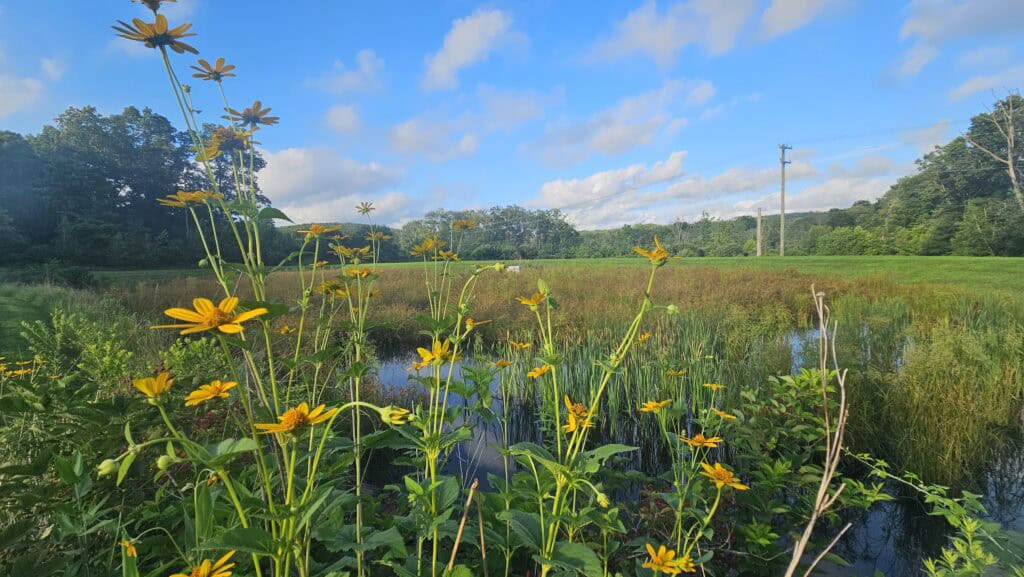
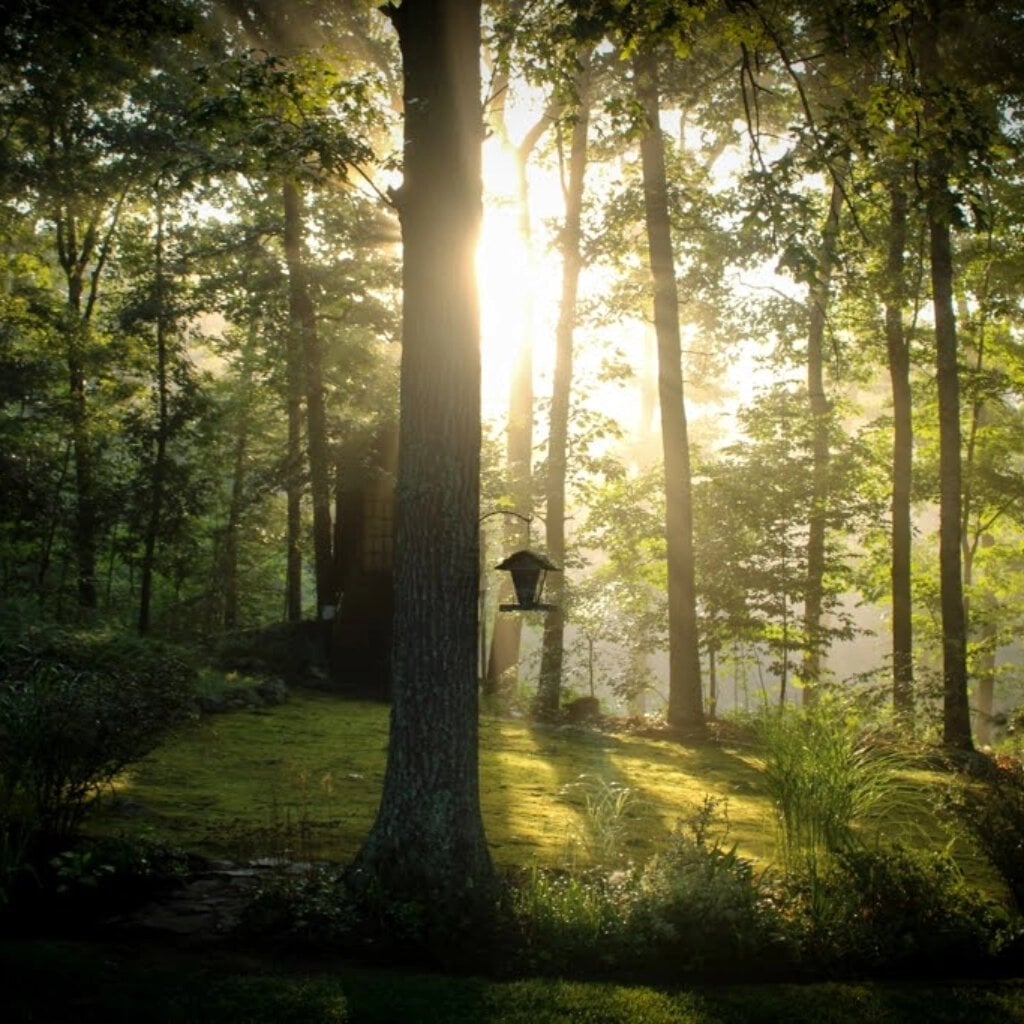
This is my first August foraging where we are now living. We moved last summer to a pond-side property in eastern Connecticut, bordered by conservation land, with a forest of mixed eastern white pine and hardwoods of oak, maple, birch, hickory. Between the pond edges, the pine-hardwood understory, the nearby meadows and fields, and the disturbed ground along a dirt road that was once dug for gravel, nearly every habitat type I write about is now within a short walk of my front door.
If you’re wondering what to forage in August in New England, this is one of the most productive months of the year. The flowering meadow plants like goldenrod, Joe-Pye Weed, boneset, mullein, yarrow are at or near peak. The first elderberries are darkening along streambanks. Wineberries are jewelweed are ready for harvest. The “weeds” in the garden, like purslane and plantain, are at their late-summer best. It’s also a transitional month: the long days are starting to shorten, and many plants (like milkweed) are putting their last energy into seed before fall.
What follows is a list of what I’m gathering this month, here in eastern Connecticut. Some of these you’ll find in your own backyard. Some ask for a walk into woodland edges, meadows, or along damp, shady pond edges. All of them ask the same thing of us: pay attention, take only what you need, and leave plenty for the bees, the birds, and the plant herself.
August Foraging: Before You Head Out
August can be hot in New England, and the woods are full of mosquitoes, ticks, and the occasional encounter with poison ivy. I always carry water, tuck my pants into my socks, and stash a small tin of jewelweed salve in my basket.
If you’re new to wildcrafting, I always recommend starting with one or two plants you can confidently identify before adding others. A good field guide makes all the difference. For Northeast plant identification, I also love the free Go Botany tool from Native Plant Trust that lets you key out unfamiliar plants by leaf, flower, and habitat, and it’s specific to our region.
And please, approach the plants with reciprocity. Offer thanks. Take less than you think you need. Pass by the first plant you find and harvest from the third or fourth. If you’d like to read more about ethical wildcrafting before you start, the Foraging and Wildcrafting section of the blog has more on this.
August Foraging: Elderberry
1) Elderberry
The white lace-cap flowers of June have ripened, and by mid-to-late August, American elderberry (Sambucus canadensis) is hanging in heavy purple-black clusters along streambanks and field edges. The catbirds know this. So do I.
I harvest in the morning, snipping whole clusters into a basket. Back at the kitchen counter, I use a fork to comb the berries off their stems—the stems and unripe berries are mildly toxic and not for eating.
Most of what I harvest goes into my favorite elderberry syrup for the cold and flu season ahead. Some I tincture, some I freeze for winter. To learn more about why this plant carries such ancient reverence—and why I never harvest from her without asking permission first—you might enjoy Elderberry Folklore: Elder Wisdom and Midsummer Magic.
August Foraging: Wineberries
2) Wineberries and Other Wild Berries
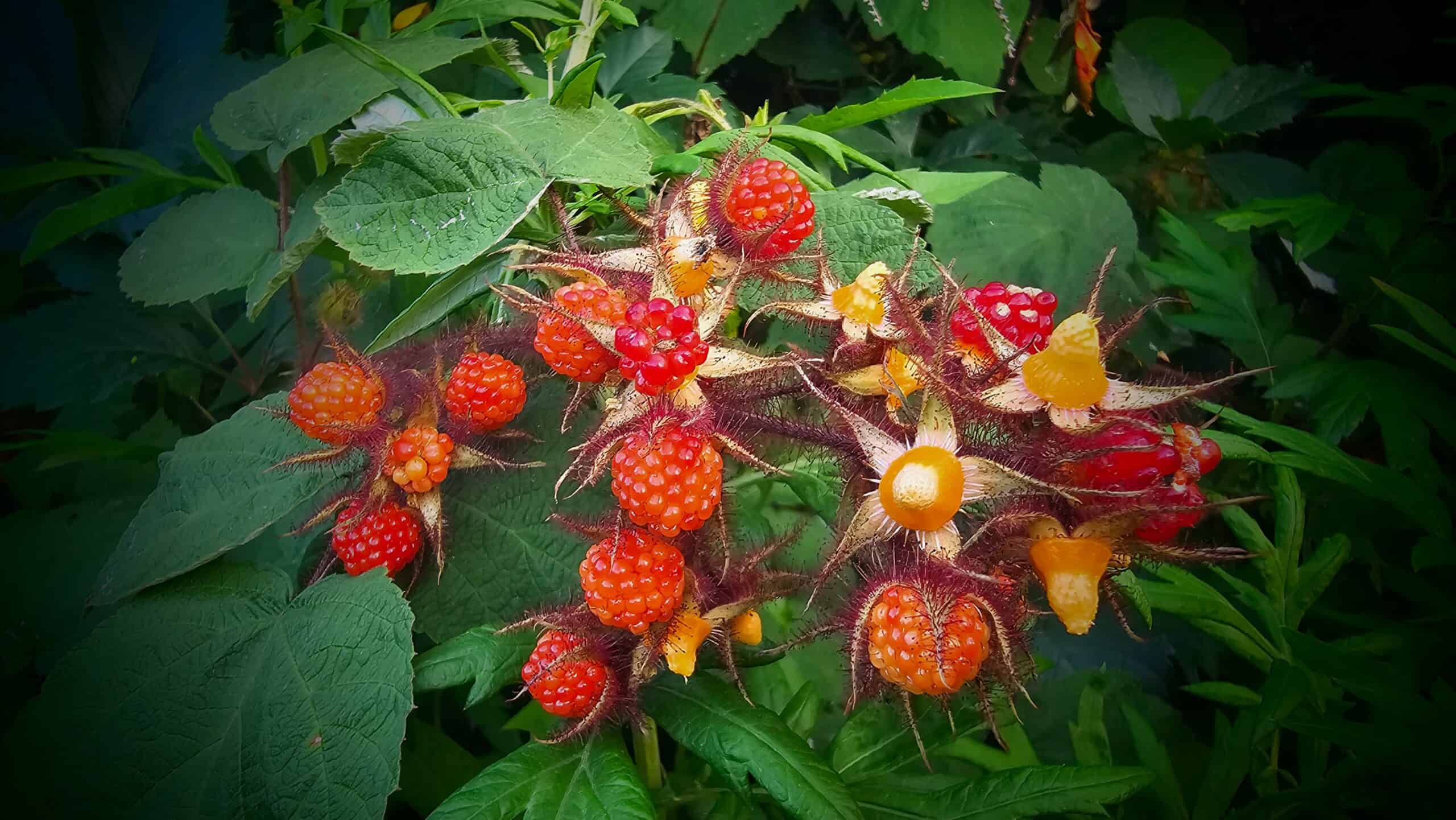
August is still berry season in New England. Wineberries (Rubus phoenicolasius) ripen through July and into early August—those luminous, ruby-red fruits that catch the eye along forest edges. They’re invasive here, which means you can harvest with abandon. The flavor is bright and slightly tart, somewhere between a raspberry and a redcurrant.
You’ll also still find wild blackberries, late-season black raspberries, and—if you’re lucky and you know a sunny rocky opening—a few wild lowbush blueberries hanging on. I’ve written about the magic and folklore of all of them in The Magic of Berry Season: Symbolism, Folklore, and Health Benefits.
August Foraging: Goldenrod
3) Goldenrod (Just Beginning)
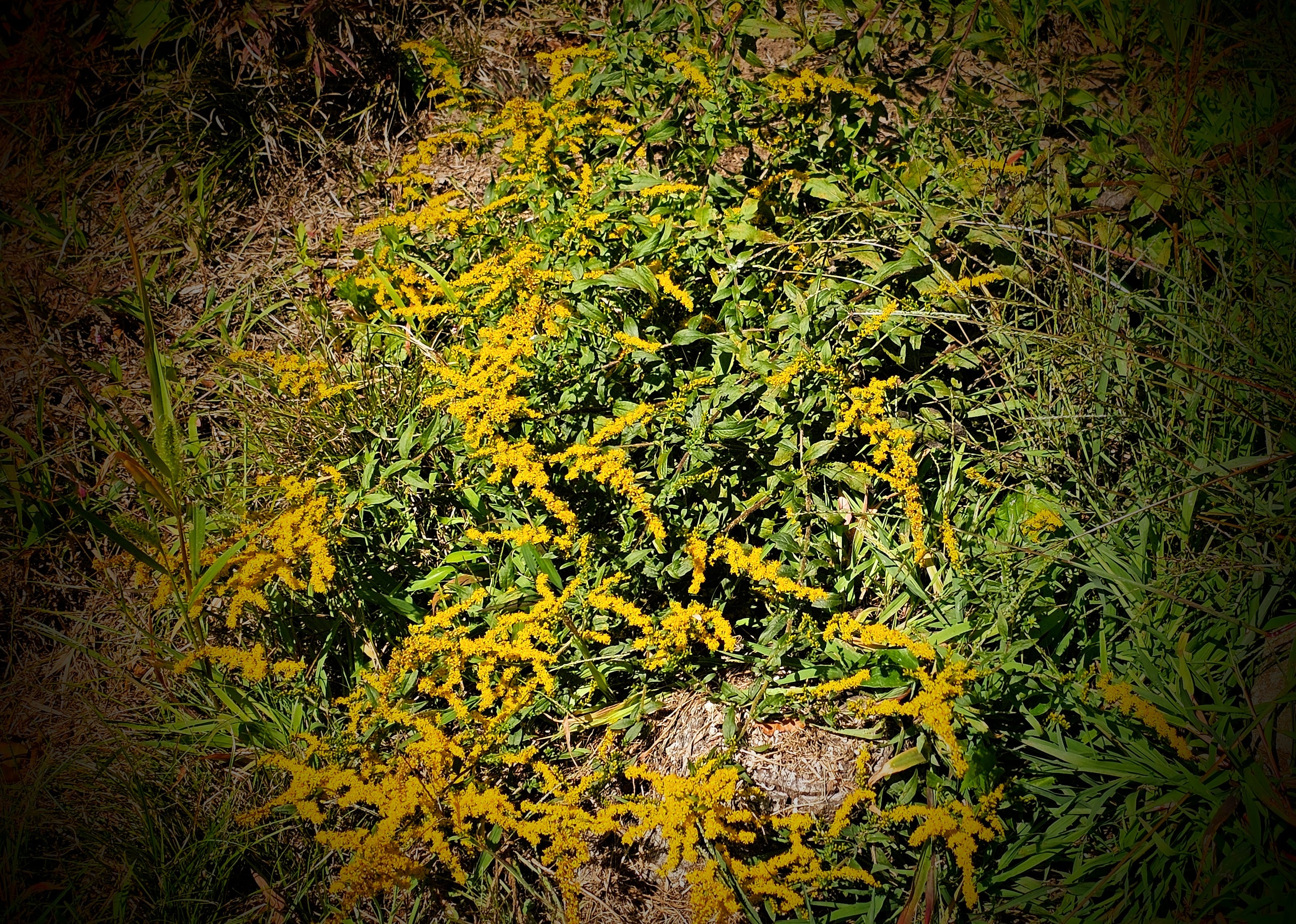
The first wands of goldenrod (Solidago spp.) begin lifting in late August along roadsides and meadow edges. By Lammas, my own meadow is already glowing yellow at the corners.
Goldenrod is gentle and joyful and—despite her bad reputation—doesn’t cause hay fever. That would be ragweed, blooming at the same time; see Goldenrod vs. Ragweed for how to tell them apart. The flowers and leaves can be tinctured, infused into oil for sore muscles, or steeped into a beautiful sun-colored goldenrod tea that tastes, as I once described it, like the last bit of summer’s golden light.
Towering above the goldenrod in the wet edges of my meadow, Joe-Pye Weed (Eutrochium spp.) is at the height of her summer power in August. Those dusty-pink flower heads draw monarchs, swallowtails, and bees in clouds.
Named, according to legend, for a Mohican healer who used the plant to treat fevers in colonial New England, Joe-Pye is a plant of liminal places—where land meets water, where summer leans toward fall. The flowering tops and leaves can be harvested now and dried for later use. Traditional uses are detailed in Surprising Joe Pye Weed Uses & How to Make a Tea From It, and the deeper magic of this plant is woven into Joe-Pye Weed Folklore: The Healer’s Herb of Summer.
August Foraging: Boneset
5) Boneset
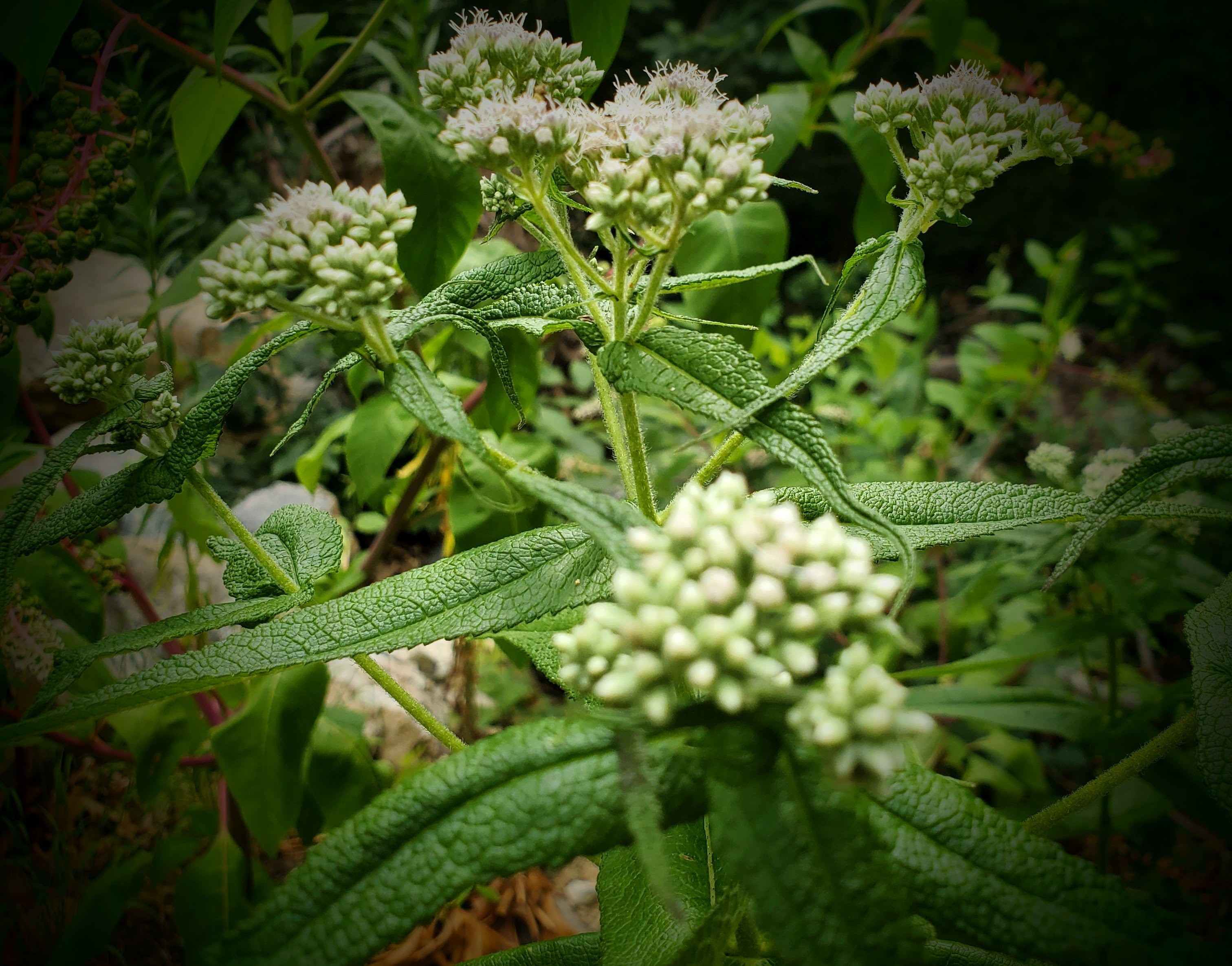
If Joe-Pye is the tall, pink-headed sister, boneset (Eupatorium perfoliatum) is her quieter, white-flowered companion. The two often grow side by side in damp meadows and along stream edges. August is when boneset’s fragrant white flower clusters open—and when I harvest the upper third of the plant for drying.
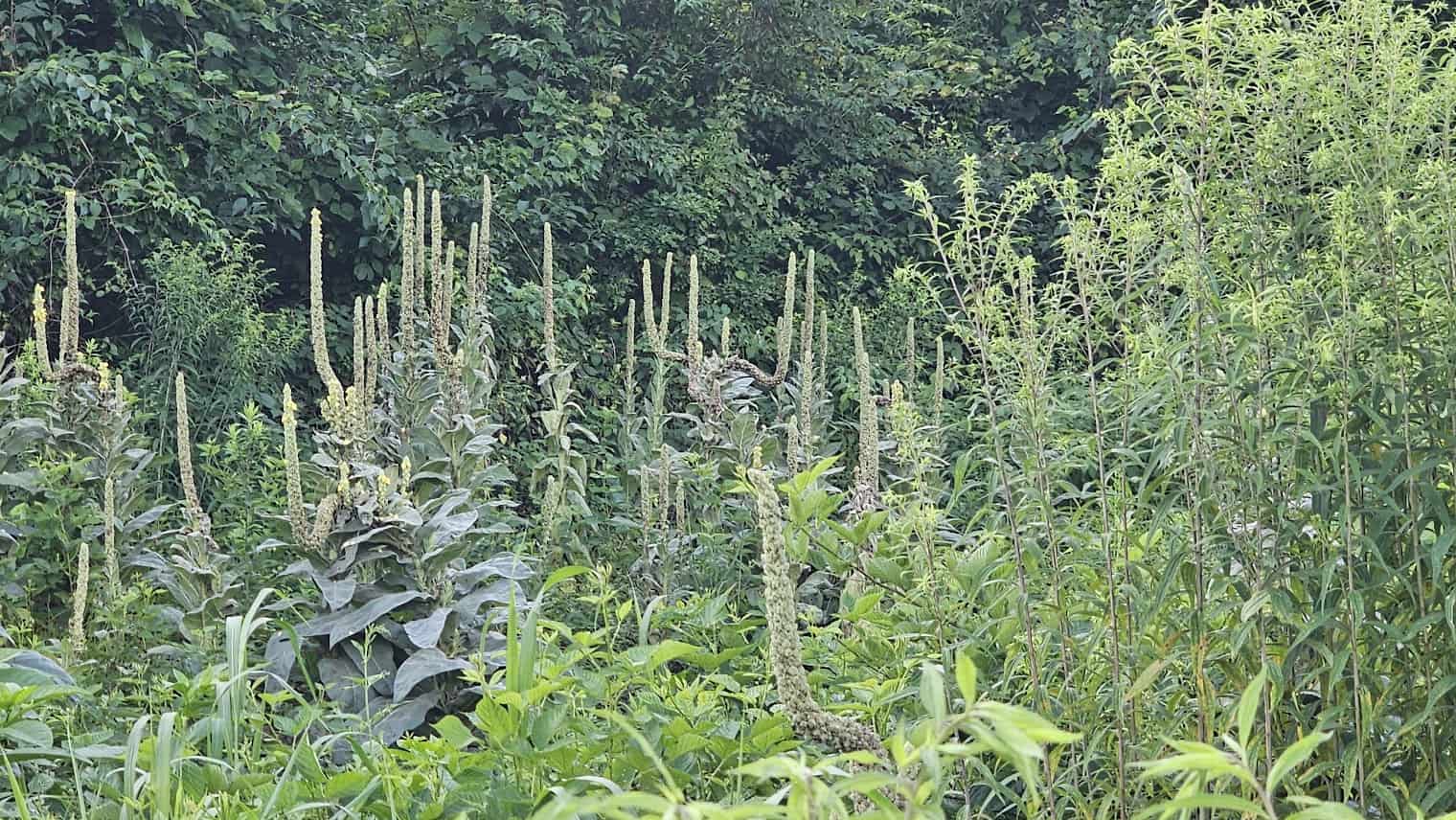
The yellow flower spikes of mullein (Verbascum thapsus) are at their best now. Each flower opens for only a single day, so I check my mullein patch every morning during August and pick what’s open.
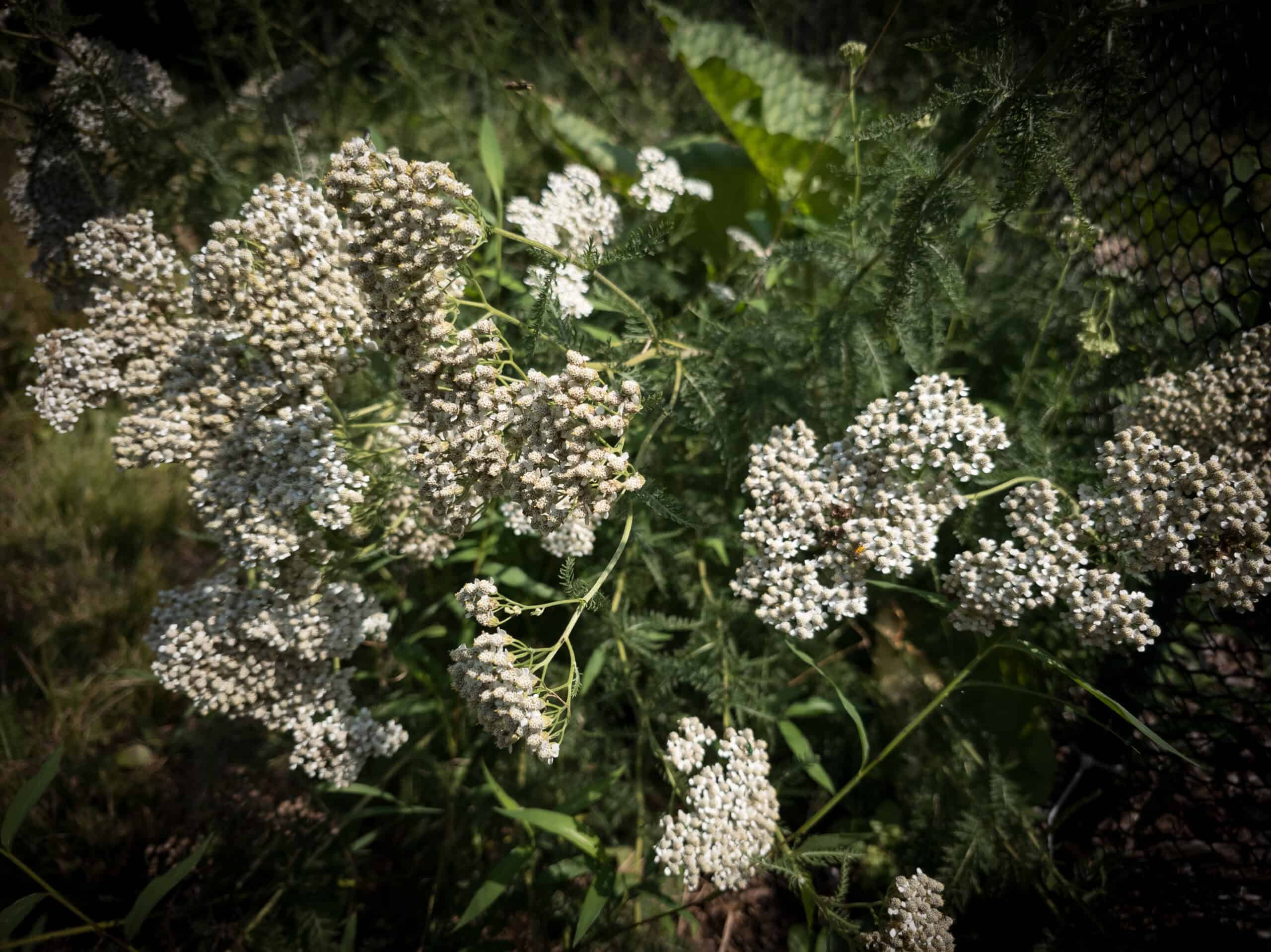
By August, yarrow (Achillea millefolium) is often well into her second flush of flowers. The white, flat-topped umbels stand out on stony roadsides and in sunny meadows. I harvest the flowering tops on a dry afternoon and either dry them for yarrow tea or infuse them into oil for yarrow salve—a staple in my late-summer first aid kit for the inevitable scrapes, cuts, and bug bites.
The folklore of yarrow as a plant of warriors, protection, and emotional boundaries feels especially right at this turning-of-the-season moment, when the outward fullness of summer is asking us to remember our edges. There’s more in Yarrow Folklore: Warrior Wisdom and Summer Magic.
August Foraging: Jewelweed
8) Jewelweed
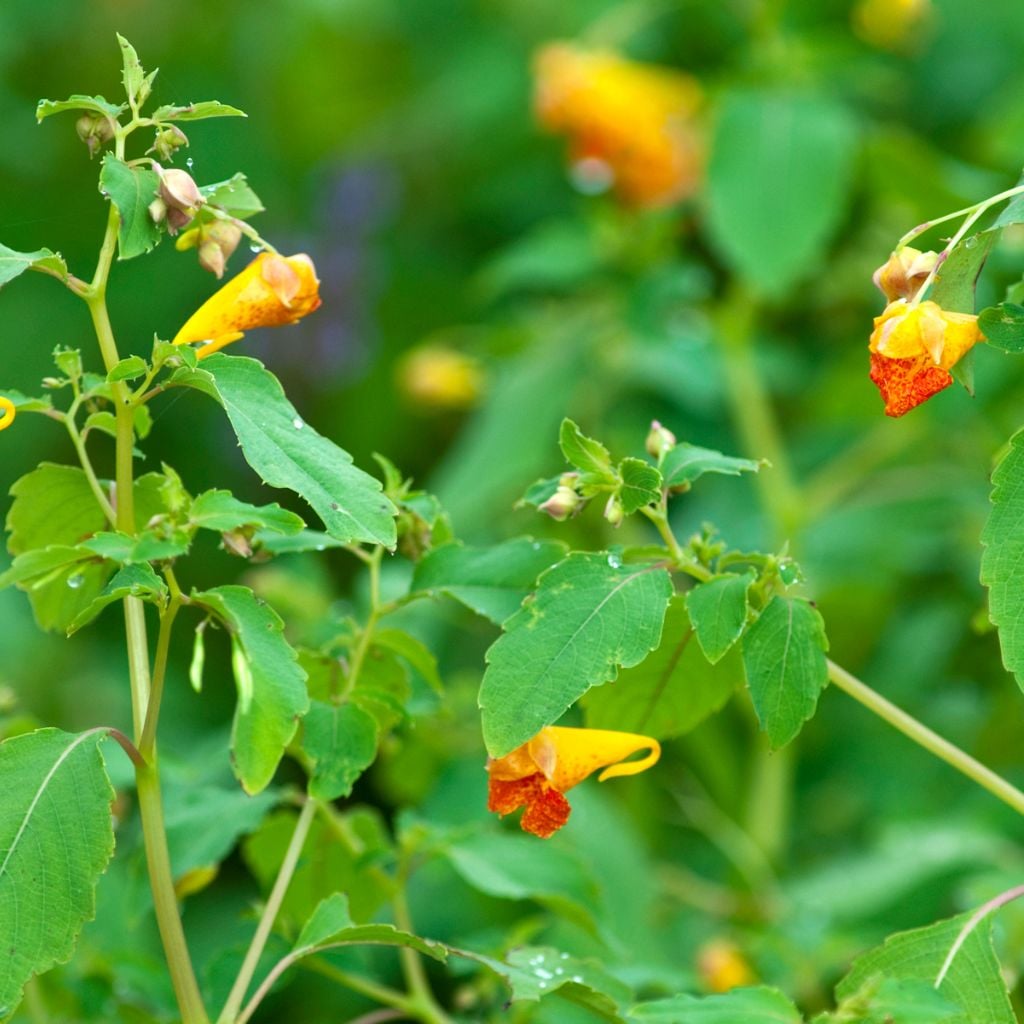
In the moist, shady places where poison ivy can be found, I almost always also find jewelweed (Impatiens capensis). The plant world’s small mercy. Her orange, trumpet-like flowers dangle now along stream banks and pond edges, and the seedpods are beginning to swell into the spring-loaded “touch-me-nots” that pop open at the slightest brush of a fingertip.
August is the perfect time to gather the whole plant—stems, leaves, and flowers—for fresh-pressed juice or for a batch of jewelweed salve for poison ivy relief. I make a few tins of this every year to have on hand for the inevitable cases of poison ivy rash .
August Foraging: Self-heal
9) Self-Heal
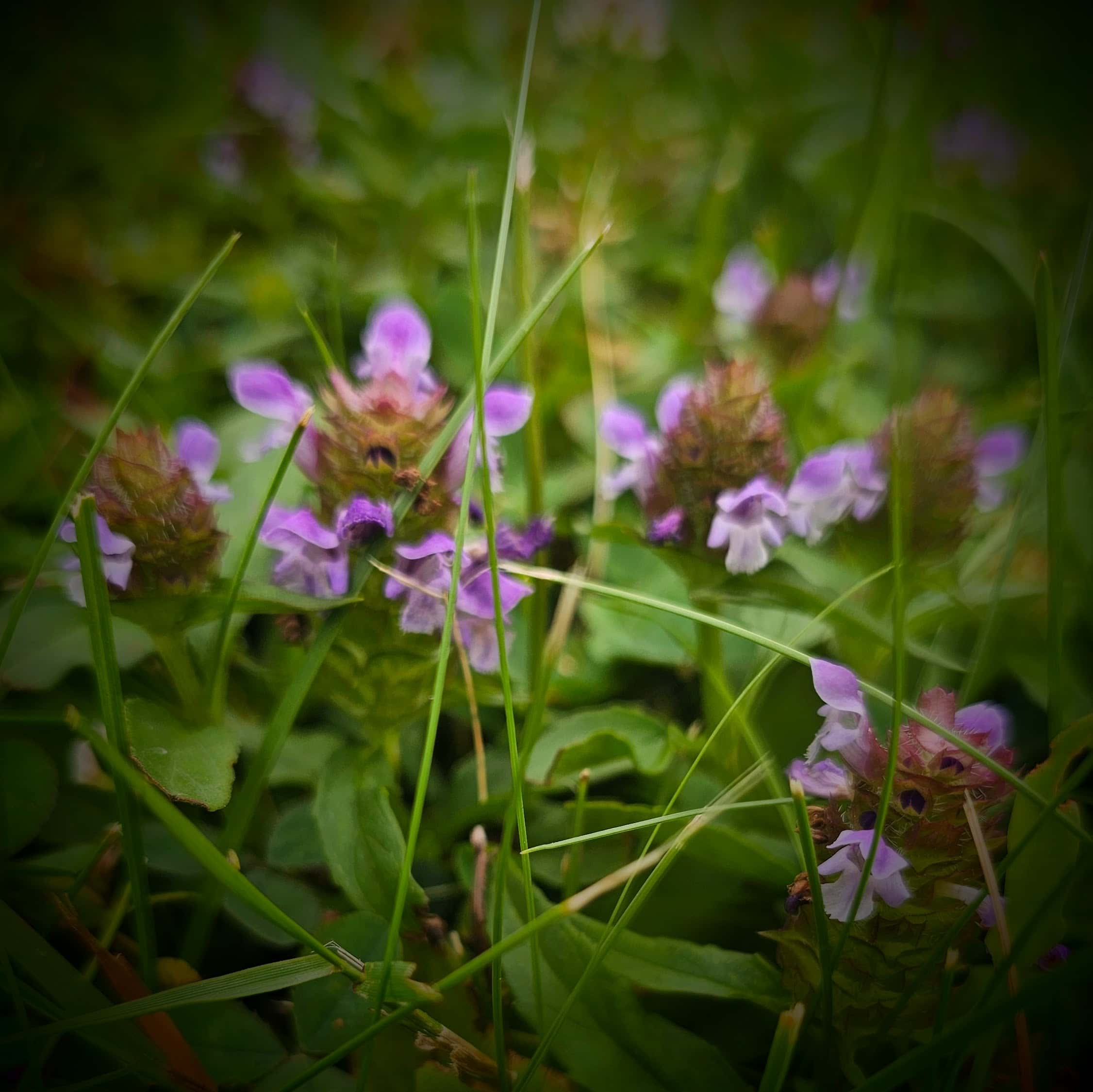
Quiet, low to the ground, and easy to miss: self-heal (Prunella vulgaris) is still flowering in lawns and along pathways throughout August. The little spikes of lavender-purple bloom are tiny mint-family treasures.
Self-heal earned her name honestly. She’s been used in folk traditions for centuries for sore throats, bruises, and gentle wound care. The whole flowering top is what you want—snipped just above a leaf node so the plant can keep blooming for the bees.
August Foraging: Purslane
10) Purslane
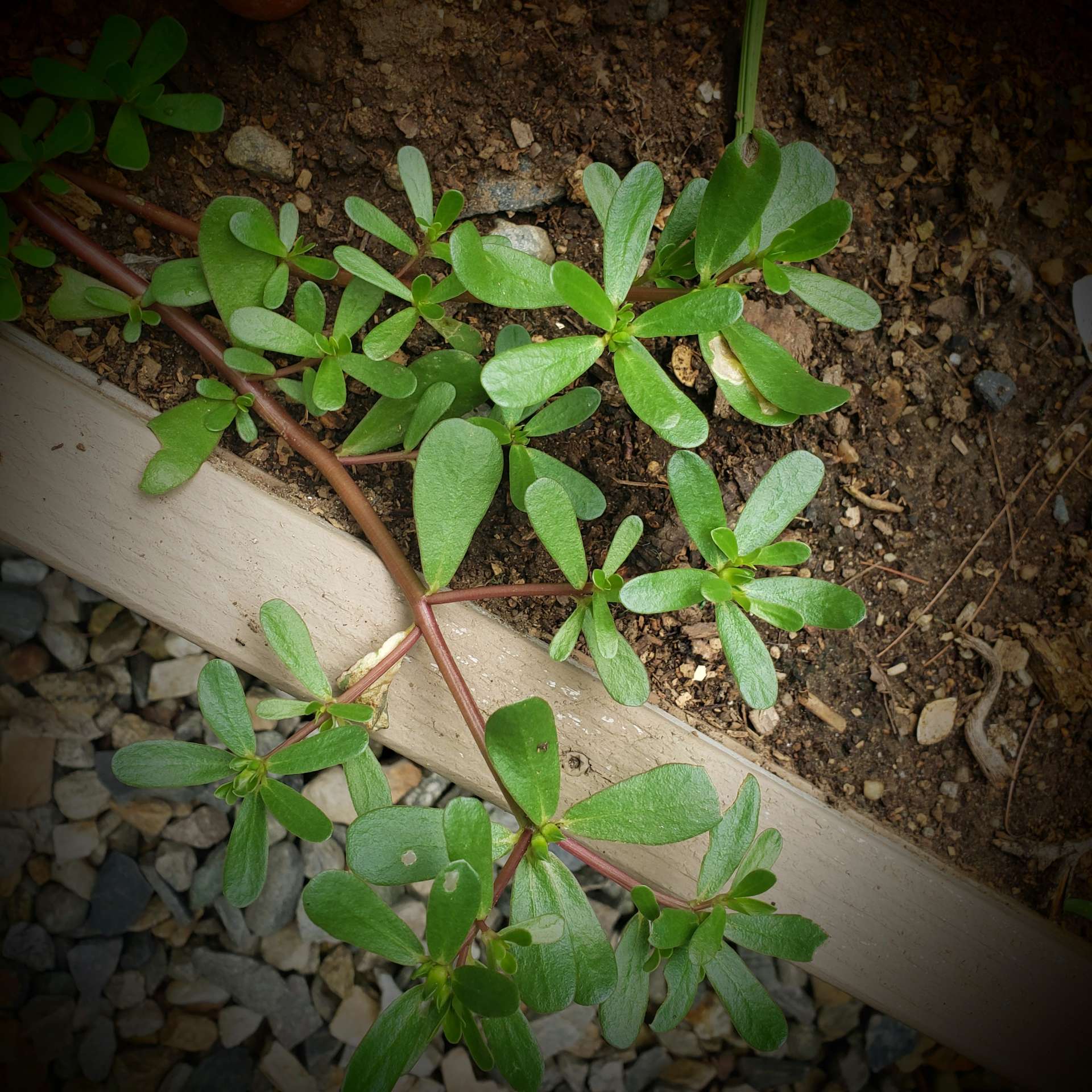
If your garden has been neglected during the August heat, you’ve probably got purslane (Portulaca oleracea) thriving in it. This succulent groundcover is one of the most nutritious wild greens out there—rich in omega-3 fatty acids, vitamins A and C, and a bright, lemony flavor.
I use her fresh in salads, lacto-fermented (see my fermented purslane recipe with ginger and garlic), or wilted into late-summer eggs. She loves heat and disturbed soil, which makes August her glory month.
August Foraging: Plantain
11) Plantain
Common, humble, and present almost everywhere we walk: plantain (Plantago major and P. lanceolata) is one of the most useful first-aid plants I know. In August, when the bees are still working and the mosquitoes are at their peak, a chewed plantain leaf pressed to a sting or bite is instant relief.
I gather a basket of leaves this month and dry them for winter salves, but mostly I just love that plantain is everywhere—a patient teacher that medicine grows underfoot, and we only have to learn to see her.
August Foraging: Milkweed Pods
12) Milkweed Pods (Young and Tender)
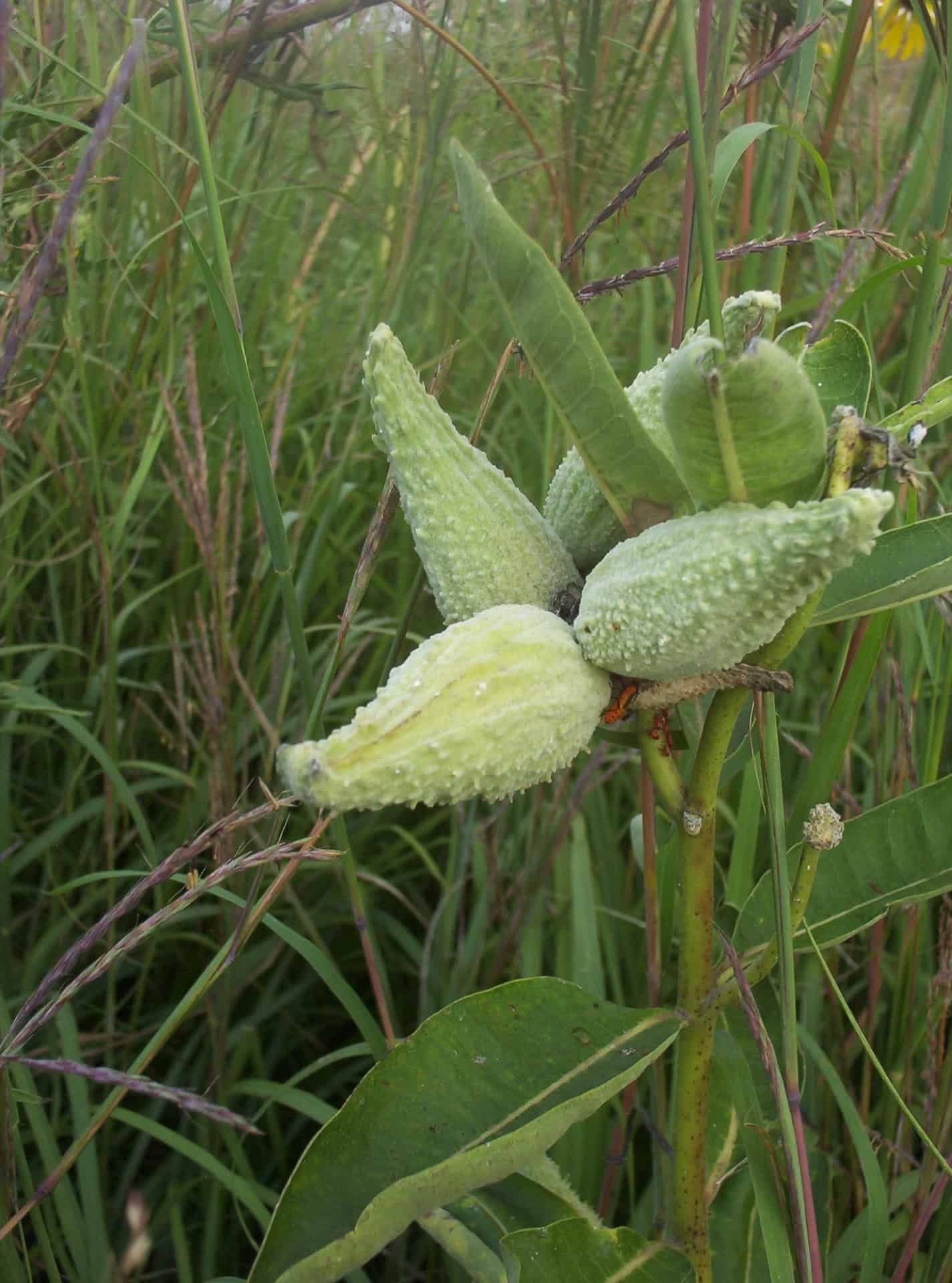
The flowers of common milkweed (Asclepias syriaca) have given way by August to young green seedpods—which, when picked very small (under two inches, before the silk forms), are one of the best wild vegetables we have here. They cook up something like okra, with a tender crunch and a green-bean flavor.
I harvest only a handful of pods from each plant and always leave plenty for the monarchs, who depend on milkweed for every stage of their lifecycle. A modest harvest from a generous patch causes the plant no harm. Read more about milkweed identification and the (very real) toxic look-alike dogbane in my full milkweed guide above.
A Quiet Closing
I think one of the gifts of August foraging is the way it slows us down at exactly the moment we most need to be slowed. The world is rushing toward harvest, toward the school year, toward whatever comes next. The plants are not. They are simply being themselves.
When I walk the meadow with my basket, I’m reminded that the medicine isn’t only in the leaves and flowers I’m gathering. It’s in the noticing. In the bending down. In the offering of thanks.
May your August basket be full.
Don't Forget to Subscribe to Our Newsletter
Get Freebies & Exclusive Content from Our Resource Library
Are you passionate about connecting with nature and exploring the world of herbal remedies? Join our community by subscribing to our weekly newsletter! As a subscriber, you’ll gain exclusive access to our members-only freebie and resource library, packed with valuable guides, recipes, and tips for living a more natural and sustainable lifestyle, closer to nature.
The Outdoor Apothecary website is intended for informational purposes only and should not be considered a substitute for professional medical advice. The information provided is not intended to diagnose, treat, cure, or prevent any disease. While we strive to provide accurate and up-to-date information, it is the reader’s responsibility to ensure proper plant identification and usage.
Please be aware that some plants are poisonous or can have serious adverse health effects. We are not health professionals, medical doctors, or nutritionists. It is essential to consult with qualified professionals for verification of nutritional information, health benefits, and any potential risks associated with edible and medicinal plants mentioned on this website.