
The Outdoor Apothecary is reader-supported. When you buy through links on our site, we may earn an affiliate commission. Learn more
Learn how to identify, forage, and manage wineberries (Rubus phoenicolasius)—a tasty yet invasive plant found across eastern woodlands and forest edges.
When I left my former town, it was a bittersweet decision. Overdevelopment was swallowing up the wild edges—trading forest for warehouses and treefall gaps for traffic and noise pollution. I knew I needed space to breathe, to begin again. Now, I’ve landed on nearly 12 acres of deciduous forest and open woods in the town where I grew up—a place where the land still speaks in the language of birdsong, rustling leaves, and the quiet hum of nature.
As I’ve started to explore this beautiful new property, one plant has stood out immediately: wineberries, or Rubus phoenicolasius Maxim. These luminous, ruby-red fruits catch your eye in the late spring and ripen through June, July, and into August, thriving in forest edges, open areas, and even wetlands. While undeniably beautiful and tasty, wineberries come with a story that’s not all sweetness.
What Are Wineberries?
Wineberries are a type of deciduous shrub in the rose family, closely related to raspberries and blackberries. Native to Asia, wineberries were introduced to the Eastern United States in the late 1800s as cultivars for raspberry breeding and quickly escaped cultivation. Today, invasive Rubus phoenicolasius is found in 20+ states, where it aggressively displaces native vegetation and thrives in treefall gaps, roadsides, open woods, and disturbed habitats.
You might also hear them compared to black raspberry or wild raspberry, but they have some distinct differences.
How to Identify Rubus phoenicolasius
Wineberry plants are unmistakable once you know what to look for. Here are the key features:
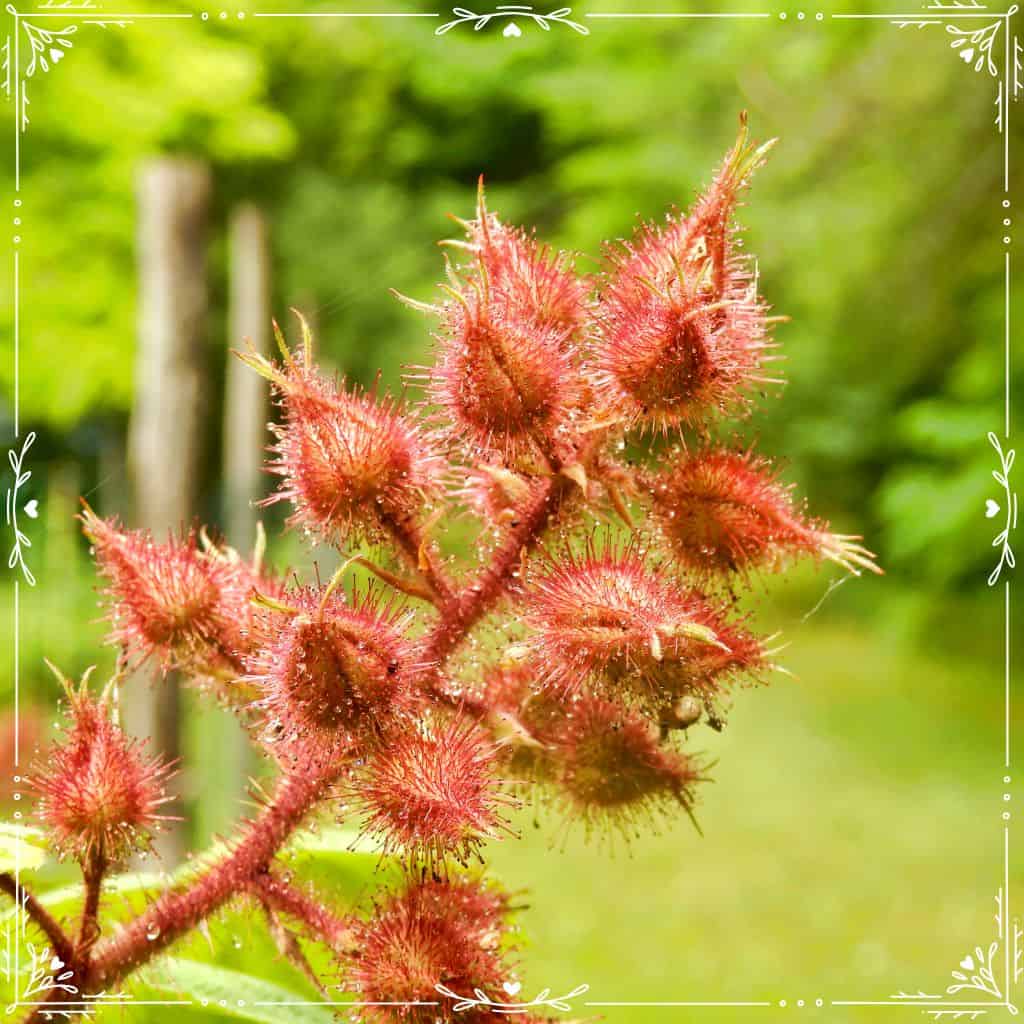
Stems (Canes): Covered in red glandular hairs and small spines, giving the canes a fuzzy, reddish appearance. These red stems are a key giveaway, especially in contrast to the darker canes of black raspberries.
Leaves: Alternate leaves with three leaflets (sometimes five) on each compound leaf. The undersides or underside of the leaves are silvery-white and fuzzy, with petioles that are also covered in reddish hairs.
Flowers: Small 5-petalled flowers with white petals and pointed sepals, usually blooming in early summer.
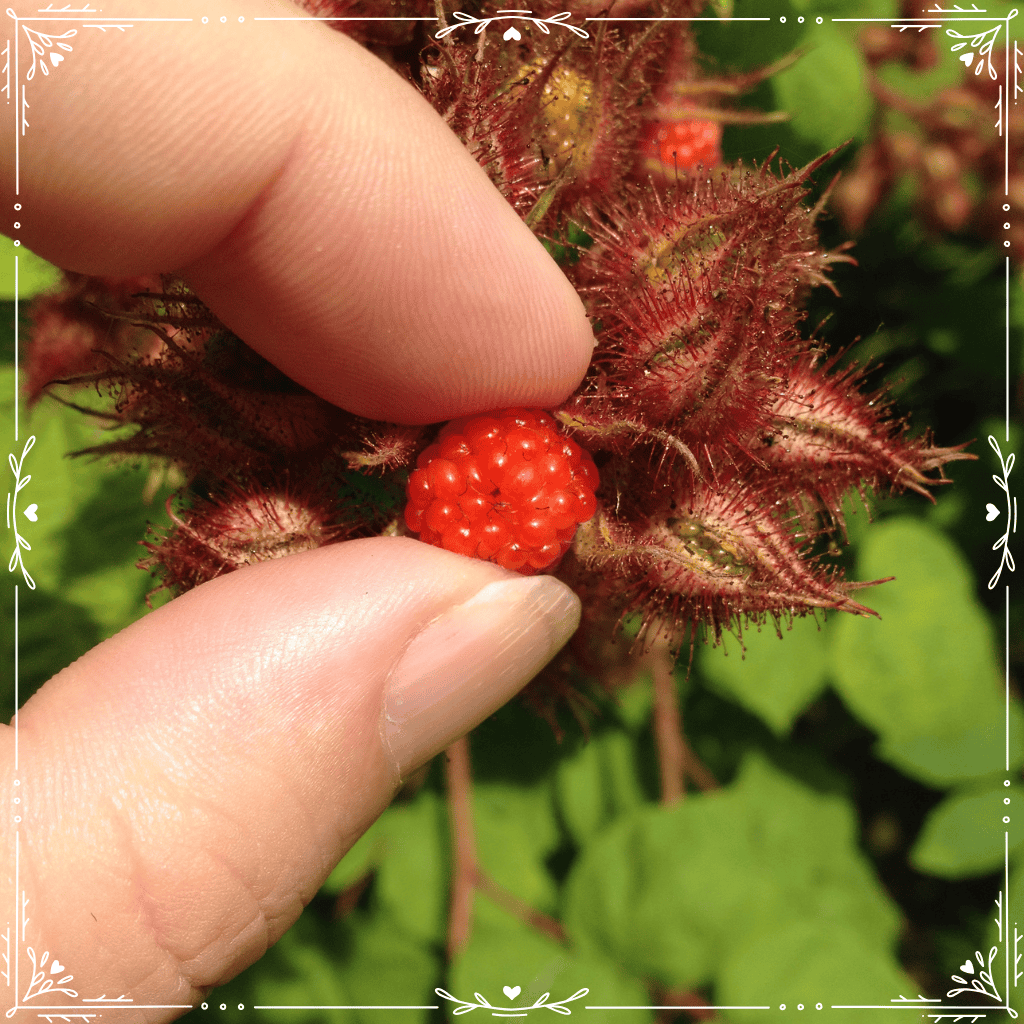
Fruit: The wineberry fruit is bright red-orange, almost translucent, and encased in a sticky calyx before ripening. They detach cleanly from the receptacle, much like raspberries.
These shrubs form dense thickets that shade out natives, limiting reproduction of more delicate forest species. Despite their appeal to small mammals and birds, they have serious consequences for native plant communities.

Foraging & Using Wineberries on My Land
As a bioregional herbalist, I’ve always believed in working with the plants that thrive where I live—especially those that offer nourishment or medicine. While wineberries aren’t native, they grow abundantly on my land, and I approach them much like I do autumn olive berries: with aggressive harvesting and a mindful eye toward their impact.
When I walk the trails I’m slowly carving through the woods, I gather wineberries in July and August, just as I do autumn olives later in the season. Their sweet-tart flavor—somewhere between a raspberry and a wild blackberry—is irresistible. I use them in jam oxymels, shrubs, and even wild-fermented sodas. I harvest with intention and enthusiasm, careful not to drop berries along the way. For me, gathering these fruits isn’t just about preserving seasonal abundance—it’s also a quiet act of stewardship. Each berry picked is one less chance for these invasive plants to spread.
Managing Invasive Wineberries: Rubus phoenicolasius
Despite their charm, wineberries are considered invasive due to their aggressive growth habit and tendency to form dense thickets that outcompete native vegetation. On my land, they’re just one of several invaders I’m working to manage, alongside Japanese barberry and bittersweet. Restoring this forest to a healthier, more balanced ecosystem—rich in native and native medicinal plants—is a slow, hands-on process that I’ve wholeheartedly embraced.
Here’s how I’m managing these invasives in a way that aligns with my values:
1. Hand-Pulling & Cutting
For small patches, I pull young plants by hand when the soil is soft and damp, making it easier to remove the roots. In larger thickets, I cut the entire plant back in early spring or late fall, before it flowers or fruits. With repeated cutting over multiple seasons, I’ve found the plants weaken significantly as their root buds lose energy.
2. Mowing
In areas where I can, like field edges and open areas, I mow down dense colonies. This regular disturbance helps reduce regrowth and gives native plants space to return.
3. Replanting with Purpose
After a few seasons of cutting and clearing, I begin reintroducing native vegetation—especially species that are medicinal, culturally significant, or beneficial to pollinators. Some of my favorites include spicebush, viburnum, goldenrod, and elderberry. Filling these spaces with strong native allies helps crowd out invasives and restore balance.
I don’t use herbicides, pesticides, or other chemical control methods on my land. It’s just not something I’m comfortable with. That said, I fully recognize that others may take a different approach—and that’s okay. Every piece of land, and every steward of it, is different. This is simply what’s working for me, and what aligns with my commitment to ecological healing through observation, persistence, and respect for the rhythms of nature.

Reclaiming the Land
Living close to the land means seeing it clearly—beauty, imbalance, and all. Rubus phoenicolasius may bear sweet, jewel-like fruit, but that doesn’t change the fact that it’s invasive and disruptive. It pushes out the native plants that belong here—plants that support pollinators, wildlife, and the deep-rooted integrity of this deciduous forest.
On my new land, I’m not taking a passive approach. My goal is to eradicate invasives like wineberry, Japanese barberry, and bittersweet. When I come across edible invasives, I forage with purpose—not with the gentle reverence I reserve for native medicinal plants, but with determination. I pick with wild abandon, careful not to drop a single berry, knowing that each one removed helps stop the spread.
But harvesting is just the beginning. I’m also working steadily to remove as many of the plants as possible, cutting them back season after season, digging where I can, and creating space for native species to reclaim their place. With each patch I clear, I’m making room for native shrubs, trees, and wild herbs to grow and thrive once more. This isn’t just land management—it’s restoration, remembrance, and an act of care for the future forest I hope to leave behind.

More to Explore
Don't Forget to Subscribe to Our Newsletter

Are you passionate about connecting with nature and exploring the world of herbal remedies? Join our community by subscribing to our weekly newsletter! As a subscriber, you’ll gain exclusive access to our members-only freebie and resource library, packed with valuable guides, recipes, and tips for living a more natural and sustainable lifestyle, closer to nature. Plus, you’ll gain access to our Freebie & Resource Library full of exclusive content for subscribers only.
Disclaimer:
The Outdoor Apothecary website is intended for informational purposes only and should not be considered a substitute for professional medical advice. The information provided is not intended to diagnose, treat, cure, or prevent any disease. While we strive to provide accurate and up-to-date information, it is the reader’s responsibility to ensure proper plant identification and usage.
Please be aware that some plants are poisonous or can have serious adverse health effects. We are not health professionals, medical doctors, or nutritionists. It is essential to consult with qualified professionals for verification of nutritional information, health benefits, and any potential risks associated with edible and medicinal plants mentioned on this website.
