
The Outdoor Apothecary is reader-supported. When you buy through links on our site, we may earn an affiliate commission. Learn more
Elderberry Protective Powers in June
As June arrives, bringing the sun to its zenith and the earth bursting with life, Elderberry (Sambucus canadensis) graces the edges of fields and forest clearings. Its creamy-white blossoms, clustered in umbels, bloom in sync with the summer solstice, casting a magical, dreamy aura across the verdant landscape. Rich in history and mysticism, Elderberry folklore intertwines deeply with myth, medicine, and midsummer magic, offering us a powerful ally during this energetically potent time.
Elderberry (Sambucus canadensis) is more than just a remedy for coughs and colds—it’s considered a sacred guardian of thresholds, watching over the thin places between worlds. This boundary-keeping quality is central to Elderberry folklore across cultures. Follow along as we delve into the Folklore of Elderberry.

Elderberry Folklore: A Tree Between Worlds
In European folklore, Elderberry is sometimes known as the “witch’s tree” or “tree of the witches,” revered as a vessel for protective spirits. Although often associated with Sambucus nigra in Europe, similar reverence is given to Sambucus canadensis in North America. Legend speaks of the Elder Mother, a guardian spirit inhabiting the tree who must always be approached with reverence. Cutting Elder without asking permission was believed to bring misfortune, emphasizing the sacred respect inherent in Elderberry folklore.
Among various Native American tribes, Sambucus canadensis was deeply honored for its medicinal virtues and spiritual strength. It embodied generosity, wisdom, and protection, symbolizing the powerful interplay between the seen and unseen worlds.
Hippocrates, known as the ‘Father of Medicine,’ referred to elder as his ‘medicine chest,’ highlighting its extensive healing properties. Dioscorides, in his seminal work De Materia Medica, noted the elder’s soft pith, which could be easily removed to create hollow reeds, a feature that found practical applications in various cultures.
The name ‘Sambucus’ is believed to derive from ‘sambuca,’ an ancient stringed musical instrument, indicating the elder’s association with music and sound. In Greek mythology, the god Pan crafted his pan flute from reeds, symbolizing the elder’s connection to musical enchantment and the natural world.
Archaeological findings reveal that elder was cultivated as far back as the Stone and Bronze Ages (3000–4000 BCE) in regions like Italy and Switzerland, underscoring its longstanding significance in human history.
Spiritual Significance and Magical Properties
Elderberry folklore associates this plant strongly with feminine energy, often aligned with the nurturing and wise crone archetype. Astrologically, Elderberry resonates with the zodiac signs of Sagittarius and Pisces, known for their expansive vision and intuitive depth. Its ruling planet is Venus, enhancing its connections to love, protection, and spiritual harmony.
Elderberry folklore highlights the plant’s potent spiritual qualities:
Protection: In Latvian traditions, elder was associated with the spirit Puškaitis, the Elder God, to whom offerings of bread and beer were made. In Norse folklore, the Hyldemoer or Elder Mother was believed to inhabit the tree, offering protection but also retribution if disrespected.
Healing: The elder’s medicinal applications were recognized by eclectic physicians like Finley Ellingwood and Harvey Wickes Felter, who documented its use in treating various ailments.
Dreamwork & Vision: In Celtic culture, elder was so esteemed that it was included among the 22 trees of the Ogham, the Celtic tree alphabet. Sleeping under an elder tree was believed to induce vivid dreams, connecting individuals to the fairy realm and otherworldly insights.
Midsummer Rituals: The elder’s blooming period around the summer solstice made it integral to midsummer celebrations, symbolizing the height of life and the thin veil between worlds.
Feminine Wisdom: The Elder Mother embodies the crone aspect of the feminine divine, representing wisdom, transformation, and the cyclical nature of life.
Above all, Elderberry teaches reciprocity. Elderberry folklore reminds us that we must build respectful relationships with plants—communicating, offering gratitude, and patiently awaiting permission to harvest. Read more about reciprocity with plants here: The Magic of Reciprocal Relationships with Plants in Herbalism

Herbal and Practical Uses in Elderberry Folklore
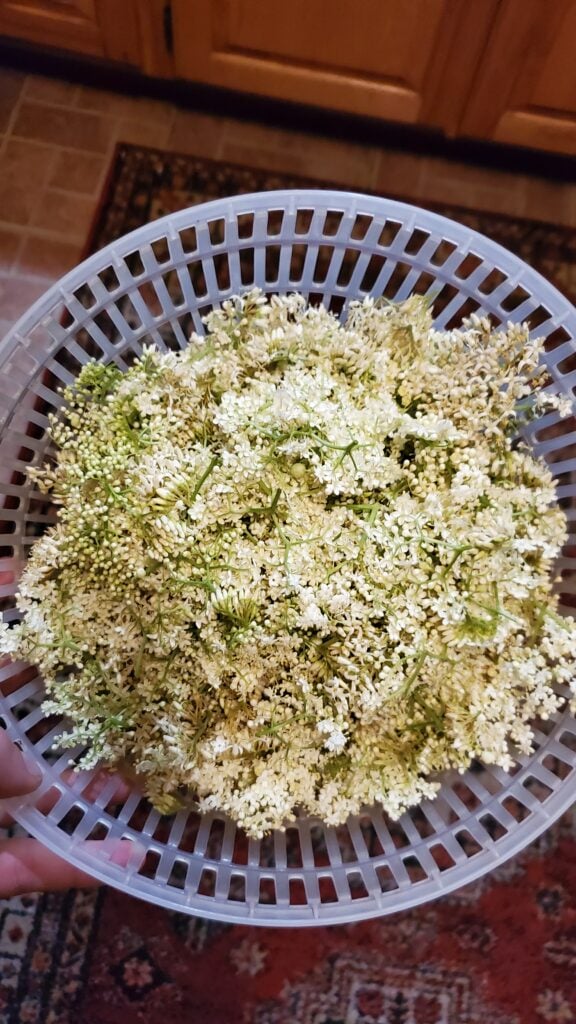
Elderflower Tea: Traditionally used to soothe fevers, support immunity, and ease inflammation.
Elderberry Syrup: A beloved immune-boosting tonic often enhanced with honey and warming spices.
Flower-Infused Oil: Ideal for soothing and moisturizing dry or irritated skin.
Floral Cordials: Delightfully fragrant beverages made from elderflowers, perfect for midsummer celebrations.
June Ritual: Elderflower Blessing Bowl
Honor the midsummer season and invite Elder’s protective and ancestral wisdom with this simple, beautiful ritual.
You’ll Need:
Fresh elderflowers (or fragrant alternatives)
A bowl of spring or rainwater
A small candle
A white cloth
Steps:
Place elderflowers in the water bowl, setting it in direct sunlight for at least one hour.
Light your candle beside the bowl, softly reciting: “Grandmother Elder, guardian wise, bless me with your sacred eyes. Protect and guide me day and night, from solstice sun to moon’s soft light.”
Gently cleanse your hands or face with this blessed water.
Cover the bowl with your white cloth and leave it on your altar or windowsill for the remainder of the day.
At sunset, pour the water back onto the earth, completing the offering.
June Journaling Prompts Inspired by Elderberry Folklore
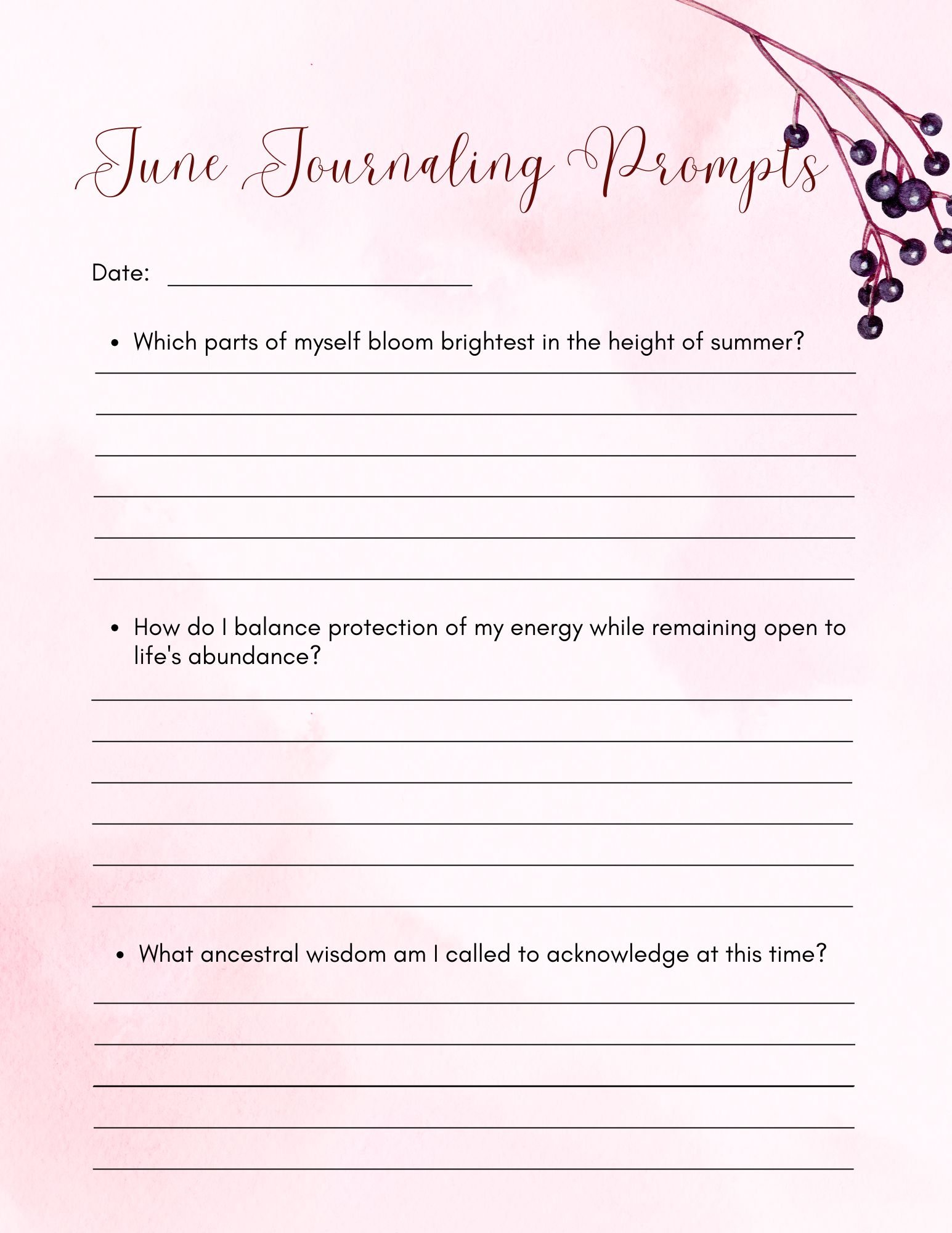
Which parts of myself bloom brightest in the height of summer?
How do I balance protection of my energy while remaining open to life’s abundance?
What ancestral wisdom am I called to acknowledge at this time?
What thresholds am I crossing, and how can I do so with intention?
In what ways can I better honor the reciprocity in my relationships with nature and others?

Nature-Aligned Activities for June
June invites us to step fully into nature’s rhythm and embrace the vibrant energies of midsummer. Elderberry folklore encourages us to weave meaningful practices into our daily lives that honor and align us with this magical plant and the natural world around us.
Prepare homemade elderflower syrup or cordial for your Midsummer festivities.
Decorate your sacred space or altar with elderflowers, sun symbols, and other natural elements.
Host an outdoor gathering or solstice circle to honor the turning of the wheel of the year.
Visit a local elder tree, offering water and thanks for its presence and blessings.
Read about the Elder Mother from traditional folklore and reflect in your journal.
Leave a ribbon, crystal, or other small offering near an elder bush as an act of gratitude.
Spend mindful time outdoors daily, noting the subtle changes in sunlight and shadow.
Embrace Elderberry folklore this June, drawing on its profound wisdom to deepen your spiritual practice and connection to nature’s rhythms.

More Elderberry To Explore
If you’re enchanted by the lore and uses of elderberry, please check out our other articles that delve deeper into this remarkable plant. Here are some we think you might like:
Each of these articles offers unique insights and practical guidance on incorporating elderberry into your life, whether through foraging, crafting remedies, or understanding its role in the ecosystem.
Feel free to explore these resources to deepen your connection with elderberry and the natural world. If you have any questions or need further information, don’t hesitate to ask!
Disclaimer:
The Outdoor Apothecary website is intended for informational purposes only and should not be considered a substitute for professional medical advice. The information provided is not intended to diagnose, treat, cure, or prevent any disease. While we strive to provide accurate and up-to-date information, it is the reader’s responsibility to ensure proper plant identification and usage.
Please be aware that some plants are poisonous or can have serious adverse health effects. We are not health professionals, medical doctors, or nutritionists. It is essential to consult with qualified professionals for verification of nutritional information, health benefits, and any potential risks associated with edible and medicinal plants mentioned on this website.
