
The Outdoor Apothecary is reader-supported. When you buy through links on our site, we may earn an affiliate commission. Learn more
There is a particular kind of summer afternoon that calls for sun tea.
You know the one. You’ve been out in the garden since morning, or working around the homestead, and somewhere around midday the heat just settles in and doesn’t move. Here in eastern Connecticut, summer doesn’t mess around. The humidity is brutal. You’re hot and sweaty and all you want is to sit under a shade tree or collapse onto the porch and not move for a while.
On those afternoons, I fill a jar with sun tea herbs.
What sun tea actually is
Sun tea is quite possibly the simplest herbal formulation you could make. In fact, anyone could do it. You put herbs in water. You set the jar in the sun. You wait. A few hours later, you have something cool, fragrant, and completely satisfying — brewed by nothing but sunlight and time.
It is a slow process. And that is exactly the point.
You can’t rush it. The sun is going to do what it does, and your job is to set the jar out and walk away. There’s something I really love about that.
I make mine in a large mason jar — a half-gallon, usually — and set it on the porch railing where it catches the most direct light. By late morning it’s already starting to color and smell like something good. By mid-afternoon it’s ready.
A word about safety
Sun tea lives in a warm zone — not hot enough to kill bacteria, but warm enough to grow it. That’s true for any sun tea, herbal or otherwise. So I keep it simple: clean jars, fresh cold water, and I don’t leave it sitting out all day. Once it’s done steeping, it goes straight into the fridge. I drink it within a day or two and never leave it out longer than four hours.
The Sun Tea herbs I reach for
This is where it gets interesting, and where I’ll be honest: I don’t make the same blend twice. Part of the pleasure of sun tea is letting the season decide. What sun tea herbs are abundant right now? What did I dry last month that’s still fragrant? What does my body want today?
That said, there are herbs I come back to again and again and make delicious sun tea.
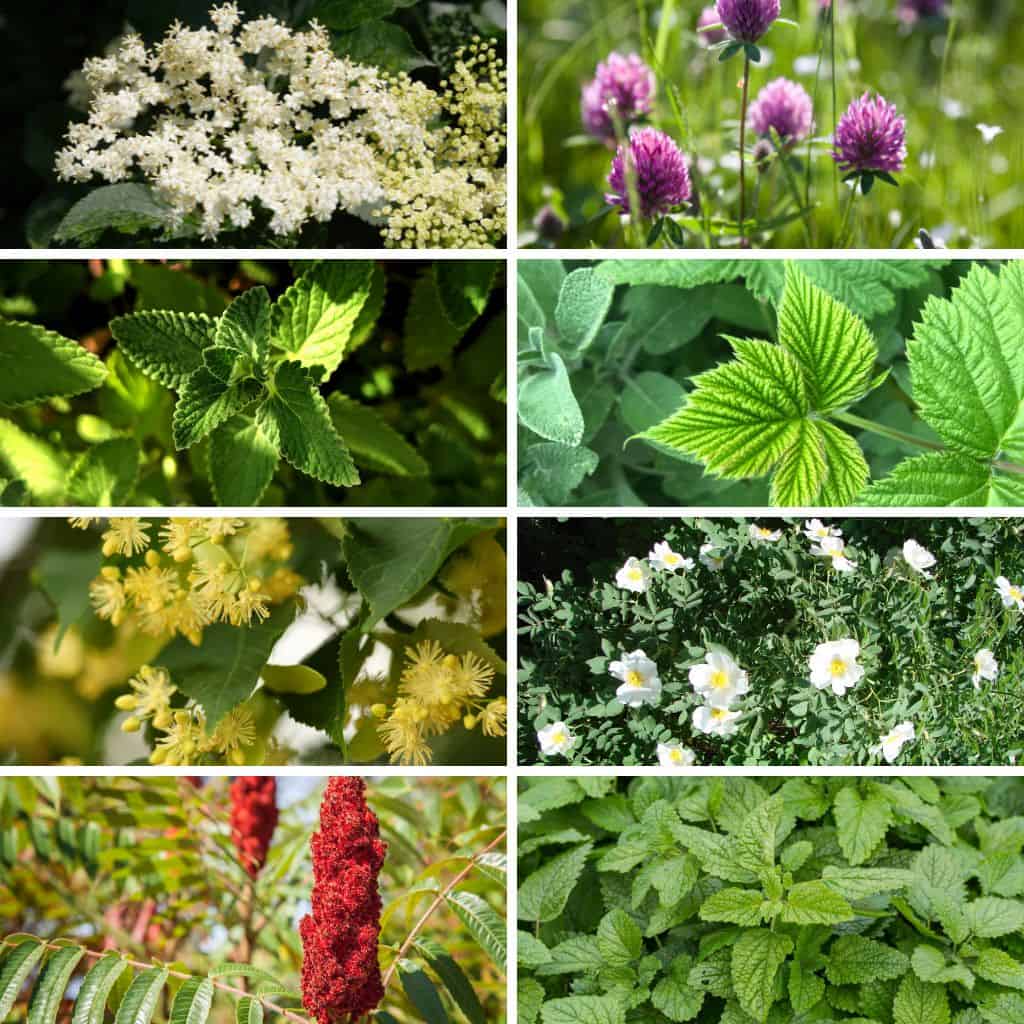
1) Mint
Always mint. Spearmint, peppermint, even wild bergamot (Monarda) when I have it — mint family herbs are made for sun tea. They’re cooling. Aromatic. They smell like the best version of summer. Fresh mint straight from the garden, a big handful stuffed into the jar, makes a tea so fragrant it almost doesn’t need anything else.
Peppermint is the more cooling of the two — it has a higher menthol content and gives that characteristic chill on the exhale. Spearmint is gentler, sweeter, more approachable. I use both depending on what I want.
2) Lemon balm
Lemon balm (Melissa officinalis) is one of my favorite summer herbs, but in sun tea it is something special. The flavor is bright and citrusy. It calms the nervous system and lifts the mood without making you sleepy — a gentle herb for a hot, humid day when you want to feel a little more relaxed.
Fresh lemon balm is best. It loses its volatile oils quickly when dried, so if you grow it, use it within the day.
3) Elderflower
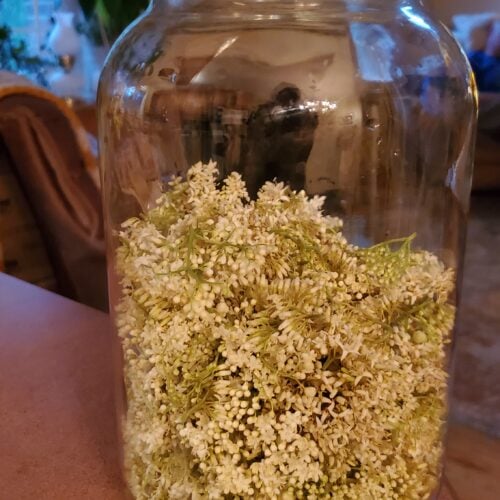
When I can get them, elderflowers make a sun tea that tastes genuinely magical. Floral & honeyed — the scent alone is worth it. Elderflower is also gently relaxing and supports the body during heat, which makes it a natural fit for a midsummer afternoon drink.
The window is short. Elderflowers bloom in late June and early July, and you have maybe two weeks before they’re gone. If you dried some this season, now is the time to use them.
4) Linden flower
Linden is another midsummer bloom that makes extraordinary sun tea. The dried flowers steep into something sweet and slightly honeyed — calming, cooling, deeply soothing. Traditional herbalism across Europe and Indigenous traditions of the Northeast have long known linden as a tea for anxiety, overheating, and restlessness.
On a hot afternoon, it is exactly right.
5) Red clover
Red clover blossoms (Trifolium pratense) steep into a mild, slightly sweet, nutritive tea that I think of as summer in a glass. Rich in minerals. Gentle. Pretty, too, if you leave a fresh blossom or two floating in the jar.
Red clover grows in abundance in fields and meadows throughout New England all summer. It’s one of those plants that asks very little and gives quite a lot.
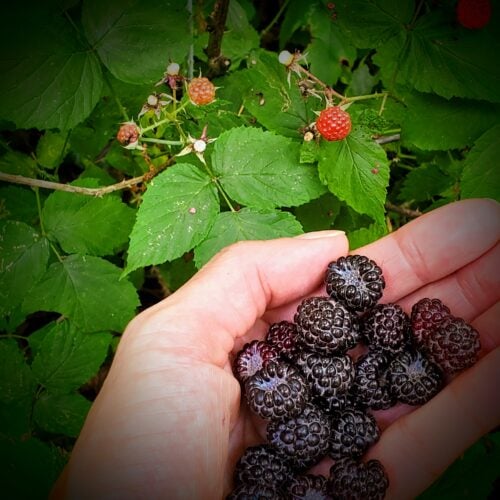
6) Raspberry leaf
Raspberry leaf (Rubus idaeus) tastes like a gentle, slightly tannic green tea. Mineral-rich and cooling, it’s a grounding addition to a blend that’s heavy on florals.
It’s also one of the most well-known women’s herbs in the Western herbal tradition. Raspberry leaf is deeply nutritive and has long been used to support the female reproductive system — toning the uterus, easing menstrual discomfort, and nourishing the body through all the stages of a woman’s life. It’s the kind of herb that works quietly and consistently, the way the best herbs do.
I dry raspberry leaves throughout the summer and lean on them heavily in sun tea. They’re abundantly available, they dry well, and they add body to blends that might otherwise taste too watery or weak.
7) Staghorn sumac
Staghorn sumac (Rhus typhina) is one of the most underused tea herbs in New England — and one of the most native. It grows along roadsides, forest edges, and disturbed ground throughout Connecticut, often in dense colonies that nobody thinks twice about. The deep red berry clusters, called bobs, ripen in late summer and make a tea that is tart, bright, and cranberry-like in both color and flavor. Think of it as a local, forageable answer to hibiscus.
I steep the bobs cold or in sun tea — heat can actually make sumac tea bitter, so the slow, gentle warmth of the sun is the perfect method. A small cluster goes a long way. The color alone is worth it: deep pink-red, vivid in the jar, beautiful in the glass.
Staghorn sumac is easy to identify and abundantly available. It is not to be confused with poison sumac, which grows in wet, swampy areas and has white berries. Staghorn has fuzzy red bobs and grows in dry, sunny spots. Once you know it, you’ll see it everywhere.
8) Wild rose petals
You don’t need a garden for this one. Two wild roses grow in abundance throughout Connecticut — dog rose (Rosa canina) and multiflora rose (Rosa multiflora) — and both make beautiful sun tea. Multiflora is actually my preference here. It’s invasive, it’s everywhere, and harvesting it freely feels like the right thing to do. The petals are small but fragrant, and they steep into something delicate and lightly floral.
Harvest in the morning when the scent is strongest, from blooms that are fully open but not yet browning. Use more than you think you need — the flavor is subtle and generous handfuls reward you. And make sure you’re harvesting from plants that haven’t been sprayed. Roadsides can be risky; forest edges and fields are safer.
Fresh rose petals in a sun tea jar on a summer afternoon is one of those simple things that feels quietly extravagant.

How I make it
There’s no formula. That’s the whole point.
I pick a jar. I look at what I have — what’s fresh in the garden, what’s dried in the pantry, what I feel like tasting. I fill the jar loosely with herbs, cover with cold filtered water, and add a squeeze of lemon juice or drop in a few slices. The lemon does double duty — it brightens the flavor and the acidity actually helps keep bacteria at bay, which is a nice bonus on top of tasting good. Then I cap the jar and set it in the sunniest spot on the railing.
Then I go do other things.
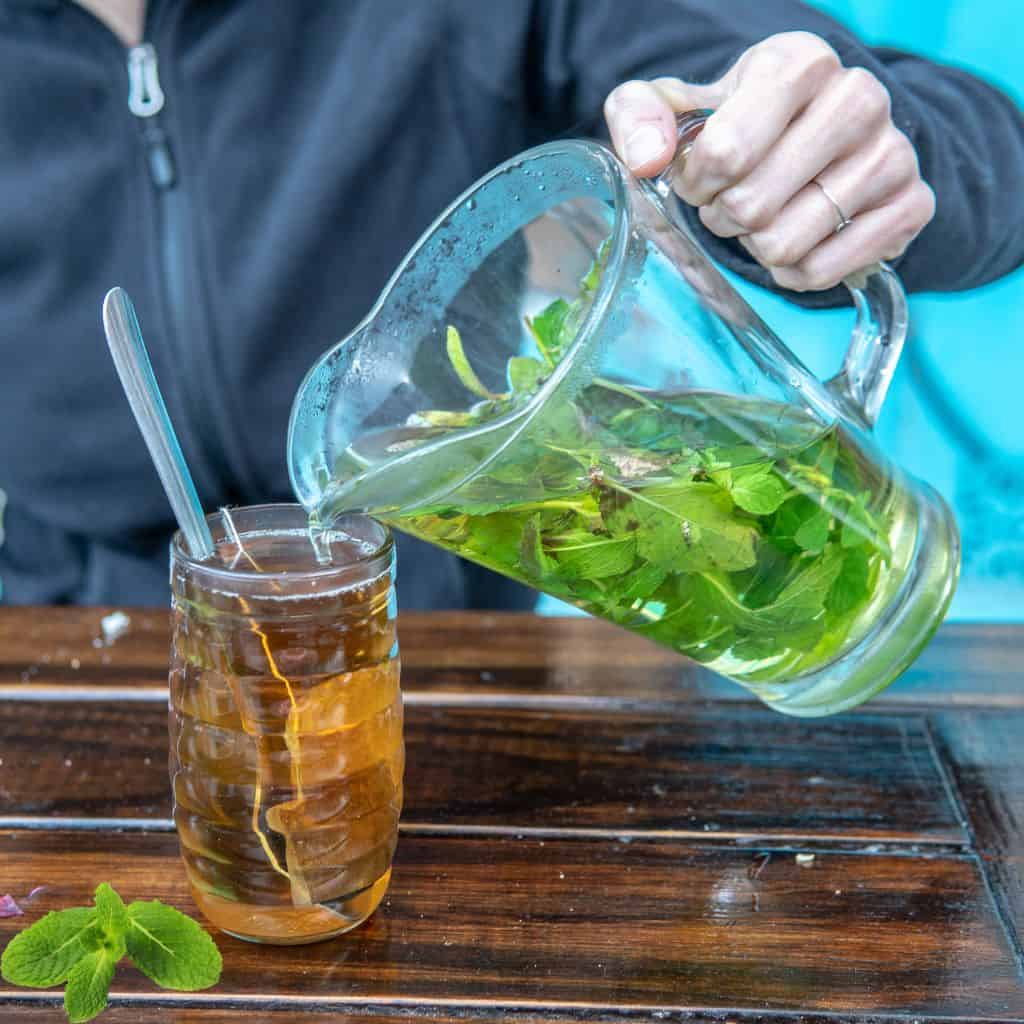
Two to four hours later, I strain it into a pitcher, add a little raw honey if the herbs want sweetening, and put it in the fridge to finish cooling. By late afternoon, it’s ready.
I drink it outside if I possibly can. In a glass with ice. Maybe on the porch steps, watching whatever the garden is doing.
That’s the whole ritual. That’s all it takes.
A few blends I love
If you’re looking for a place to start, here are some combinations that have become favorites:
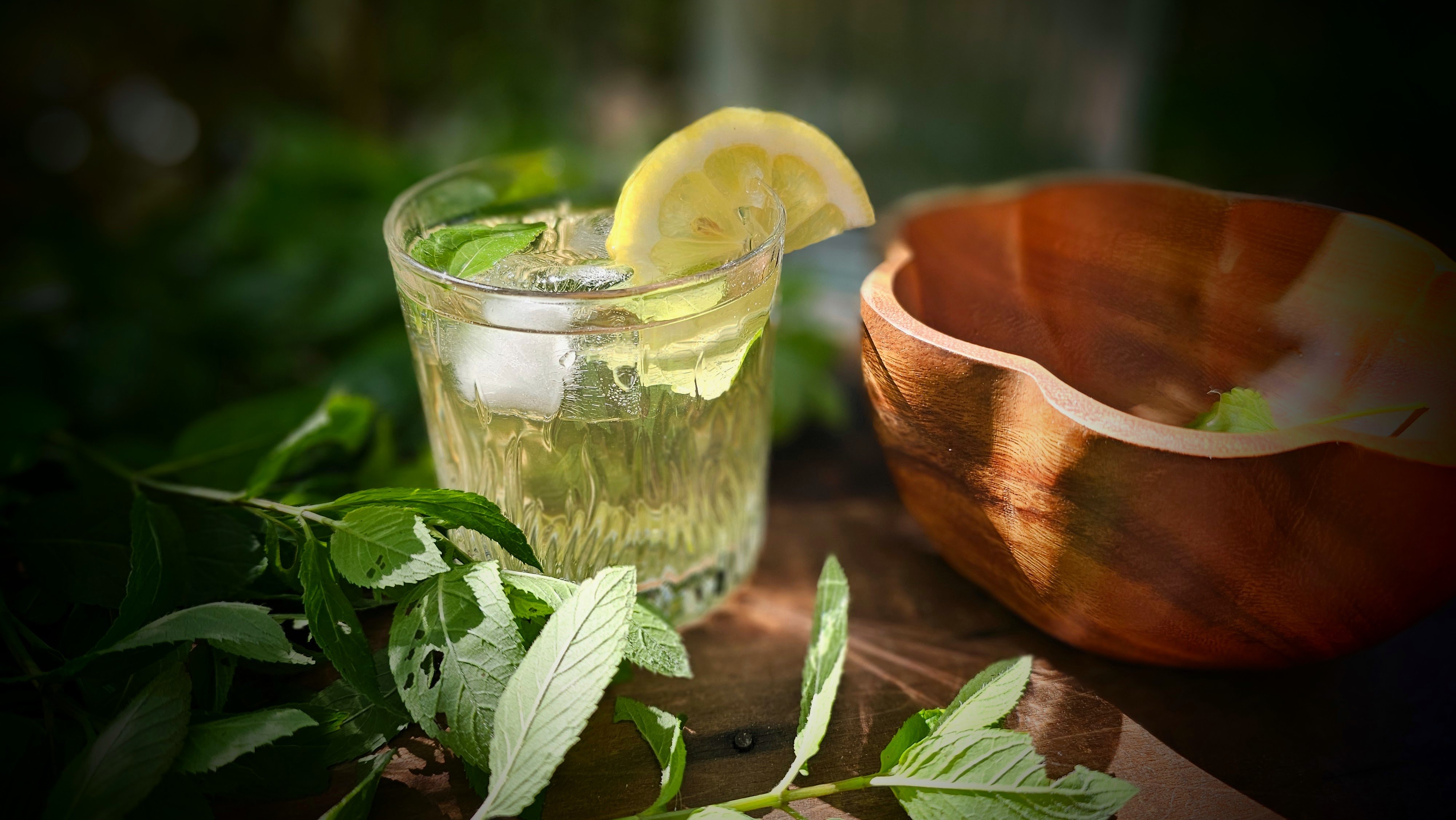
Cooling & calming — linden flower, lemon balm, spearmint. For the hottest afternoons when everything feels like too much.
Bright & tart — staghorn sumac, rose petals, a little mint. Vivid and refreshing. Looks stunning in the jar.
Summer meadow — red clover, raspberry leaf, elderflower. Gentle, nutritive, slightly sweet. Tastes like a walk in a July field.
Simple & classic — fresh mint, lemon balm, a slice of lemon. The one I make most often because it requires almost no thought.
The real reason I make sun tea
I’ll be honest. Sun tea isn’t the most efficient way to make herbal tea. I could pour boiling water over these same herbs and have something drinkable in ten minutes.
But that’s not what I’m after on a hot summer afternoon.
What I’m after is the ritual of it. The slowing down. The act of filling a jar with plants I’ve gathered or grown or dried with my own hands, setting it in the light, and letting the sun do what it does. It’s a way of being in the season instead of just passing through it.
Summer doesn’t last. These flavors are specific to right now, to this particular summer, to this particular patch of afternoon light falling across your porch.
Sun tea is a way of tasting that.
What herbs are you steeping this summer? I’d love to know what’s in your jar.
You might also enjoy:
- Mint and Lemon Balm Iced Tea Recipe: Cool and Calming
- Staghorn Sumac: How To Identify, Harvest, And Use This Wild Plant
- Yarrow Folklore: Warrior Wisdom and Summer Magic
- Elderflower: Foraging, Cordial & Medicine
- The Magic and Traditional Uses of the Basswood Tree
- Joe-Pye Weed Folklore: The Healer’s Herb of Summer
Don't Forget to Subscribe to Our Newsletter

Are you passionate about connecting with nature and exploring the world of herbal remedies? Join our community by subscribing to our weekly newsletter! As a subscriber, you’ll gain exclusive access to our members-only freebie and resource library, packed with valuable guides, recipes, and tips for living a more natural and sustainable lifestyle, closer to nature.
Disclaimer:
The Outdoor Apothecary website is intended for informational purposes only and should not be considered a substitute for professional medical advice. The information provided is not intended to diagnose, treat, cure, or prevent any disease. While we strive to provide accurate and up-to-date information, it is the reader’s responsibility to ensure proper plant identification and usage.
Please be aware that some plants are poisonous or can have serious adverse health effects. We are not health professionals, medical doctors, or nutritionists. It is essential to consult with qualified professionals for verification of nutritional information, health benefits, and any potential risks associated with edible and medicinal plants mentioned on this website.
