The Outdoor Apothecary is reader-supported. When you buy through links on our site, we may earn an affiliate commission. Learn more
Self-Heal (Prunella vulgaris): Foraging and Identifying This Humble Ground cover Herb
At our new home, something beautiful is happening beneath my feet—self-heal (Prunella vulgaris) is absolutely carpeting the ground, forming a lush, green understory with spikes of lavender flowers poking up through the clover and grass. As a bioregional herbalist, I find deep joy in working with the native plants that grow naturally around me, and self-heal—also known as woundwort, brownwort, or even carpenter’s herb—has quickly become one of my favorite allies.
This small perennial herb might be dismissed by some as just another lawn “weed,” but to me, it’s medicine in motion. Let’s take a closer look at how to identify, forage, and appreciate this valuable member of the mint family—one that’s just as beneficial to bees, butterflies, and insects as it is to our own wellness journeys.

What Is Self-Heal?
Self-heal is a low-growing perennial that thrives in disturbed soils, lawns, and wild open places. Found across Europe, Asia, and North America, it spreads by stolons and grows especially well in partial shade but tolerates full sun if soil moisture is adequate.
It’s been used in traditional folk medicine for centuries to support everything from sore throats and bruises to inflammatory conditions like Crohn’s disease and inflammatory bowel disease. Its long use as an everyday wound care plant is why it’s called “self-heal”—this little herb was once as common in the household apothecary as bandages.
How to Identify Prunella vulgaris
Here’s how I identify this plant when I’m out in the field:
Growth Habit: A perennial that grows low and spreads through creeping stems and rooting nodes. It forms dense mats that can help suppress other weeds.
Leaves: The leaf blades are ovate with rounded lobes and soft teeth along the edges. The leaves grow in opposite pairs along the stems, with short petioles connecting them.
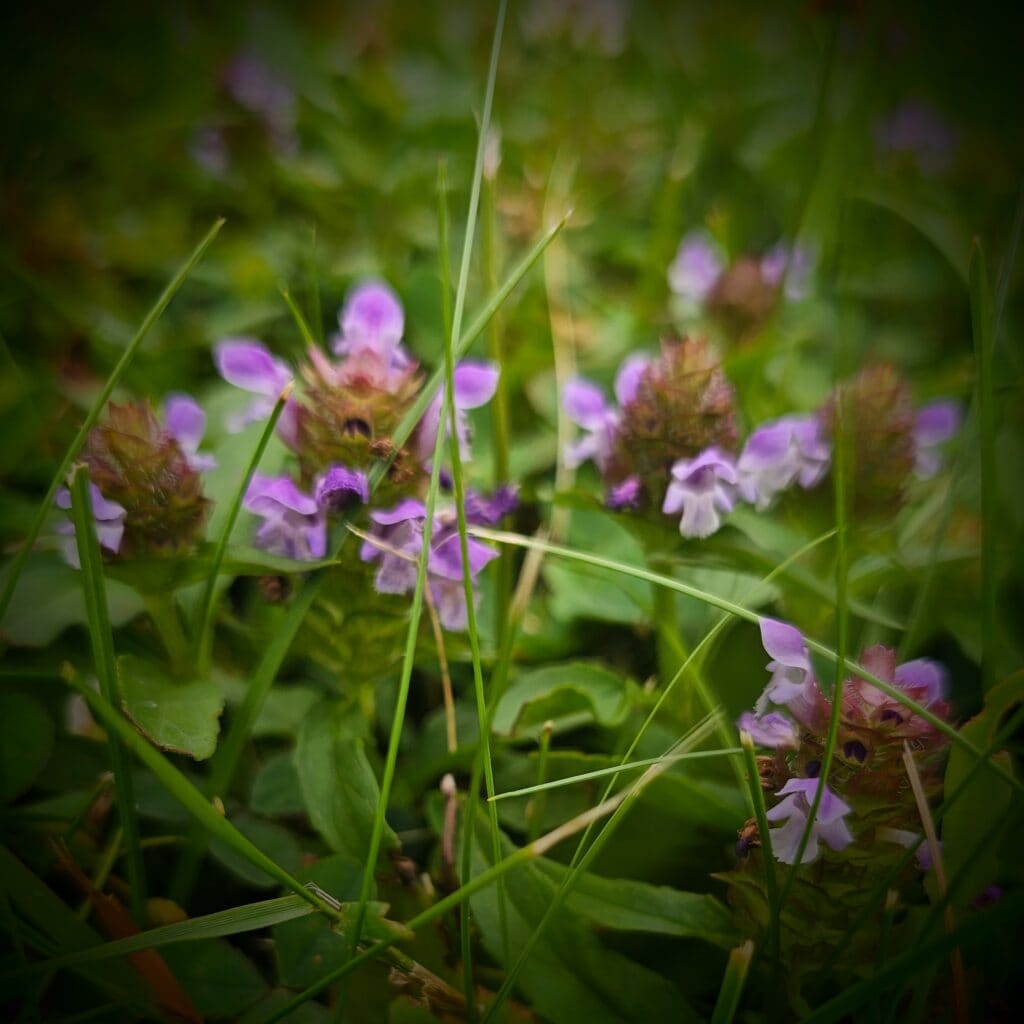
Flowers: The flowering heads consist of tight clusters of tubular blooms ranging from purple to deep lavender. Each flower has a distinct two-lipped structure: a hooded upper lip and a fringed lower lip.
Bracts & Calyx: Below the flower, you’ll notice reddish-purple bracts that support the flower’s calyx, a structure made up of tiny sepals. The corolla is where the flower color really shines, housing the stamens that produce pollen.
Scent and Taste: Like many mints, self-heal has a slightly bitter, earthy scent. Its flavor is grassy with a hint of astringency, due to the presence of tannins.
Where to Find Self-Heal
Self-heal thrives in lawns, meadows, the edges of woodlands, and even cracks in pavement. It prefers moist soil, but once established, it’s fairly drought-tolerant. It grows best in places where it can get a mix of sun and shade, especially in cooler climates like ours in the Northeast.
I often find it mingling with dandelions and clover, creating a vibrant patchwork of color and healing energy. And once it sets in, it spreads easily with very little care—making it a perfect ground cover in herbal gardens.
Foraging and Harvesting Tips
Harvest self-heal when the flowers are in bloom—usually from late May through early fall. The entire flowering head, along with a few inches of stem and leaf, can be used.
Here’s how I harvest it:
Snip the larger plants just above a leaf node.
Collect in the morning after the dew has dried for best germination potential if you’re saving seed.
Dry the plants on a screen in a dark, warm, ventilated area.

How I Use Self-Heal
While I’m not a clinical herbalist and cannot recommend dosages, I can share what I do personally.
I love working with Prunella vulgaris in:
Tea: Fresh or dried, steeped as a simple herbal tea. I drink it when I feel a cold coming on or when my throat feels dry.
Salads: Young leaves can be added raw to salads for a mild, earthy green.
Soups & Stews: Older leaves can be tossed into soups or stews as a nourishing green—especially in the early spring before flowering.
Topical Uses: I make a cooled tea for compresses on minor wounds or bruises.
Oxymels: Combined with raw vinegar and local honey, it makes a delicious tonic.
This plant was once part of everyday healthcare, and for good reason—it’s packed with tannins, flavonoids, and other compounds that have traditionally been used for inflammation, skin support, and overall wellness.
Growing and Propagation
Self-heal is incredibly easy to grow. Propagation is typically by seed or division of stolons. Seeds need cold stratification to germinate, so if you’re starting from scratch, consider planting in the fall or using the fridge method.
You can also divide established clumps in spring or fall. Once planted, Prunella vulgaris will quietly and persistently spread, needing little more than occasional water and a space to grow.

A Groundcover With Purpose
I often say the plants that come to us are the ones we need—and self-heal is a perfect example. At our new home, it’s growing with such vigor and abundance, I can’t help but think it’s offering its support for this next chapter.
Whether you’re looking to add low-maintenance herbs to your lawn, draw in pollinators like bees and butterflies, or simply explore the rich traditions of local medicine, Prunella vulgaris is a quiet powerhouse worthy of your attention.


More to Explore:
If you’re feeling inspired to deepen your connection with the plants around you or are looking for more seasonal herbal wisdom, I’ve got you covered. Here are a few of my favorite articles that pair beautifully with the themes of self-heal—each one rooted in ancestral knowledge, bioregional herbalism, and the slow rhythms of the seasons.
Create a Healing Tea Garden: 41 Best Herbs – This guide highlights self-heal (Prunella vulgaris) for its support of gut health, inflammatory bowel disease (like Crohn disease), diarrhea, mouth and throat wellness, and wound healing
10 Easy Spring Herbs to Forage for Wellness – A beautifully written introduction to seasonal wildcrafting that complements our deep dive into self-heal and encourages mindful, ethical foraging .
How to Make Powerful Herbal Glycerites – Learn to craft alcohol-free tinctures from glycerin—perfect for preserving the gentle qualities of herbs in a sweet, child-friendly extract.
5 Easy Herbal Salve Recipes – Discover how to create soothing botanical salves, ideal for using self-heal in topical applications for minor wounds, bruises, and inflammation.
Don't Forget to Subscribe to Our Newsletter

Are you passionate about connecting with nature and exploring the world of herbal remedies? Join our community by subscribing to our weekly newsletter! As a subscriber, you’ll gain exclusive access to our members-only freebie and resource library, packed with valuable guides, recipes, and tips for living a more natural and sustainable lifestyle, closer to nature. Plus, you’ll gain access to our Freebie & Resource Library full of exclusive content for subscribers only.
Disclaimer:
The Outdoor Apothecary website is intended for informational purposes only and should not be considered a substitute for professional medical advice. The information provided is not intended to diagnose, treat, cure, or prevent any disease. While we strive to provide accurate and up-to-date information, it is the reader’s responsibility to ensure proper plant identification and usage.
Please be aware that some plants are poisonous or can have serious adverse health effects. We are not health professionals, medical doctors, or nutritionists. It is essential to consult with qualified professionals for verification of nutritional information, health benefits, and any potential risks associated with edible and medicinal plants mentioned on this website.
