The Outdoor Apothecary is reader-supported. When you buy through links on our site, we may earn an affiliate commission. Learn more
What to forage in September in New England — goldenrod, elderberry, sumac, hickory, mullein, and more. A bioregional guide to the season’s first wild harvest.
September marks a seasonal transition across New England, bringing cooler nights, shorter days, and subtle changes throughout the landscape. While many gardens begin to wind down, fields, forests, and hedgerows continue to offer an abundance of wild edible and medicinal plants. It’s an excellent time to forage, as many species reach their peak before autumn frosts arrive.
This guide highlights some of the most common plants to forage in September throughout New England and the Northeast. Whether you’re just beginning to explore wild foods or have years of foraging experience, you’ll find seasonal opportunities to harvest responsibly while deepening your connection to the natural world.
As always, only harvest plants you can confidently identify, gather sustainably by leaving plenty for wildlife and future growth, and take only what you can realistically use. Ethical foraging helps ensure these valuable plants remain healthy and abundant for generations to come.
What to Forage in September
Goldenrod: What to Forage in September
Goldenrod: The Golden Threshold Plant
You’ll see her before you look for her. Goldenrod (Solidago spp.) lights up roadsides, meadows, and field edges right now with plumes so bright they almost look electric against the fading green. She’s often blamed for allergies that ragweed actually causes, a case of mistaken identity I love setting the record straight on.
I fell for goldenrod long before I knew her name. As a girl, I used to ride the school bus and stare out the window at those golden roadsides, not knowing what I was looking at, just knowing I loved it. She often grows right alongside purple New England asters, and I remember thinking how striking that yellow and purple looked together. Turns out they’re opposites on the color wheel, which is probably exactly why my eye kept catching on them.
It turns out there’s real science behind that pull. Purple and gold are complementary colors, meaning they sit across from each other on the color wheel and intensify one another when placed side by side, for human eyes and for bee eyes alike.
Botanist Robin Wall Kimmerer writes beautifully about this exact pairing in her book Braiding Sweetgrass(a book I love so much I’ve read and reread it more times than I can count). She describes how goldenrod and asters growing together aren’t just a coincidence of bloom time. That bold color contrast helps both flowers stand out more to pollinators than either would alone, so the two plants end up drawing in more bees together than they would separately. Kimmerer calls it a kind of reciprocity: beauty and biology working as one. I love that the thing that caught a little girl’s eye on a school bus turns out to be the same thing that calls the bees home.
Harvest the leaves just as the flowers begin to open, and use fresh flowers for tea, since they tend to turn to fluff when dried. She steeps into a golden, sunshine colored infusion that feels like the perfect way to mark this turn of the season.
By September, elderberries have usually darkened to that deep purple black that tells you they’re ready. If you found the flowers back in June or July, this is the payoff. Always cook elderberries before eating (raw berries can upset your stomach), and never eat the red berried species.
I still remember walking our property for the very first time, before we’d even bought it, and spotting elderberry bushes already growing here. I knew right then I’d be making syrup for the winter ahead. There’s something about a new piece of land handing you a gift like that before you’ve even signed the papers.
This is prime syrup season. I make mine with ginger and a good pour of raw honey, and it becomes the backbone of my whole winter wellness routine.
Those deep red, fuzzy sumac cones aren’t poison (that’s a different plant entirely), and I always spend a moment on identification because the confusion is so common. Staghorn sumac berries are ready right around now, and they’re wonderfully tart, almost lemony.
This is one of the small joys of a new piece of land. I found mine right on the property, tucked in among the edges I’m still getting to know. Half the fun of this move has been wandering the new town and stumbling onto patches like this one, plant by plant, season by season.
I turn mine into a spice blend I reach for all autumn long, and a cold steeped “sumac ade” that tastes like wild pink lemonade.
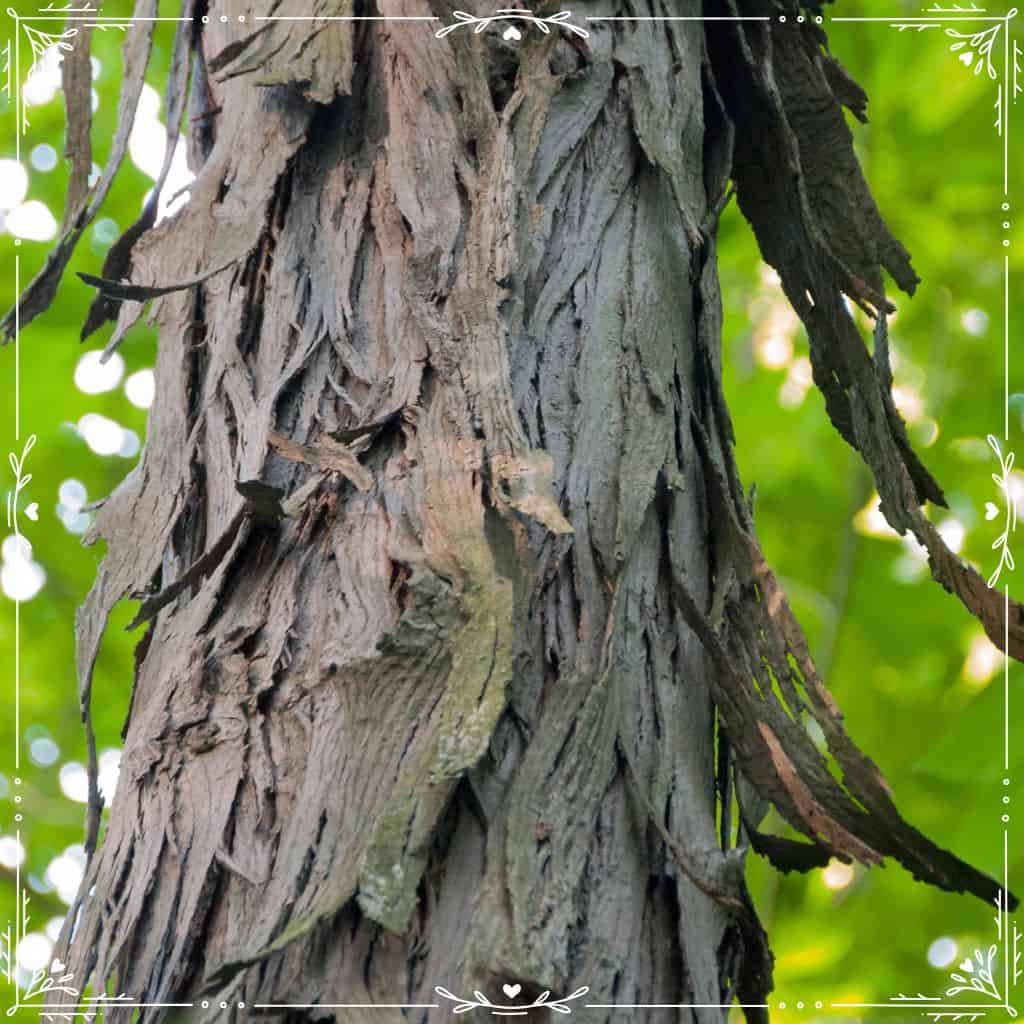
Shagbark hickory is one of those trees that rewards patience. The nuts are just beginning to drop this month in many parts of New England, and the bark itself can be simmered into a smoky sweet syrup that tastes like nothing else in the pantry.
This one I found close to home too, on my own explorations through this new town of mine. There’s something special about learning a place through its trees: a hickory here, a sumac patch there, until the map in your head starts to fill in.
Mullein’s tall flowering stalks are winding down by September, but this is exactly when her roots come into their own. If you’re working with a first year rosette, fall is the ideal time to dig the root for tinctures supporting urinary and respiratory health.
My late father-in-law was the one who first introduced me to mullein, and I think of him fondly every single time I spot her soft, velvety leaves along a roadside or field edge.
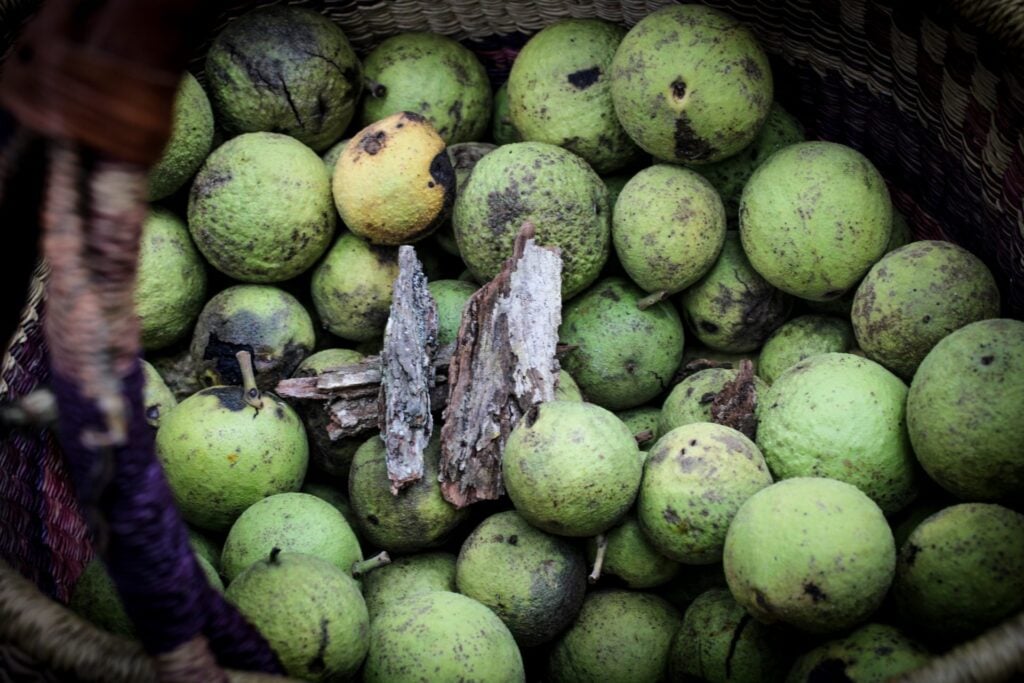
The green husks are dropping now, staining hands and driveways alike (a rite of passage, honestly). I forage mine from a spot I return to every year, not on my own property but close by. Last season I learned this lesson the hard way. I was wearing gloves while hulling, but one had a tiny hole in a fingertip I hadn’t noticed. That finger stayed stained for a solid week. Consider yourself warned: check your gloves first.
Inside is one of the most underused wild foods in New England, rich, earthy, and worth the work of hulling and cracking.
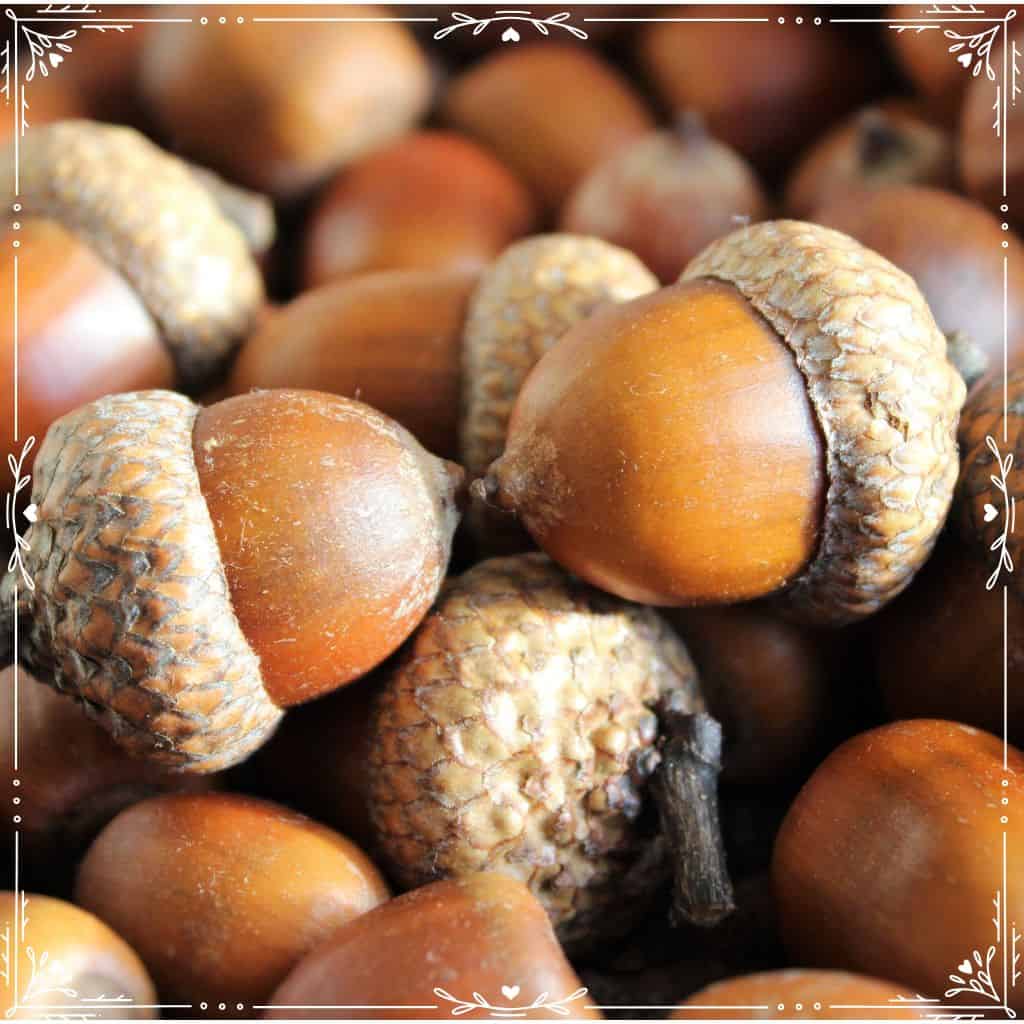
Late September is when the first acorns start dropping in earnest, especially from white oaks. They need a leaching process to remove the bitter tannins before they’re edible, but once you’ve done it, you have access to one of the most nutrient dense wild foods in the forest, a staple that fed people here for thousands of years.
Depending on your microclimate, the earliest rose hips are just beginning to blush red by month’s end. I like to wait until after the first light frost for the sweetest hips, but September is when I start scouting my patches so I know exactly where to return.
Every plant on this list is one I harvest from my own patches here in the Quiet Corner, season after season. Take a little, leave a lot, and always come back to say thank you. The land remembers how we treat her. Read more about this here: [The Magic of Reciprocal Relationships with Plants in Herbalism]
More to Explore
If you’re interested in learning more about ethical foraging, seasonal harvesting, and making the most of your wild harvests, these guides are a great place to continue your journey:
Get Freebies & Exclusive Content from Our Resource Library
Are you passionate about connecting with nature and exploring the world of herbal remedies? Join our community by subscribing to our weekly newsletter! As a subscriber, you’ll gain exclusive access to our members-only freebie and resource library, packed with valuable guides, recipes, and tips for living a more natural and sustainable lifestyle, closer to nature.