The Outdoor Apothecary is reader-supported. When you buy through links on our site, we may earn an affiliate commission. Learn more
Learn how to make lemon extract at home with just two ingredients. Bright, fresh, and far better than store-bought. A simple recipe for lemon lovers.
If I’m being honest, lemon might be my favorite flavor in the world. Any time I’m offered a choice of dessert, I will pick the lemon one nine times out of ten. Lemon bars, lemon curd, lemon olive oil cake, lemon meringue pie, lemon shortbread, lemon poppyseed muffins. If it has lemon in it, I’m there.
So it should come as no surprise that lemon extract was one of the first flavors I started making at home. It’s bright, it’s punchy, and it captures something the store-bought version simply doesn’t. (If you’ve ever read the back of a commercial bottle of “lemon flavoring,” you’ll know exactly what I mean.)
If you read my earlier post on how to make extracts, you already know the basic method. This is the same process, dialed in for lemon.
Why Make Your Own Lemon Extract
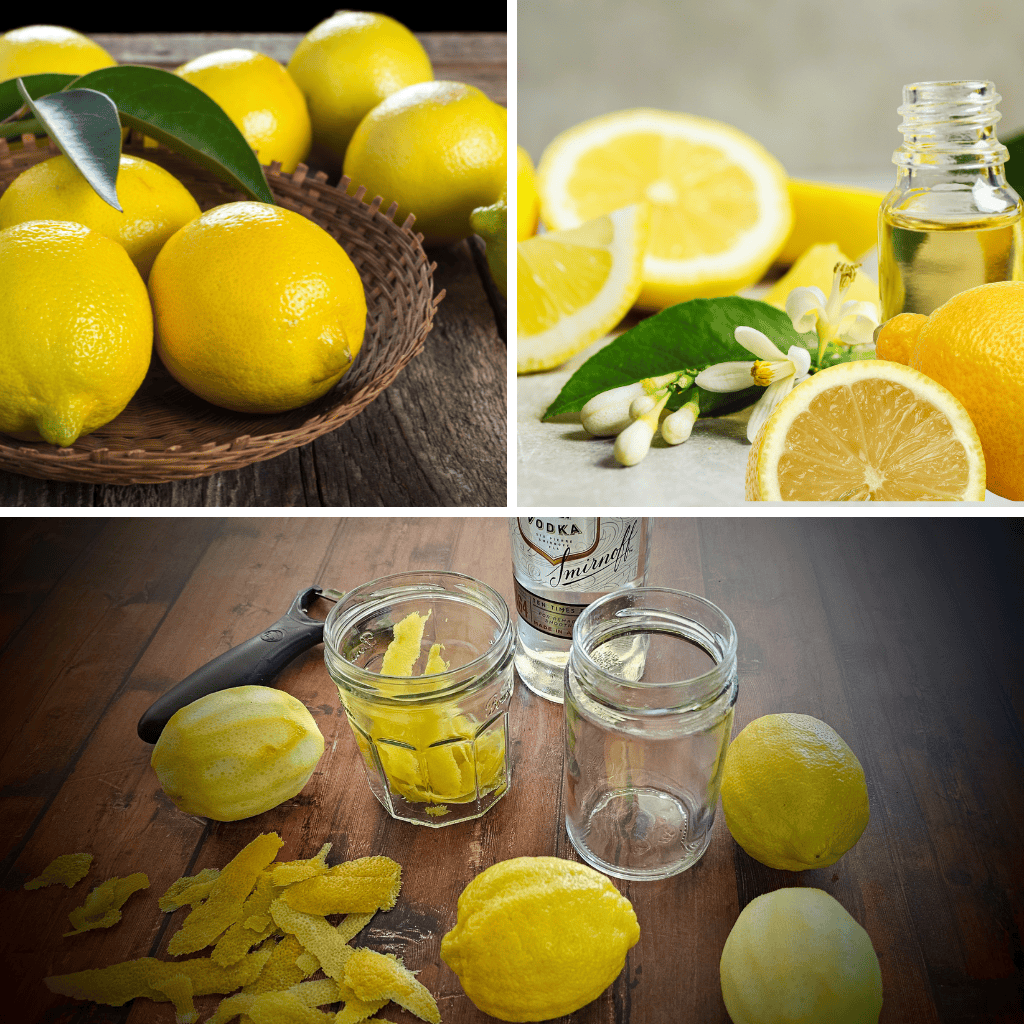
Store-bought lemon extract is often made with synthetic flavorings or processed oils that taste only vaguely like the real thing. The homemade version is two ingredients: lemon zest and alcohol. That’s it. The flavor is brighter, fresher, and more recognizably lemon. It tastes like the fruit you peeled it from, because that’s exactly what it is.
You can use whatever good lemons you have on hand. For this batch I’m using organic Eureka lemons from the grocery store, which are easy to find year-round and make a beautifully bright extract.
If you happen to have Meyer lemons (their season runs from late fall through early spring), they’ll give you a slightly sweeter, more floral version that’s worth trying at least once. I’ve been growing a Meyer lemon tree indoors for a few years now, and when she’s producing I love using her fruit for things like this. You can read about that whole adventure in The Best Guide to Growing a Lemon Tree Indoors. Either variety works beautifully though, so use what you can find.
What You’ll Need
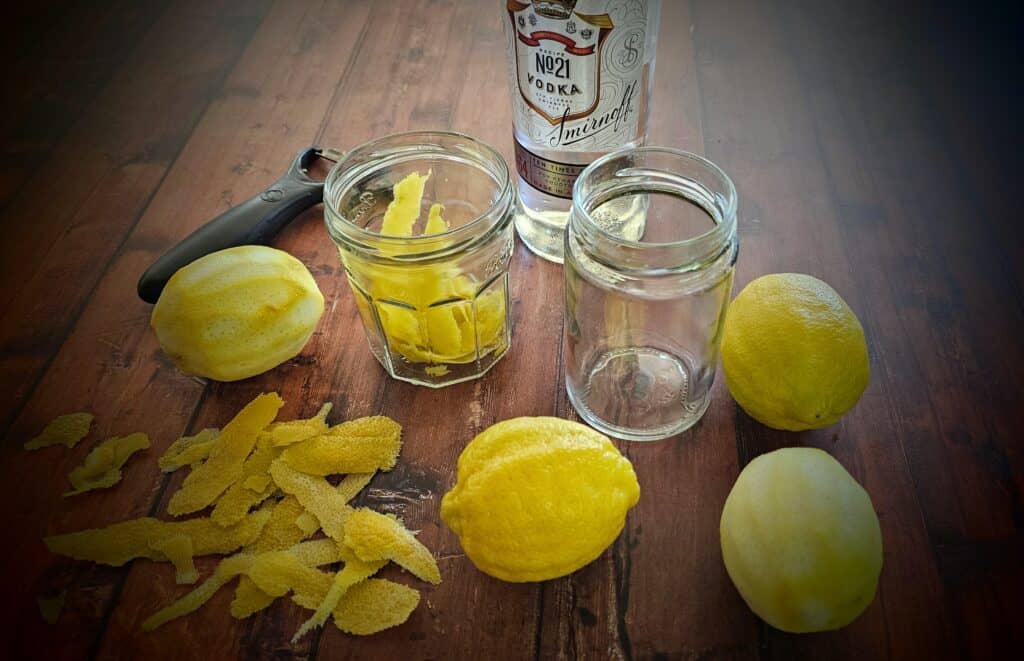
- 4 organic lemons
- A clean half-pint mason jar with a tight-fitting lid (or two, if you’d like to make a double batch)
- About 1 cup of vodka (80 proof or higher)
- A vegetable peeler or microplane
That’s the whole list.
A note on the lemons: organic really matters here. You’re using the peel, which is where the flavor lives and also where any wax, pesticide residue, or fungicide tends to concentrate. If organic isn’t an option, give your lemons a long, hot scrub with a vegetable brush before zesting.
How to Make Lemon Extract: Recipe and Instructions
- Wash and dry your lemons thoroughly. If they look waxed, scrub them well in warm water.
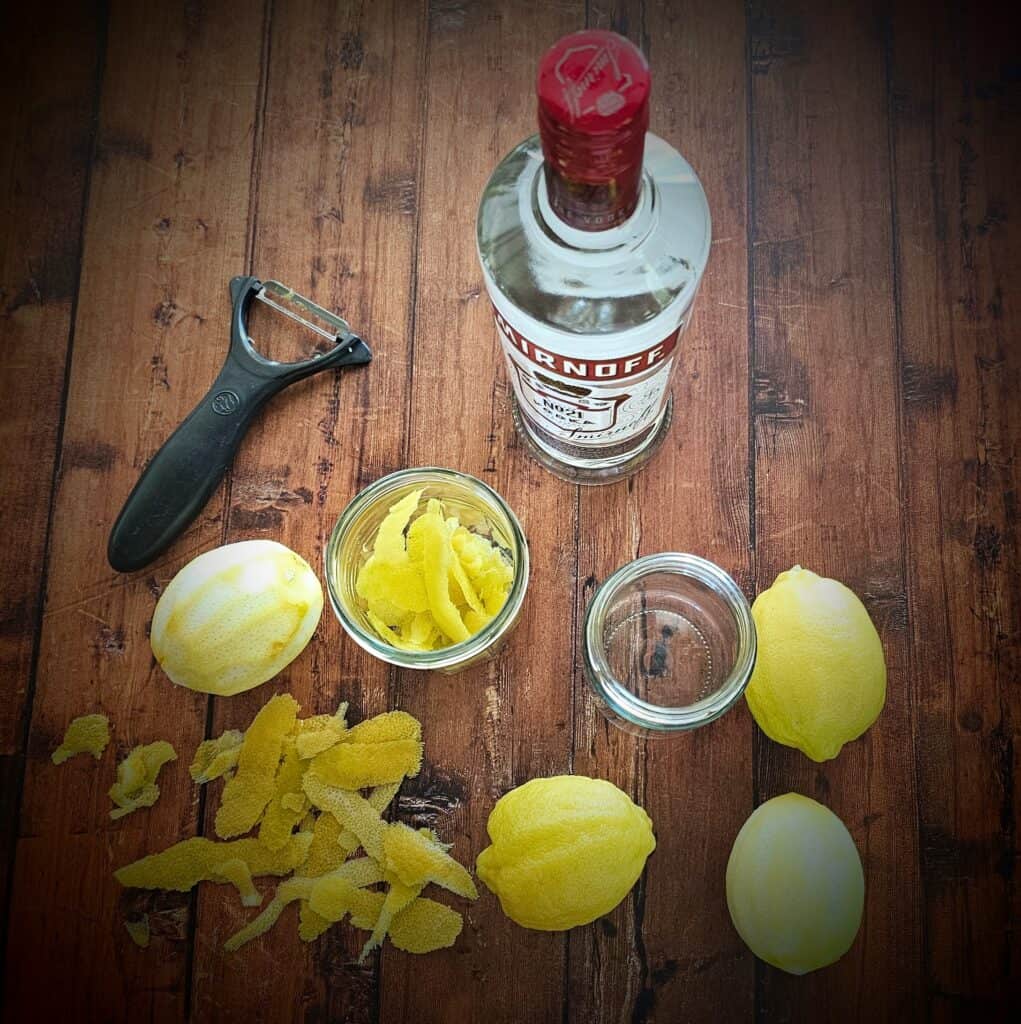
- Zest the lemons. Use a microplane or a sharp vegetable peeler to remove the lemon peel only. Avoid the white pith underneath. It’s bitter and will muddy your extract.
- Add the zest to your jar. You want enough to come about halfway up the jar. The more zest, the bolder the flavor.
- Pour the vodka over the top. Submerge everything completely. Press the zest down if it floats.
- Seal tightly and shake.
- Store in a cool, dark cupboard. Out of sunlight.
- Shake once a week or so.
- Start tasting at 2 weeks. Lemon extract is usually ready somewhere between 2 and 4 weeks. The liquid will turn a soft golden yellow as the oils release from the zest.
- Strain when ready. Pour through a fine-mesh sieve lined with cheesecloth or a coffee filter, and bottle in a clean glass jar.
Five minutes of work, plus a few weeks of patience.
A Few Tips
- Take only the yellow. I cannot say this enough. The pith is your enemy. A microplane gives you the cleanest result, but a vegetable peeler works just as well if you’re careful.
- Don’t waste the fruit. Once you’ve zested your lemons, juice them and freeze the juice in ice cube trays. Free lemon juice for vinaigrettes, marinades, or a squeeze in your water.
- Meyer, Eureka, or Lisbon all work. Each one will give you a slightly different flavor profile. If you’re lucky enough to find Meyers in season (winter into early spring), grab a bag and make a batch. They’re worth it.

How to Use Lemon Extract
Once your extract is ready, you’ll find yourself reaching for it constantly. A few of my favorite uses:
- A teaspoon stirred into lemon poundcake, scones, or shortbread to deepen the lemon flavor (it’s lovely in my lavender and lemon shortbread cookies, which I bake every spring for Ostara)
- A few drops in homemade frosting, glazes, or whipped cream
- A splash in sparkling water for a quick lemon soda
- A bit in Earl Grey or black tea
- A small amount in salad dressings, hollandaise, or pan sauces
- A dash in pancake or waffle batter on a Sunday morning
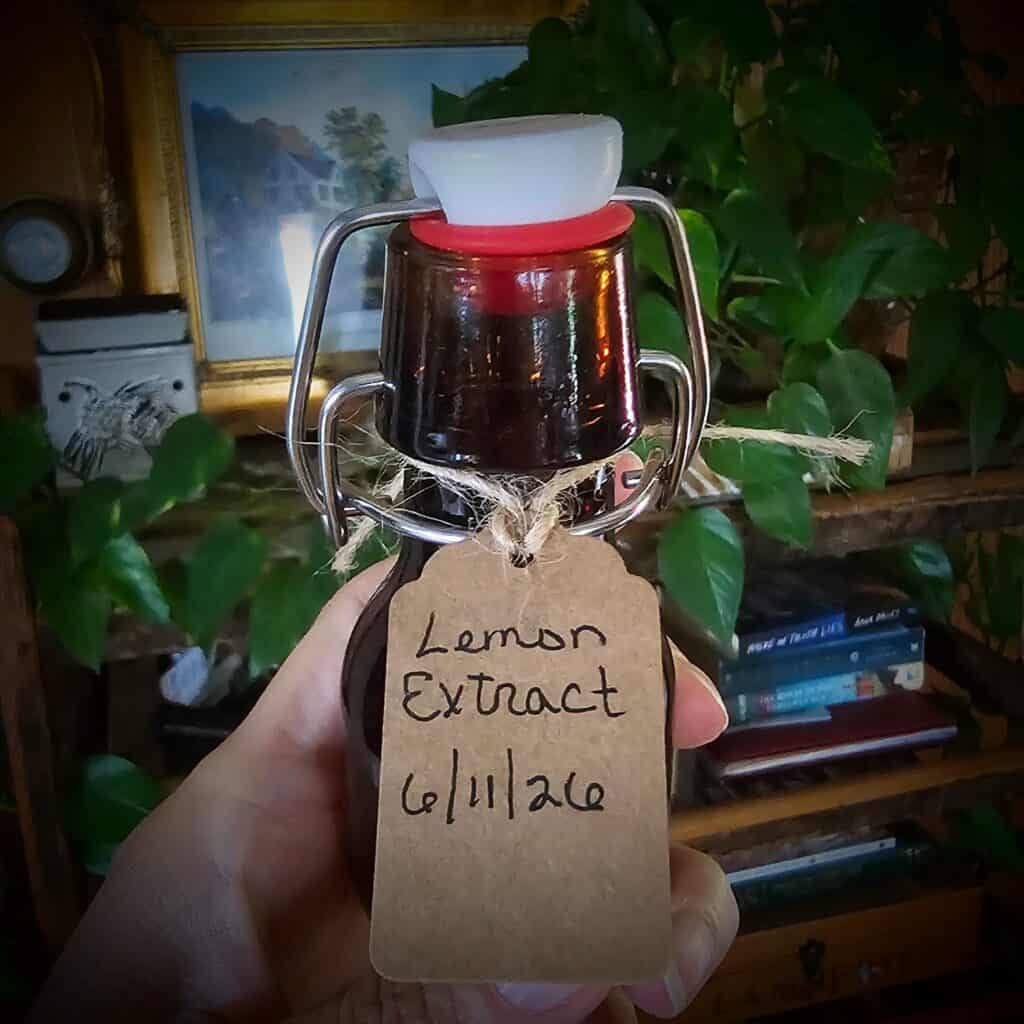
It also makes a beautiful gift. A small amber bottle with a handwritten label tucked into a basket with fresh-baked muffins or a jar of homemade lemon curd is the kind of present people actually use up.
A Non-Alcohol Option
If you’d rather skip the alcohol, you can make a lemon glycerite using the same method, substituting food-grade vegetable glycerin for the vodka. The flavor will be milder and the shelf life shorter (about a year, refrigerated), but it’s a lovely option for baking with children or for anyone who avoids alcohol.
Coming Up Next
In the next few weeks I’ll be sharing recipes for orange, mint, coffee, and cardamom extracts, all using the same simple method.
If you love lemon the way I do, though, this is the one to start with. Once you have a little bottle of homemade lemon extract on your shelf, you’ll wonder how you ever got by without it.

More to Explore
If you enjoyed this post, you might love a few of my other favorites:
- The Best Guide to Growing a Lemon Tree Indoors — How I brought a Meyer lemon tree home from Logee’s and started growing my own citrus in New England.
- Lavender and Lemon Shortbread Cookies — A buttery, floral spring cookie I bake every year to welcome Ostara and the return of light.
- How to Make Extracts at Home — The foundational post that walks you through the basic method for making any extract from scratch.
- Homemade Vanilla Extract — My go-to holiday hostess gift, and the first extract I ever made.
Don't Forget to Subscribe to Our Newsletter

Are you passionate about connecting with nature and exploring the world of herbal remedies? Join our community by subscribing to our weekly newsletter! As a subscriber, you’ll gain exclusive access to our members-only freebie and resource library, packed with valuable guides, recipes, and tips for living a more natural and sustainable lifestyle, closer to nature.
As an Amazon Associate, I earn from qualifying purchases.
