The Outdoor Apothecary is reader-supported. When you buy through links on our site, we may earn an affiliate commission. Learn more
Late summer is one of the most abundant seasons for foragers in the Northeast, and wild grapes are among its most recognizable gifts. Before the vines come into view, their presence is often announced by a sweet, fruity fragrance that drifts through forest edges, hedgerows, and old fields.
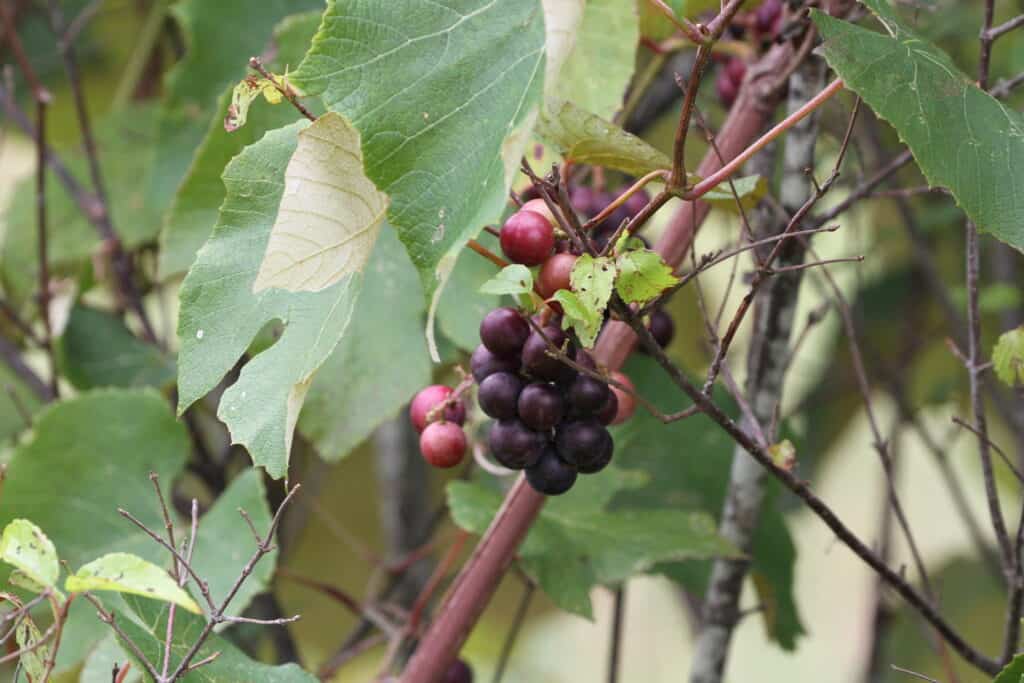
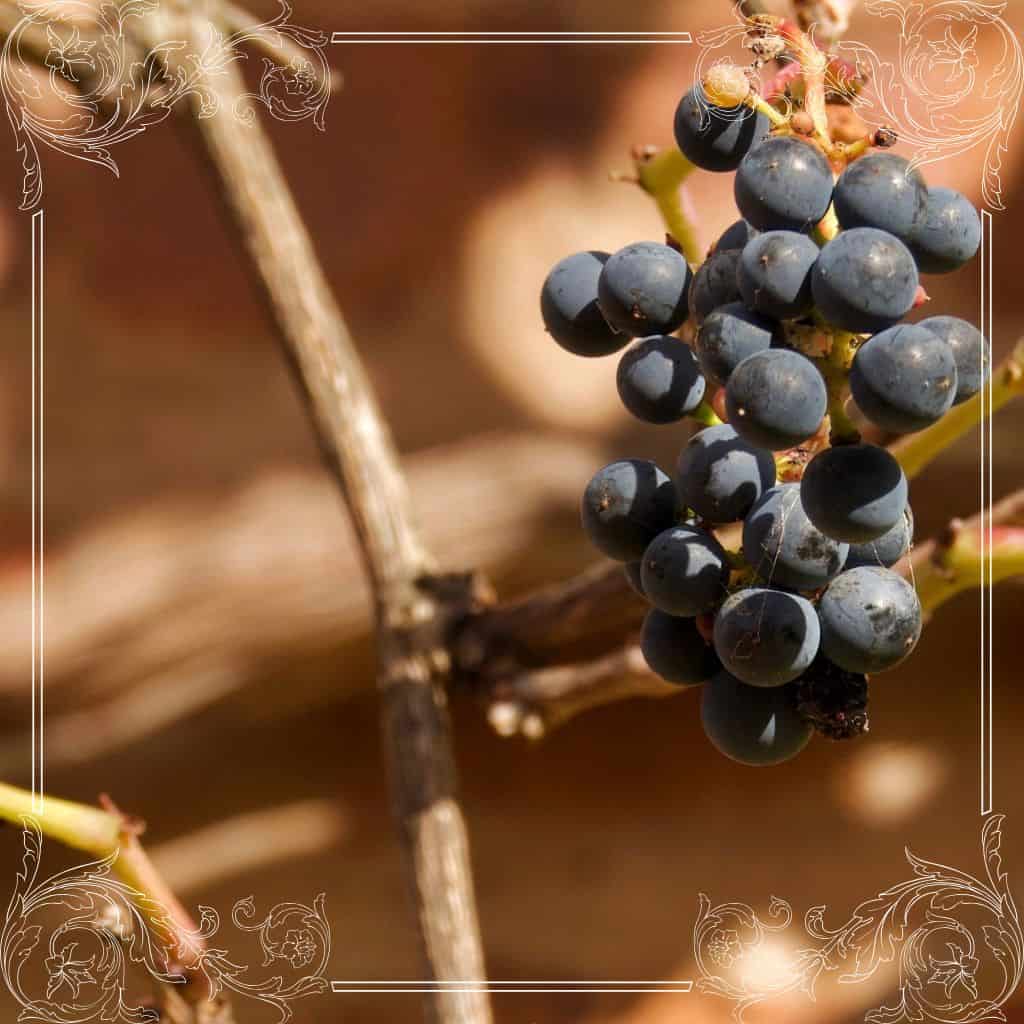
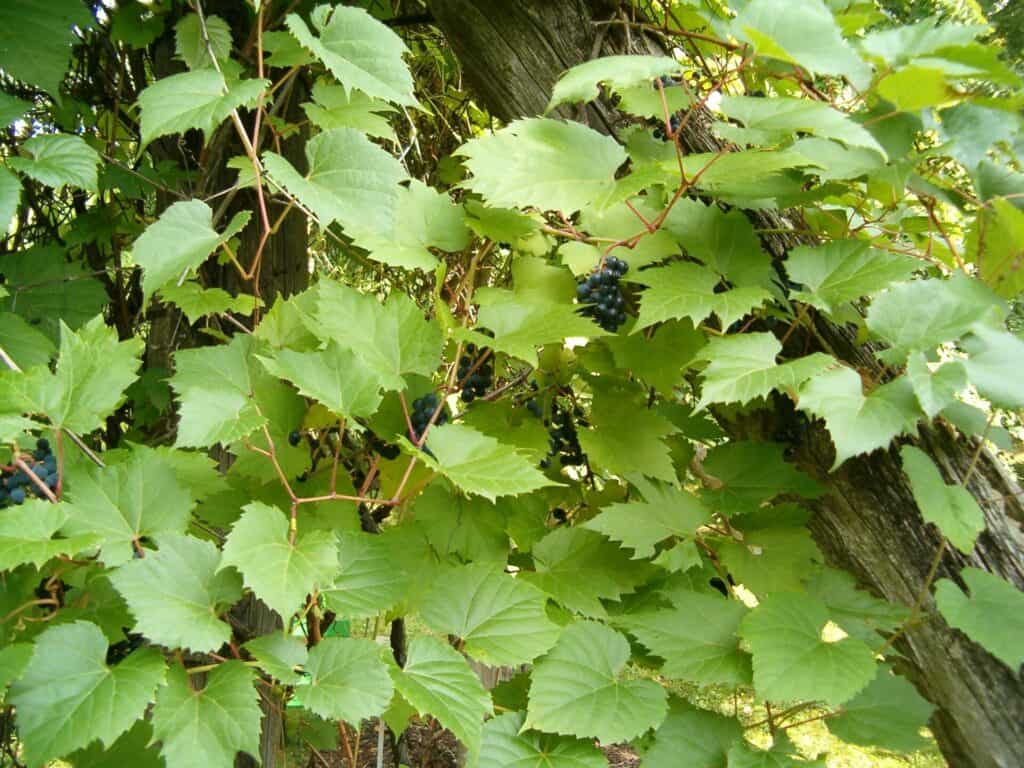
Wild grapes (Vitis spp.) are native climbing vines that can grow high into the forest canopy, using trees for support. Their twisting stems may become thick and rope-like over time, while clusters of dark purple, blue, or black fruits hang from the vines in late summer and early autumn.
These native grapes have been an important food source for both wildlife and people for thousands of years. Indigenous communities harvested the fruit for fresh eating, drying, and cooking, while birds, mammals, and countless other creatures continue to rely on them today. Though often overlooked in favor of cultivated grapes, wild grapes remain a valuable and abundant seasonal food that can still be found throughout much of eastern North America.
Getting to Know Wild Grapes
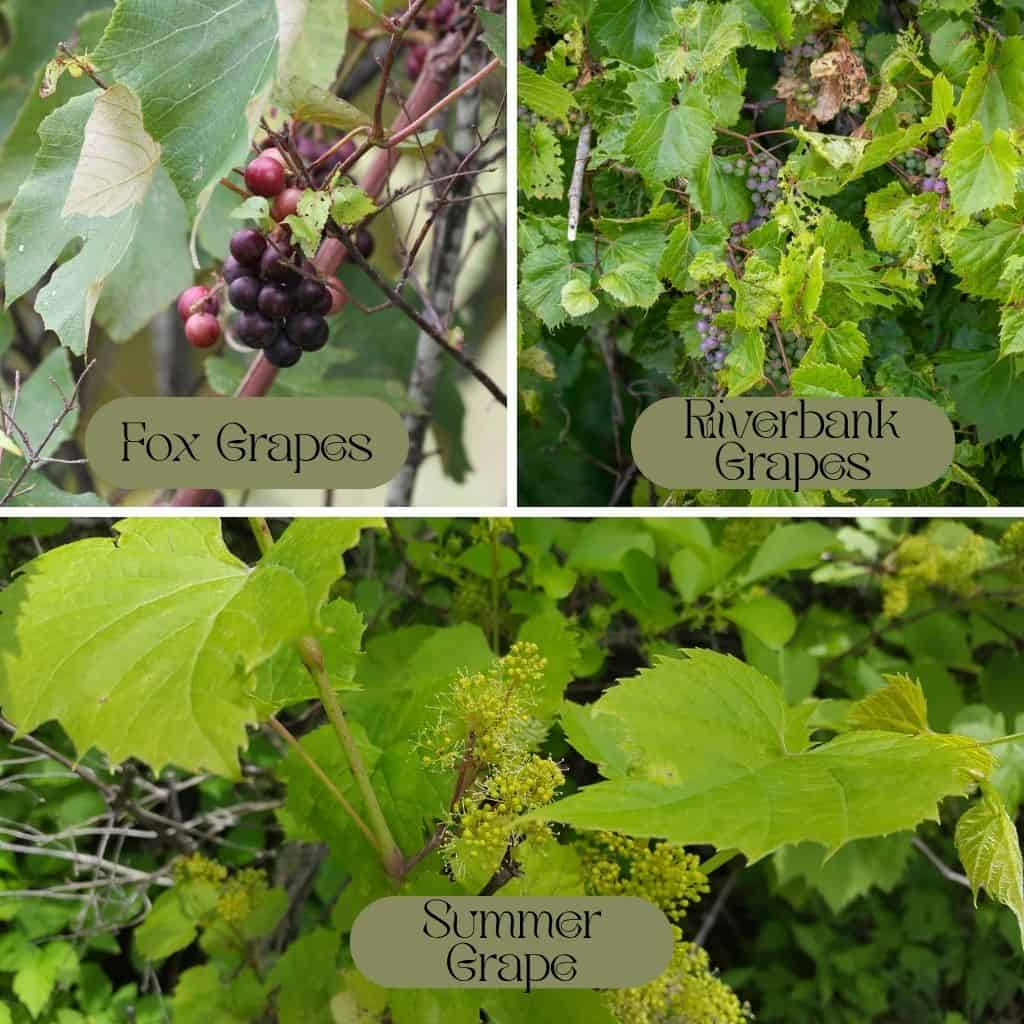
Wild grapes are native to eastern North America, and here in Connecticut are often seen and smelled from the roadside. The two species I encounter most often in my foraging territory are fox grape (Vitis labrusca) and riverbank grape (Vitis riparia).
Fox grape is the most familiar one. It’s the ancestor of Concord grapes, cultivated here in New England. Its fruit is large (for a wild grape) with a smell that is intensely fruity and sweet. You’ll find it at the edges of forests, at old field margins, and winding up stone walls where abandoned farmland meets second-growth woodland.
Riverbank grape tends toward smaller fruit and tighter clusters. It loves, as its name promises, the banks of rivers and streams. The Quinebaug watershed is full of it. It ripens a little earlier than fox grape, sometimes as soon as late August.
A third species worth knowing is summer grape (Vitis aestivalis), with its distinctive rusty or cinnamon-colored hair on young growth.
All three are edible, and delicious if you’re lucky enough to find them.
Identification: What to Look For
Learning to identify wild grapes is well worth your time. They’re prolific, useful, and once you know them, you’ll see them everywhere.
Here’s what to look for:
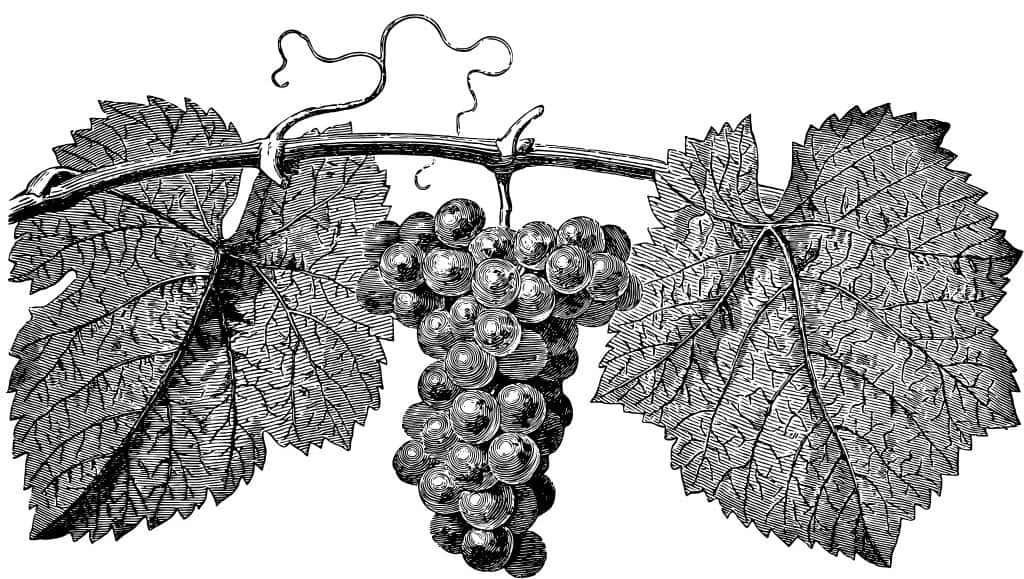
Leaves are the most reliable starting point. Wild grape leaves are alternate on the stem, heart-shaped at the base, and usually lobed, though the lobing varies quite a bit between species and even between leaves on the same vine. They are toothed along the edges. Fox grape leaves are often deeply lobed into three or five points and have a woolly, whitish underside. Riverbank grape leaves tend to be less woolly, with sharper teeth.
Tendrils are opposite the leaves and help the vine climb. This is an important identification feature. Grape tendrils are forked and coiling. They do not have adhesive pads.
Bark on mature vines peels in long, shreddy strips. This is one of the most distinctive features of wild grape. Run your hand along an old vine and it practically comes away in your fingers.
Fruit forms in loose, branching clusters. The grapes are round to slightly oval, depending on the species, and often display a small scar at the blossom end where the flower was attached. Each grape contains several seeds. The flesh is juicy, while the skin is thick and tart, contributing much of the fruit’s characteristic wild grape flavor.
Smell. Trust your nose. Wild grapes smell like grapes.
The Lookalike You Must Know: Moonseed
There is one serious lookalike that every forager in this region needs to know about.
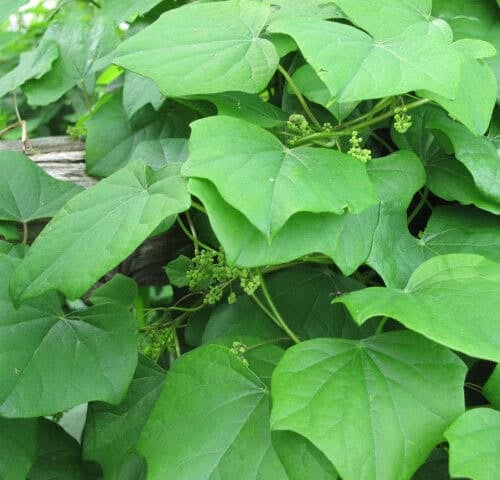
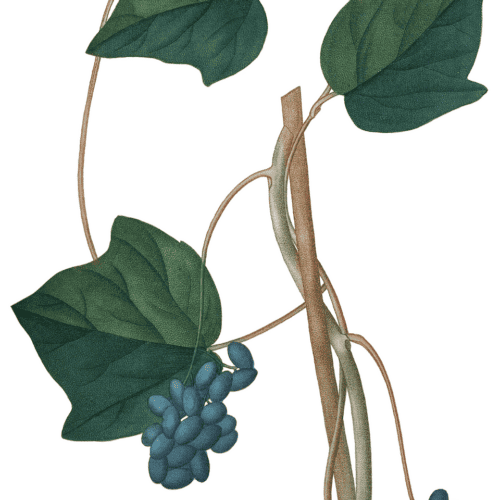
Moonseed (Menispermum canadense) is toxic, and it can be found growing alongside wild grape in the same habitats. The two are remarkably similar at first glance.
Here’s how to tell them apart:
- Tendrils: Grape vines have tendrils. Moonseed does not.
- Seeds: Grape seeds are oval or teardrop-shaped. Moonseed contains a single crescent-shaped (or “moon”) seed — hence the name.
- Leaves: Leaves: One of the easiest ways to distinguish moonseed from wild grape is by looking at where the leaf stalk (petiole) attaches. In moonseed, the petiole attaches slightly in from the leaf’s edge, near the center of the leaf’s underside (a feature known as a peltate attachment). In wild grapes, the petiole attaches at the base of the leaf along the outer edge, where the leaf blade meets the stem.
- Fruit surface: Moonseed fruit has a slight bloom but tends to look a bit less clustered, less abundant.
When in doubt, check for tendrils. Grape has them. Moonseed doesn’t. That alone is usually enough.
My advice is to invest in a really good feild guide and always be sure of identification before ingesting any wild plant. Here’s my list of favorite guides: 30+ Best Field Guides & Plant Identification Books
When and How to Harvest Wild Grapes
Wild grapes ripen from August through October, depending on species and location. Fox grape tends to be later, Peak harvest here in eastern Connecticut runs from mid-September into October.
Taste before you harvest in earnest. Wild grapes range widely in flavor. Some are sweet and complex. Others are astringent and tart straight off the vine, but mellow beautifully into preserves or wine.
Harvest the whole cluster. Bring scissors or snips if you have them, or simply twist the stem until it releases. I always leave more than I take, the birds and other wildlife are counting on these, too.
Uses: More Than You Might Expect
Wild grapes offer far more than fruit.
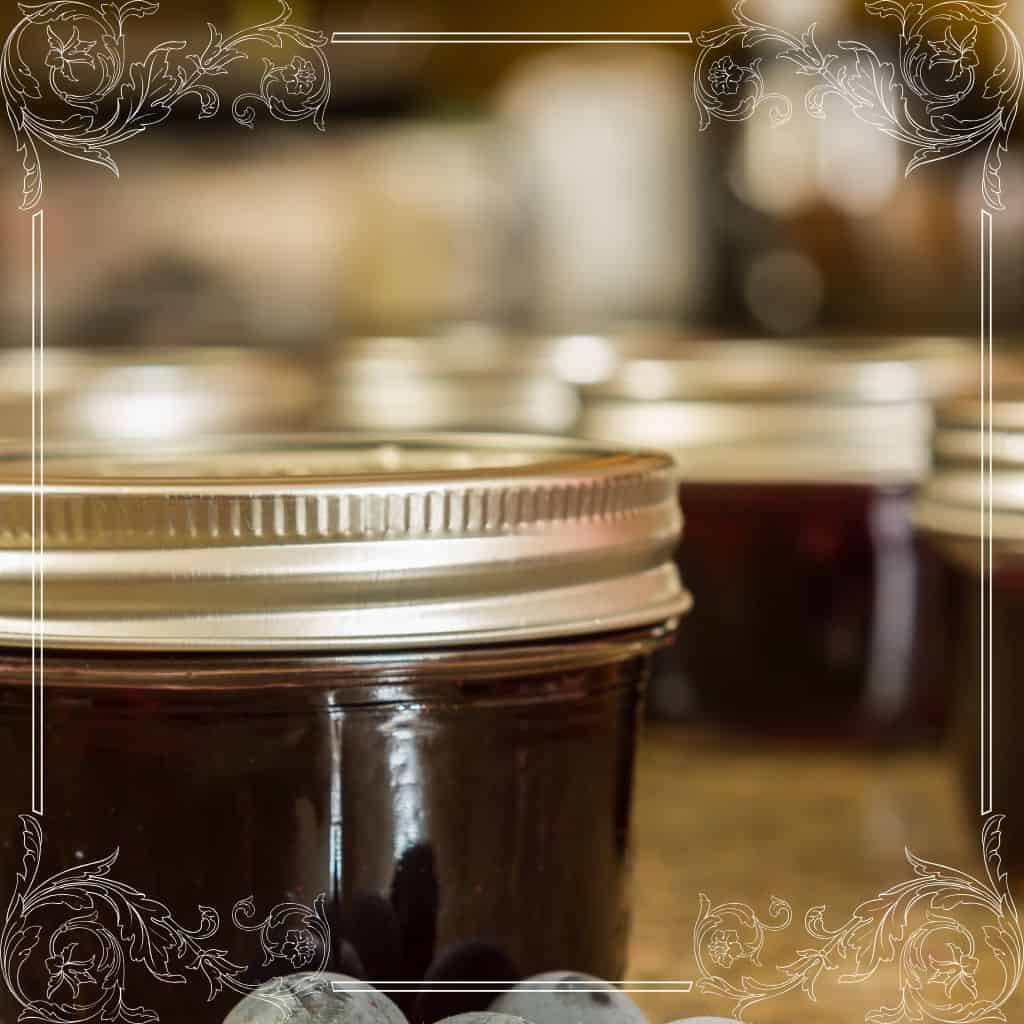
The fruit itself makes exceptional jelly and the flavor is something commercial Concord grape products can only approximate. I process mine into jam in September, usually with nothing but some pectin, grape juice, pulp, and sugar.
The leaves are edible and useful. Young spring leaves are tender enough to use in dolmades, stuffed grape leaves. Harvest them when they’re about the size of your palm and still slightly folded. In summer and fall, the larger, tougher leaves can be used to wrap foods for grilling or steaming, imparting a subtle tannic flavor.
The tendrils can be nibbled raw. They’re tart and crunchy, pleasant as a trail snack.
Wild grape vinegar is one of my long-running kitchen projects. Press the grapes, let the juice ferment naturally, then let it sour into vinegar over several months. It’s extraordinary in dressings and deglazes.
Grape leaves for preservation: Tannin-rich grape leaves have long been used as a traditional trick for keeping lacto-fermented vegetables crisp. Laid across the top of the veggies in a fermentation crock, they act as a natural weight to hold everything below the brine.
And then there is wild grape juice: simmered down, strained, sweetened slightly, and poured over ice on a hot September afternoon. There is nothing better.

The Vines: Wreaths, Baskets, and Wild Décor
Before the fruit ripens, before the leaves unfurl, there is the vine itself.
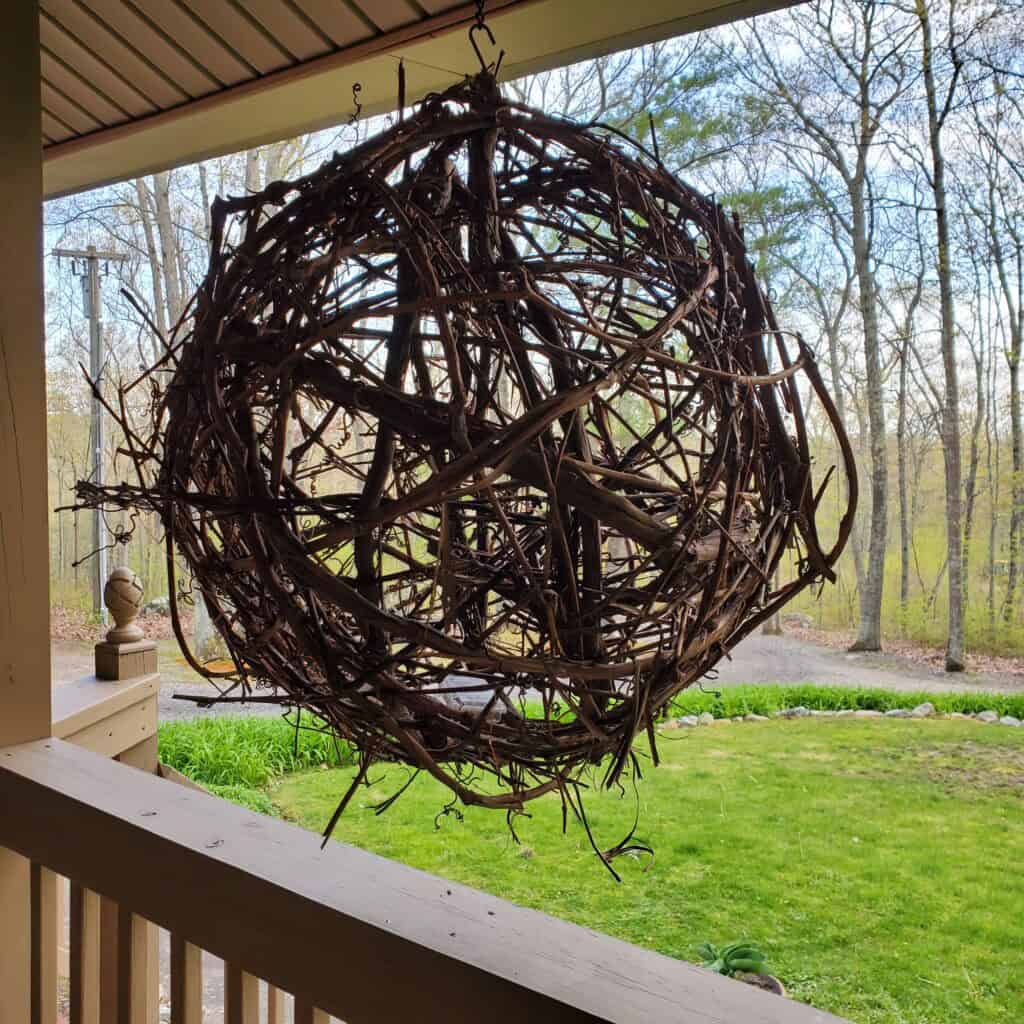
Wild grape vines are one of the most satisfying natural materials I work with. They’re flexible enough to coil and shape when freshly harvested, and they dry hard and woody — holding their form for years. A grape vine wreath made in September will still be hanging on your door five winters from now.
Harvesting the vines is best done in late summer through early winter, after the leaves have dropped and you can see what you’re working with. Look for younger vines — pencil-thick to thumb-thick — that are still supple enough to bend without cracking. The older, thicker vines are too stiff to coil easily, though they make beautiful rustic bases if you can work them while still green.
To make a basic wreath, gather a long, flexible length of vine — ten to fifteen feet if you can find it. Begin coiling it into a circle, weaving the end back through itself to hold the shape. Layer more lengths over and through until you have the density you want. The vine will grip itself naturally as it dries, tightening as it contracts. No wire or adhesive needed.
I make mine in a range of sizes — small four-inch ones for ornaments, large eighteen-inch bases for the front door. Some I leave plain and let the vine speak for itself. Others I tuck with dried herbs, seed heads, lichen-covered twigs, or dried flowers from the garden.
Beyond wreaths, grape vine lends itself to all kinds of natural décor. I use it to make rustic swags and garlands for the mantel. I’ve woven it into simple baskets and nest forms. Twisted lengths of it look beautiful in a tall crock or vase. During the winter holidays I weave in dried rose hips, dried orange slices, cinnamon sticks, and sprigs of white pine.
A note on working with dried vines: if you find old, dried grape vine that’s already stiff, you can often revive it by soaking it in water for an hour or two. It won’t be as pliable as fresh-harvested material, but it becomes workable enough to coil and shape.
This is old craft. Basket weavers and wreath makers have been working with Vitis vines across this continent for as long as people have been here. There’s a reason the material has endured — it’s strong, beautiful, and freely given by the land.
The Vines Themselves: A Note on Reciprocity
I want to say something about the vines before I close.
Grape vines, when they’re growing vigorously, can overtop and shade young trees. Foresters sometimes frame them as a problem. And in disturbed areas like roadsides and forest edges they can become quite dense.
But I think about this differently. Wild grapes are part of this ecosystem. They’ve been here as long as the oaks. The birds who eat the fruits disperse the seeds across the landscape. Wildlife fatten on them before winter. Indigenous peoples across this region, including my Nipmuck ancestors, gathered, dried, and ate wild grapes and used the vines for basket-making and cordage.
When I harvest, I’m participating in something old. Something reciprocal. I try to remember that.
I take what I need. I leave the rest. I say thank you.
Quick Reference: Wild Grapes at a Glance
Species: Vitis labrusca (fox grape), Vitis riparia (riverbank grape), Vitis aestivalis (summer grape)
Habitat: Forest edges, roadsides, riverbanks, old fields, woodland margins
Season: Leaves in spring; tendrils spring–summer; fruit August–October
Key ID features: Shreddy peeling bark, forked tendrils, heart-shaped leaves, fruit in loose clusters
Dangerous lookalike: Moonseed (Menispermum canadense) — no tendrils, crescent-shaped seed, peltate leaf attachment
Edible parts: Fruit, leaves, tendrils, juice
Uses: Jelly, juice, wine, vinegar, stuffed leaves, food wrapping, fermentation crocks

More to Explore
If wild grapes have you thinking about the abundance of late summer and fall, here are a few more posts to keep you foraging through the season:
Wild Harvesting: 5 Easy-to-Find Fall Edibles A guide to the season’s most accessible wild harvests — including mushrooms like chicken of the woods and hen of the woods — to round out your autumn foraging basket.
Staghorn Sumac: How to Identify, Harvest, and Use This Wild Plant Another native plant that ripens alongside wild grapes, staghorn sumac offers a tangy, lemony flavor and a long harvest window. If you’re making wild grape jelly, a splash of sumac-ade makes a beautiful pairing.
Autumn Olive Berries: An Amazing Superfood Also ripening in September and October, autumn olive is one of the most abundant fall foraging finds in the Northeast. Invasive and prolific — which means you can harvest freely.
Northeast Winter Foraging: 10 Wild Plants You Can Eat When the grape harvest is done and the vines are bare, the foraging doesn’t stop. This post will keep you going through the cold months.
9 Basic Principles of Ethical Wildcrafting for Beginners New to foraging, or bringing someone along for the harvest? This is the post to share. The ethics of wildcrafting are at the heart of everything we do here.
Foraging Northern Spicebush: A Delicious Wild Spice Spicebush ripens at almost exactly the same time as fox grape and grows in the same forest-edge habitats. A perfect companion plant to know.
Don't Forget to Subscribe to Our Newsletter

Are you passionate about connecting with nature and exploring the world of herbal remedies? Join our community by subscribing to our weekly newsletter! As a subscriber, you’ll gain exclusive access to our members-only freebie and resource library, packed with valuable guides, recipes, and tips for living a more natural and sustainable lifestyle, closer to nature.
Disclaimer:
The Outdoor Apothecary website is intended for informational purposes only and should not be considered a substitute for professional medical advice. The information provided is not intended to diagnose, treat, cure, or prevent any disease. While we strive to provide accurate and up-to-date information, it is the reader’s responsibility to ensure proper plant identification and usage.
Please be aware that some plants are poisonous or can have serious adverse health effects. We are not health professionals, medical doctors, or nutritionists. It is essential to consult with qualified professionals for verification of nutritional information, health benefits, and any potential risks associated with edible and medicinal plants mentioned on this website.
