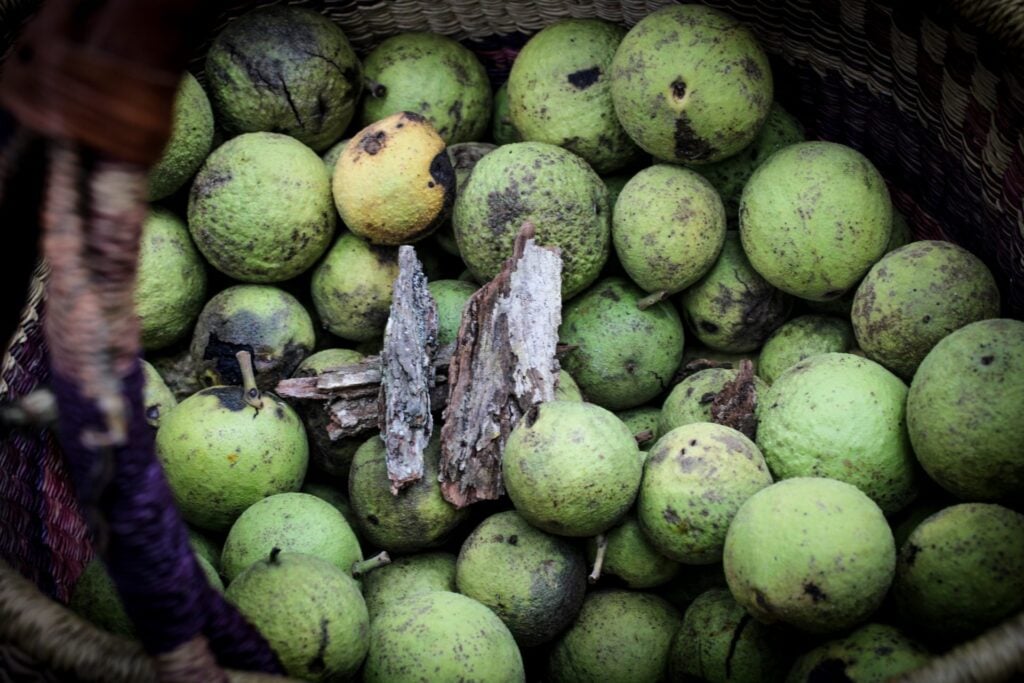
The Outdoor Apothecary is reader-supported. When you buy through links on our site, we may earn an affiliate commission. Learn more
Every October, I head to a quiet spot I’ve been visiting for years—a historical property here in Connecticut that’s open to the public. The homestead was built in 1715 and is now cared for by the local historical society. I love it there. The moment I step onto the property, I feel like I’ve stepped back in time.
I often sit for a while before I start gathering, imagining what life might have been like when the house was full of activity, when people relied on the land for food, medicine, and daily living. I picture someone from centuries ago walking the same paths I do, bending to pick up black walnuts just as I’m about to do.
By mid-October, the ground beneath the trees is scattered with green-husked nuts, their earthy scent strong in the cool air. I slip on gloves—an absolute must unless you want your hands stained for days—and start filling my basket.
Gathering black walnuts here isn’t just about collecting food or medicine. It’s about connection—to the season, to the land, and to the long history of people who have valued this tree for its many gifts.
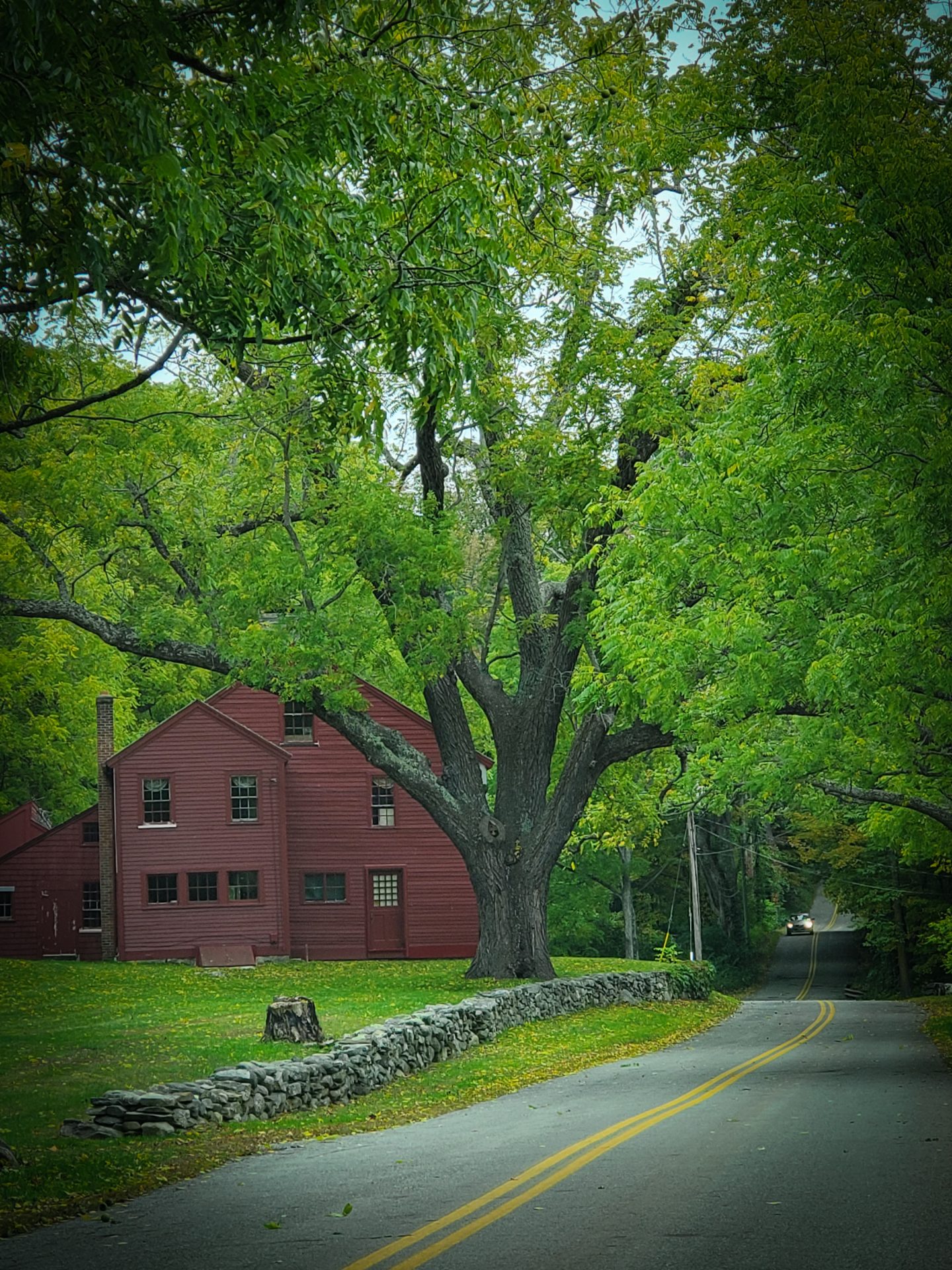
Meeting the Black Walnut
Black walnut (Juglans nigra) is one of those trees you notice once you know what to look for—tall and stately, with dark, deeply ridged bark and long, feather-like leaves that turn golden in the fall. The nuts, wrapped in green husks, can be as big as a small lime and drop with enough force to make you look up… and be thankful it didn’t land on your head!
They’re native to Eastern North America, and here in Connecticut they thrive along old fence lines, in open woodlots, and—like the ones I gather from—on historic homesteads. The trees prefer rich, well-drained soil and plenty of sunlight, and they can live for well over a century.
By late September through October, the nuts start to fall. Some will still be firmly green, while others begin to darken and soften as the husks break down. Wildlife takes full advantage—squirrels, chipmunks, and even certain birds work the ground for fallen nuts. That’s why I always leave plenty behind when I gather.
What I love most is that black walnut is useful in more ways than one. The wood is prized for its rich, dark grain. The nuts are a flavorful food source. The hulls have been valued in traditional medicine for generations. And the tree itself is an important part of the ecosystem, offering food and shelter to a variety of species.

Black Walnut as Medicine
Black walnut has been valued as a medicinal plant for centuries. The green hulls contain compounds that were traditionally used to address a variety of skin issues, fungal infections, and even internal parasites. They’re rich in tannins, which give them astringent qualities, and also contain juglone, a natural compound with antimicrobial properties.
Herbalists past and present have made tinctures from the fresh green hulls, infused them into oils for salves, and prepared strong decoctions to use as washes for skin irritation. It’s potent medicine, so a little goes a long way—and it’s always worth remembering that some remedies are best used under the guidance of a clinical herbalist.
The nuts themselves are another gift. They’re packed with nutrients, including omega-3 fatty acids, protein, and antioxidants. Black walnut meat has a bolder, earthier flavor than English walnuts—slightly bitter but deeply rich—which makes it wonderful for baking, sprinkling over oatmeal, or tossing into salads.
When I gather black walnut, I’m reminded that medicine doesn’t always come in tidy packages. Sometimes it stains your hands, smells earthy and wild, and demands a bit of work before you can enjoy it. But that effort deepens the connection—it makes you appreciate the gift even more.
(For a detailed look at how I harvest and process the nuts, see my step-by-step guide: Harvesting Black Walnuts)

Folklore and Magic of the Black Walnut
Black walnut has long been surrounded by stories and symbolism. Across different cultures, it’s been seen as a tree of wisdom, protection, and abundance. Its deep roots and long lifespan made it a natural symbol for strength and endurance, and its ability to produce nourishing nuts year after year tied it to ideas of prosperity and self-reliance.
In some European folk traditions, people believed carrying a walnut in your pocket could bring clarity of thought or even ward off headaches. Planting a black walnut tree was sometimes done to mark a family’s land or to ensure the success of future generations.
There are also protective aspects to its folklore. In certain traditions, walnuts were used to keep away unwanted energies, and placing them around the home was thought to create a barrier of safety. While that might sound like old superstition, I’ve always felt there’s a certain presence to a mature black walnut tree—it feels grounded, watchful, and protective.
For me, the magic is in the harvest. Standing under a tree that’s been here far longer than I have, gathering what it freely offers, I can’t help but think about all the hands that have done the same over the centuries. That connection—to land, history, and the cycles of nature—is the truest magic I know.

A Taste of Autumn: Black Walnut in the Kitchen
Once the nuts are cured and cracked, black walnut reveals its bold, earthy flavor—something completely different from the milder English walnut most people are used to. It has a richness that’s both slightly bitter and sweet, with a depth that works beautifully in baked goods, savory dishes, and even sprinkled over morning oatmeal.
One of my favorite ways to use them is in my Black Walnut Tart—a decadent dessert that pairs the nut’s unique flavor with a buttery crust and sweet filling. It’s a showstopper at holiday gatherings and a lovely way to honor a harvest you’ve worked for.
Black walnuts also shine in quick breads and muffins, where their flavor pairs beautifully with autumn spices like cinnamon, nutmeg, and clove. I often substitute them in recipes that call for pecans or English walnuts—like my Pumpkin Crisp recipe for an unexpected twist.
They’re not just for sweets, either. Try toasting them lightly and tossing them into a salad with roasted root vegetables and a maple vinaigrette, or folding them into wild rice dishes for added texture and protein.
The flavor of black walnut brings a flavor to recipes that feels like the very essence of autumn—deep, grounding, and just a little wild.

Returning Year after Year
Gathering black walnut has become more than just a seasonal task for me—it’s a tradition. Every October, I return to that historic property, basket in hand, knowing I’ll leave with more than just nuts. I leave with the quiet satisfaction of having taken part in something timeless.
There’s a rhythm to it now: walking the same paths, spotting the first green husks, pausing to watch a squirrel dart off with its prize. I move slowly, letting the crisp air and the scent of fallen leaves settle around me. It’s unhurried work, and I think that’s part of its magic.
As I gather, I imagine all the hands that have done the same before me—centuries of people who valued this tree not only for its food and medicine, but for the shade, the sturdy wood, and the shelter it provided. In some small way, I feel connected to them, continuing a thread of relationship between people and place.
When I crack open those cured nuts in the weeks ahead, I’ll remember that cool October morning—the golden light filtering through the branches, the crunch of leaves underfoot, the history humming quietly in the air. And I’ll feel grateful—not just for the harvest, but for the land itself and the stories it still holds.
So if you happen to pass a black walnut tree this fall, stop for a moment. Look up into its branches, watch the way the light catches the last of its leaves, and notice what’s scattered at its base. Maybe you’ll be inspired to gather a few and start a tradition of your own.

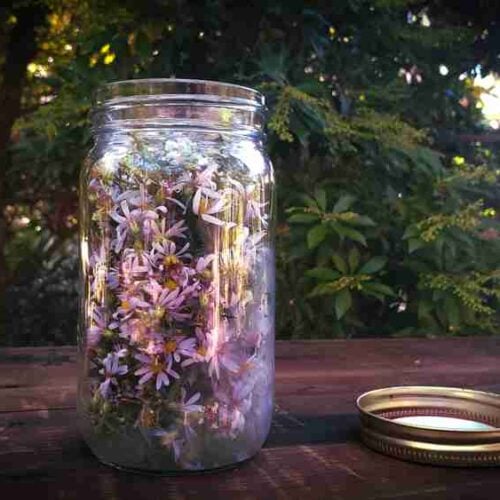
More to Explore
If you enjoyed learning about black walnut, you might also like these seasonal plant guides and recipes:
Harvesting Black Walnuts – Step-by-step guide to identifying, gathering, and processing this autumn treasure.
Black Walnut Tart – A decadent seasonal dessert that celebrates the bold flavor of black walnut.
Goldenrod Tea – Discover the benefits and beauty of this bright autumn wildflower.
New England Aster Tea – How to harvest and use this late-season pollinator favorite.
Wild Harvesting in the Fall – A seasonal guide to gathering wild foods and medicines before winter.
Don't Forget to Subscribe to Our Newsletter

Are you passionate about connecting with nature and exploring the world of herbal remedies? Join our community by subscribing to our weekly newsletter! As a subscriber, you’ll gain exclusive access to our members-only freebie and resource library, packed with valuable guides, recipes, and tips for living a more natural and sustainable lifestyle, closer to nature. Plus, you’ll gain access to our Freebie & Resource Library full of exclusive content for subscribers only.
Disclaimer:
The Outdoor Apothecary website is intended for informational purposes only and should not be considered a substitute for professional medical advice. The information provided is not intended to diagnose, treat, cure, or prevent any disease. While we strive to provide accurate and up-to-date information, it is the reader’s responsibility to ensure proper plant identification and usage.
Please be aware that some plants are poisonous or can have serious adverse health effects. We are not health professionals, medical doctors, or nutritionists. It is essential to consult with qualified professionals for verification of nutritional information, health benefits, and any potential risks associated with edible and medicinal plants mentioned on this website.
