The Outdoor Apothecary is reader-supported. When you buy through links on our site, we may earn an affiliate commission. Learn more
The Magic and Medicine of Oak Trees
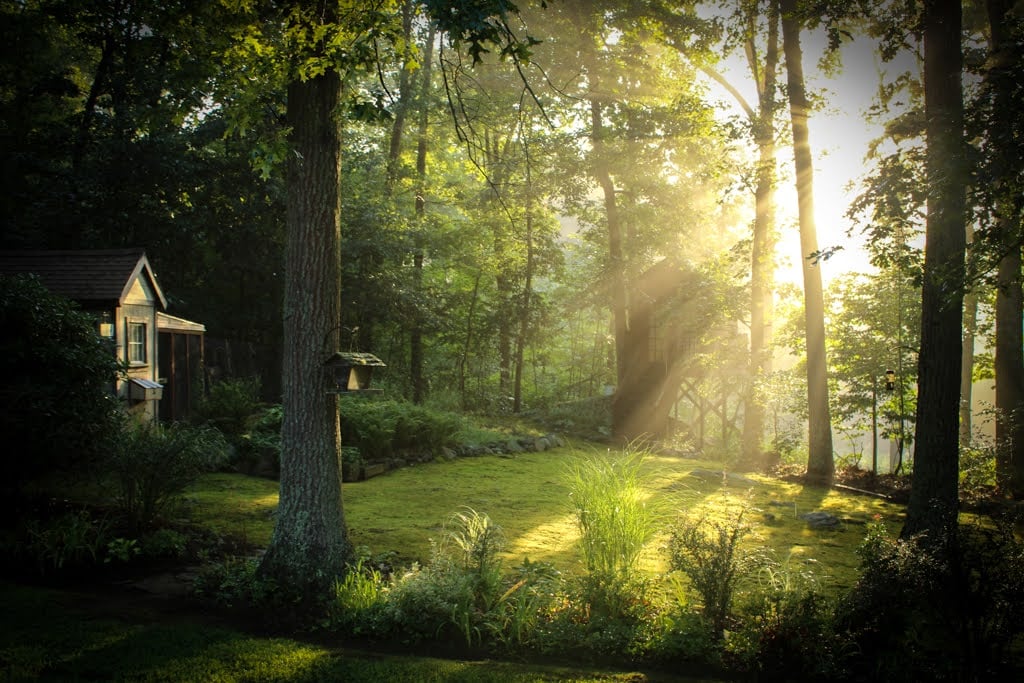
Growing up in eastern Connecticut, surrounded by the hardwood forests that blanket so much of New England, oak trees were just part of the backdrop of my life. They were everywhere—towering over stone walls, shading winding country roads, and carpeting the forest floor with acorns each fall. Honestly, I took them for granted. Oak was just there, steady and unchanging.
It wasn’t until I began traveling to other countries that I realized how fortunate we are in the Northeast to live in such abundance of these mighty trees.
In some places, oak trees are treasured as rare and sacred relics. Here at home, they have quietly held space in my life for decades. For 25 years, I lived nestled within a hardwood forest full of oak, hickory, basswood, and other giants common to this region. Only now, stepping back and reflecting, do I see how deeply the oak has shaped my sense of place and belonging.
Oak in Myth and Folklore
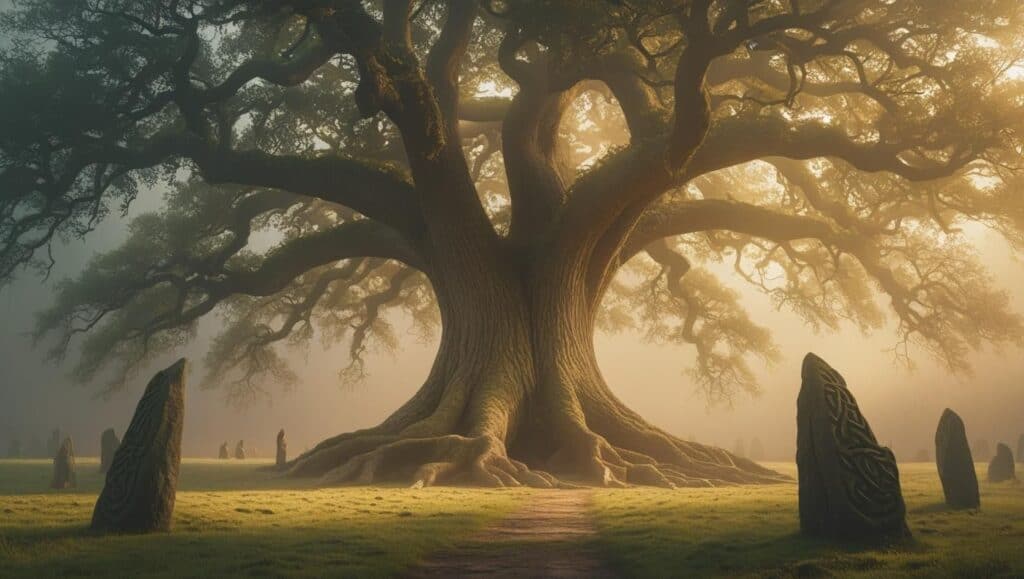
Across time and culture, the oak has stood as a symbol of power, endurance, and connection to the divine. In Celtic traditions, the very word Druid is thought to be linked to the oak—priests of the oak. The oak represented wisdom, protection, and a living bridge between the human and spirit worlds.
The Norse associated oaks with Thor, the god of thunder, while the Greeks and Romans connected them to Zeus and Jupiter. Even their physical form reinforces this: oaks stretch skyward while digging deep roots into the earth, often acting as natural lightning rods. In this way, they become living channels between earth and sky, reminding us of our own potential to bridge the physical and spiritual.
The oak also holds deep connections with the idea of doorways and gateways. The very month of January is named for Janus, the Roman god of transitions, thresholds, and new beginnings. Oak trees were sacred to Janus, and in many traditions, oak itself is the “door” between worlds. The Sanskrit word for both oak and door is dwr, mirrored in the Celtic Ogham word duir. Oak becomes not just a tree, but a doorway—one that opens to the heavens above and the sacred earth below. As above, so below. As within, so without.
From this same root we get the word Druid, combining dru (oak) with wid (to know or see)—literally “one who has oak knowledge.” Even the word dryad, meaning a tree spirit, comes from this lineage. In the Celtic Ogham alphabet, duir symbolizes strength, courage, will, nobility, virility, and sovereignty. The oak is tied to the solar cycle, standing as the tree of vitality and sovereignty, opening the way between the solstices.
The old tale of the Oak King and Holly King reflects this cycle. The Oak King rises in power after the winter solstice, ruling the waxing year as light returns, while the Holly King takes over after midsummer, when the sun begins to wane. In this way, the oak embodies renewal, light, and the eternal turning of the seasons.
Oak was also protected under the pre-Christian Irish Brehon Laws, which declared certain trees sacred and to be treated with reverence. These laws reflected a worldview that recognized forests as more than resources—they were sacred communities of beings. But with colonization, this reverence was broken. In the 12th century, the Normans introduced land ownership in Ireland, and oaks were cut as commodities. Later, under the Tudor dynasty, Henry VIII and Elizabeth I ordered mass deforestation to build warships for the Royal Navy, destroying Ireland’s ancient forests as both punishment and exploitation.
Even earlier, the Romans had targeted sacred oak groves, felling them to subjugate the Druids and expand their empire. And this tragic cycle continued across the ocean: colonists arriving in North America cleared roughly half of the forests of the Eastern Woodlands—including countless oaks—between the 1600s and 1870s, reshaping entire ecosystems.
Despite centuries of destruction, oak remains a survivor—still standing as a tree of reverence, strength, and resilience. Sacred groves may have been cut down, but the oak continues to embody the threshold between worlds, calling us to remember our connection to both earth and sky.
Beyond myth and history, oaks are also keystone species in the ecosystems they inhabit. In the Northeastern forests where I live, oaks provide food and shelter for more wildlife than any other tree genus. Their acorns sustain deer, bears, turkeys, and countless small mammals. Their branches host caterpillars that become food for migrating songbirds, and their canopies shelter insects, fungi, and mosses. Remove the oak, and entire communities of plants and animals unravel. To honor the oak is not only to remember its sacred stories, but to recognize its ongoing role as a foundation of life itself.

Oak Trees Identification
Oak trees are some of the most widespread hardwoods in the Northern Hemisphere, and while they’re familiar to most of us, learning to identify them more closely can be a rewarding practice. There are over 600 species of oak worldwide, with nearly 200 in North America, but they fall broadly into two groups: white oaks (with rounded lobes and sweeter acorns) and red oaks (with pointed lobes and more bitter acorns).
Leaves: Typically lobed, sometimes serrated, and arranged alternately on the branch. Shaded leaves tend to be larger with shallower lobes, while sun-exposed leaves are smaller with deeper lobes.
Bark: As trees age, bark becomes deeply ridged and furrowed. White oaks often have light, grayish bark with flaky plates, while red oaks tend to have darker, rougher bark with vertical ridges.
Acorns: The fruit of the oak, acorns develop in a cupule (cap). White oak acorns mature in a single season and are lower in tannins, while red oak acorns take two seasons to ripen and are higher in tannins, requiring more leaching before eating.
Flowers: Oaks are monoecious, meaning each tree bears both male and female flowers. Male flowers appear as long catkins in spring, releasing pollen, while female flowers are tiny and discreet, forming at the leaf axils and eventually maturing into acorns.
Knowing these features—leaf shape, bark texture, acorn type, and flowering habit—can help us better appreciate the diversity of oak trees and deepen our relationship with the forest around us.

The Medicine of Oak Trees
Oak bark is one of those traditional remedies that almost every old herbal text mentions. Rich in tannins, it’s strongly astringent, making it helpful for soothing sore throats, treating diarrhea, healing wounds, and easing skin irritations. It was once used in poultices, washes, and decoctions to draw out infection and bring relief to inflamed tissue.
Then there are the acorns—the humble nuts we tend to crunch underfoot in autumn without a second thought. To our ancestors, acorns were an important source of nourishment. Properly leached to remove their bitterness, they can be ground into flour, roasted into a coffee substitute, or used as a hearty porridge. In times of scarcity, acorns were survival food, but even today they offer a deep, nutty flavor and an invitation to remember old ways of eating from the forest.
Even the tannins in oak bark had practical uses beyond medicine—they were used to tan leather and to make ink. The oak really is a tree of endless gifts.
Related Post: 30 Northeastern Medicinal Trees and Their Uses

The Spiritual and Magical Oak
Spiritually, I think of oak trees as gateway trees. Sitting beneath an oak, I often feel a groundedness that’s hard to put into words, as if the tree is quietly lending me some of its strength. There’s a reason oak is seen as a protector in folk magic. Carrying an acorn in your pocket has long been considered a charm for luck and fertility. In some old traditions, a circle of oak branches was laid out to keep away unwanted spirits.
For me, oak trees have become a reminder of resilience. Its deep roots, massive trunk, and spreading crown mirror the way we, too, must root ourselves deeply in order to reach upward and outward in life. Oak invites us to find balance between being grounded and expansive, between endurance and generosity.
In my Nipmuck culture, oak trees carry a particularly personal resonance. My husband was gifted the name Stone Oak, or Qussunootimet. He is a strong and steady presence in our family, and the name feels so well fitting. Even though he is not Nipmuck by blood, he has been embraced as family within the tribe. To be given a name by an elder is an honor, and his name ties him to the same qualities of endurance, protection, and strength that oak has embodied for generations.
October’s Gift: Acorn Harvest
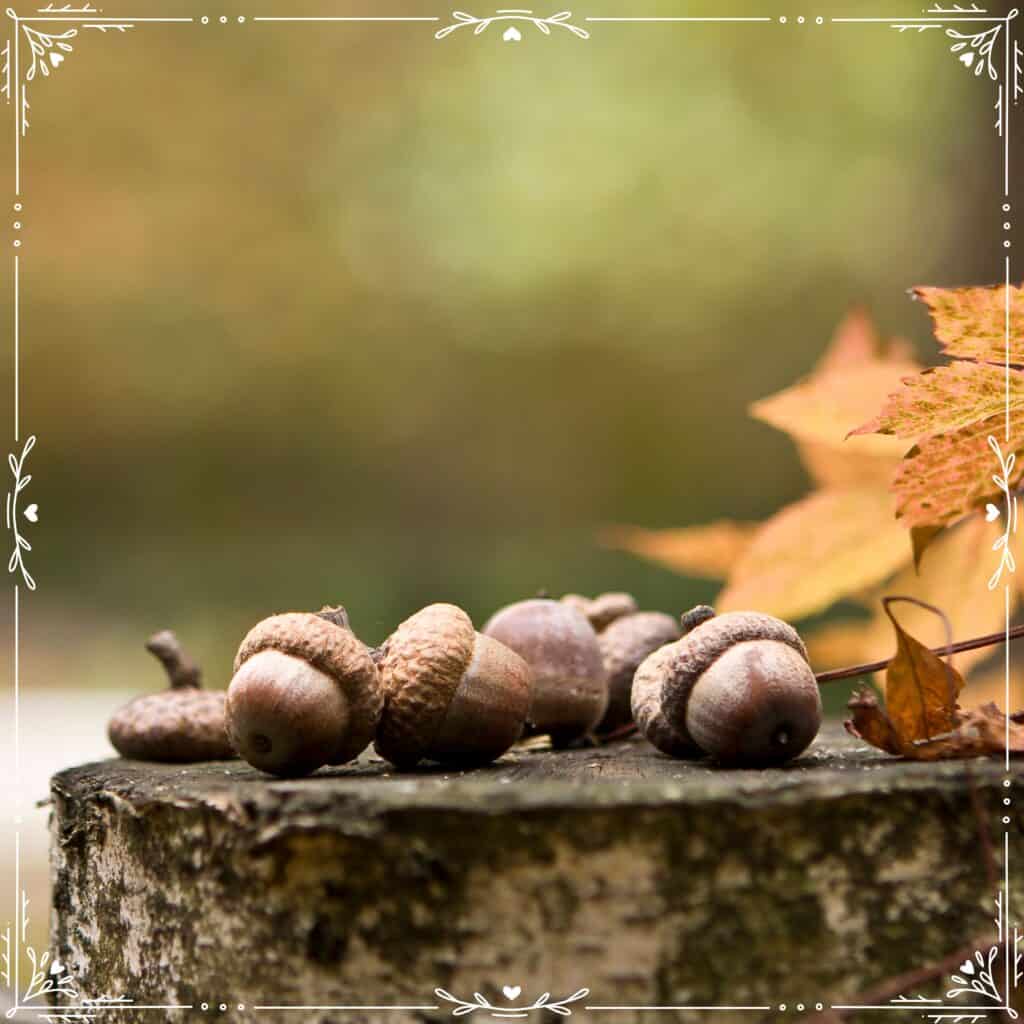
October is oak’s season of abundance. Walking through the woods this time of year, the acorns seem to rain down, bouncing off stones and rolling into mossy hollows. It’s a perfect time to gather them—whether for food, for crafts, or simply for ritual.
One of my favorite autumn practices is to place a few acorns on my altar as a symbol of potential—the small, unassuming seed that carries within it the promise of a mighty oak. Sometimes I’ll slip one into my pocket as a talisman, a reminder of strength and endurance as the year turns toward the darker months.
If you feel called, try roasting a handful of acorns, or even grinding them into flour to bake into bread. There’s something deeply satisfying about weaving these ancient foods back into modern life, connecting us not only to the land but also to the people who came before us.
Reflection
Oak trees have been steadfast companions for me, even when I didn’t realize it. Now, with more years behind me and more travel under my belt, I find myself cherishing its presence in ways I never thought I would.
So I leave you with this question, one I ask myself often when I sit beneath the shelter of oak branches:
Where in your life do you need the strength and rootedness of oak right now?
Take an acorn in your hand, or rest your back against the bark of an old oak, and see what answer rises from within you.
Don't Forget to Subscribe to Our Newsletter

Are you passionate about connecting with nature and exploring the world of herbal remedies? Join our community by subscribing to our weekly newsletter! As a subscriber, you’ll gain exclusive access to our members-only freebie and resource library, packed with valuable guides, recipes, and tips for living a more natural and sustainable lifestyle, closer to nature. Plus, you’ll gain access to our Freebie & Resource Library full of exclusive content for subscribers only.
Disclaimer:
The Outdoor Apothecary website is intended for informational purposes only and should not be considered a substitute for professional medical advice. The information provided is not intended to diagnose, treat, cure, or prevent any disease. While we strive to provide accurate and up-to-date information, it is the reader’s responsibility to ensure proper plant identification and usage.
Please be aware that some plants are poisonous or can have serious adverse health effects. We are not health professionals, medical doctors, or nutritionists. It is essential to consult with qualified professionals for verification of nutritional information, health benefits, and any potential risks associated with edible and medicinal plants mentioned on this website.
