The Outdoor Apothecary is reader-supported. When you buy through links on our site, we may earn an affiliate commission. Learn more
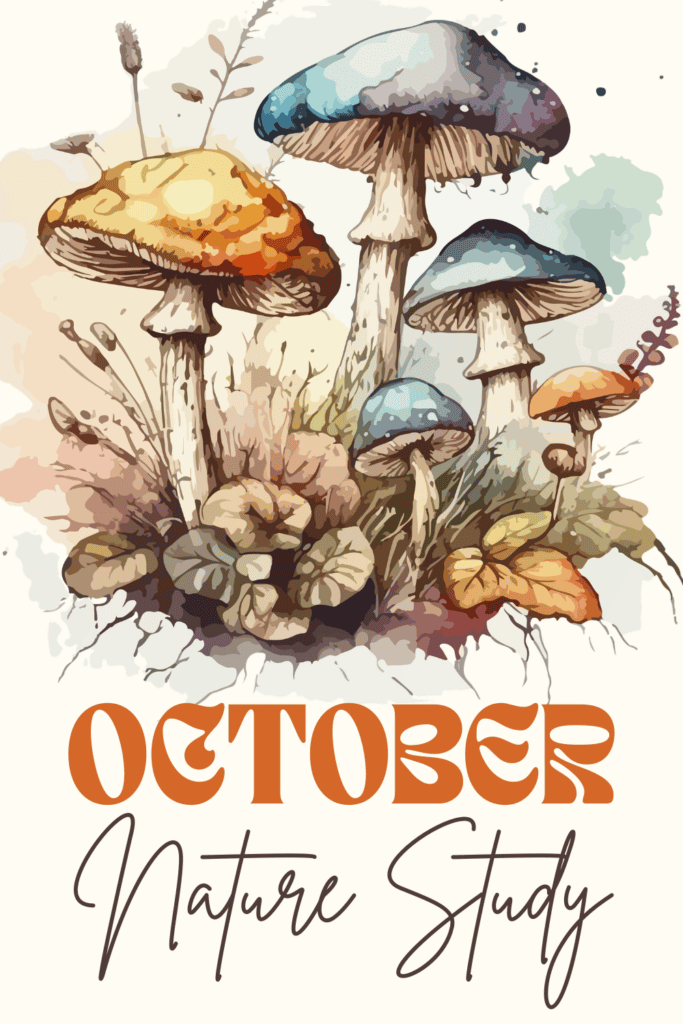
October is the month when fall color peaks across most of the Northeast. In a single week, a landscape that was still mostly green in late September can shift into full color, and by the end of the month, much of it is bare again. This makes October one of the best months for nature study, since the changes are fast enough to track in real time.
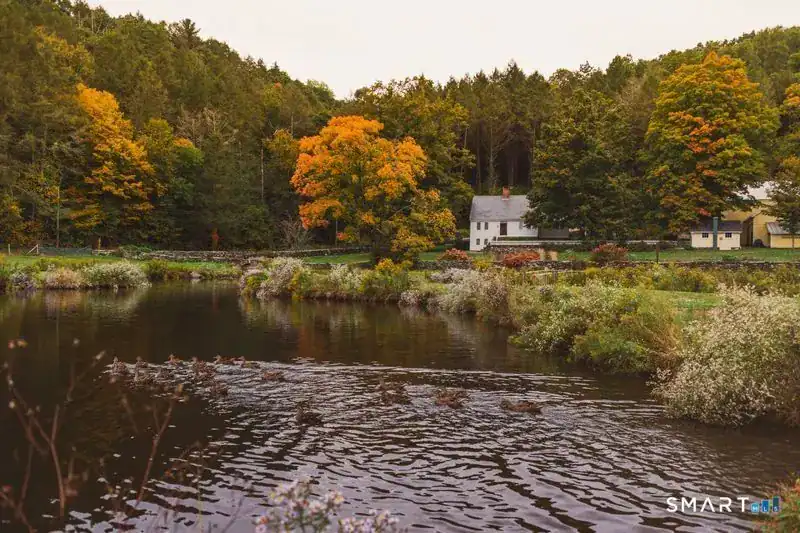
I’ve been doing my October nature study at the pond on our property. A maple across the water went from green-gold to full orange in about a week. Our white farmhouse behind it, trimmed out with its picket fence and stone walls, sits right in the middle of all that color. A line of ducks moves across the pond most mornings, and their wake breaks up the reflection of the trees on the surface.
October nature study is a good practice to build because so much is happening at once: peak leaf color, migration, the first hard frosts, and the last of the fall foraging season. Where September asked you to notice small, early shifts, October nature study gives you bigger, faster changes to track.
What Is Nature Study?
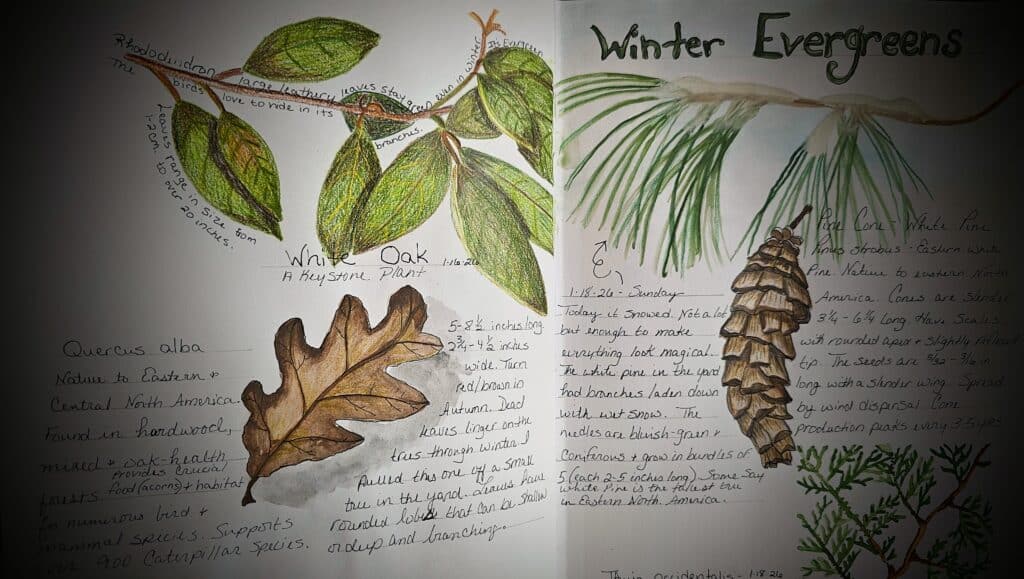
Nature study is the practice of observing the natural world closely and consistently, rather than passing through it. It usually involves returning to the same place repeatedly, recording what you notice, and building familiarity with a landscape over time.
You don’t need special equipment to start. A notebook and a regular walking route are enough. Nature journaling is a straightforward way to begin recording observations, and choosing a dedicated sit spot gives your October nature study practice a fixed point of comparison to return to each week.
If you’re looking for a journal that can also handle watercolor, this is the one I use and recommend: my go-to nature journal. The paper holds up well to both writing and painting, which makes it easy to sketch fall color in the field and add notes right alongside it.
October works well for this kind of practice because the changes are large and easy to track: leaf color, temperature drops, and shifts in bird activity are all measurable week to week.
What’s Changing on Our Property This Month
We’re still getting to know this land, so October nature study has doubled as an introduction to how it behaves this time of year.
The pond below the house is the easiest place to track change. On calm mornings, the water is still enough to reflect the trees along the far bank clearly; on windier days, that reflection breaks apart. The ducks that use the pond each morning don’t seem affected by any of this—they’re on the water regardless of temperature or wind, while the maples above them move through green, gold, and orange over the course of the month.
The farmhouse sits close to the tree line behind the pond, and its white clapboard and stone retaining walls make a useful reference point for photographing or comparing the same view week to week. I’ve been noting which trees change color first (the maples, consistently), which hold their green longest, and how much more sky becomes visible above the pond as leaves drop.
Tracking the same spot through the seasons—see nature’s calendar for more on this approach—turns a place you pass every day into one you actually understand across different conditions and times of year.
25 October Nature Study Ideas
- Track how quickly one tree changes color over a single week.
- Note which tree species turn first and which are still green.
- Watch how fallen leaves collect and move on the surface of a pond or stream.
- Compare the bird calls you’re hearing now to what you heard in summer.
- Watch for V-formations of geese migrating overhead.
- Note any changes in waterfowl behavior as water temperatures drop.
- Collect leaves from five different tree species and compare their shapes.
- Watch for squirrels caching acorns and nuts.
- Look for black walnuts or hickory nuts dropping to the ground.
- Record the date of the first hard frost and its effect on the garden.
- Watch for morning mist rising off a pond or low field.
- Check soil temperature by hand and compare it to last month.
- Note which flowers are still blooming despite cooler temperatures.
- Watch for late-season pollinators using the last available blooms.
- Look for spider webs made visible by morning dew or frost.
- Note changes in the smell of the woods as leaves begin to decay.
- Track how sunlight angle changes along a regular walking route.
- Look for mushrooms appearing after October rain.
- Record the date you observe peak color in your area.
- Watch how reflections on still water change as leaves fall.
- Note which bird species have left and which new ones have arrived.
- Collect and press a few fallen leaves for reference.
- Spend ten minutes seated near a body of water and record your observations.
- Note how much earlier darkness falls compared to last month.
- Write down one specific observation after every walk this month.
October Nature Study Journal Prompts
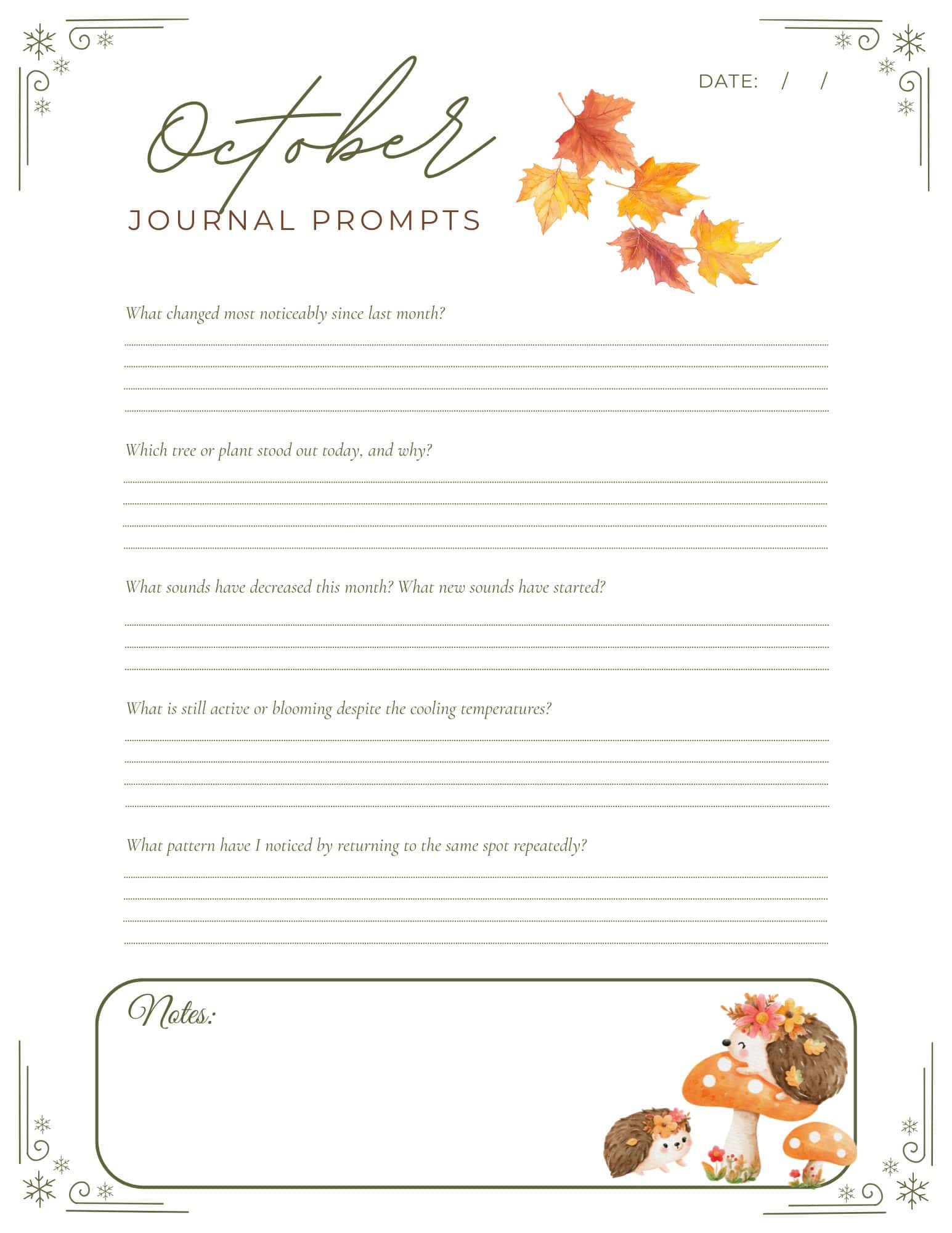
If you’re not sure what to record after a walk, these prompts are a useful starting point for your October nature study journal. My full set of nature journal prompts has more if you want additional options:
- What changed most noticeably since last month?
- Which tree or plant stood out today, and why?
- What did the water look like, and what conditions affected it?
- What sounds have decreased this month? What new sounds have started?
- What is still active or blooming despite the cooling temperatures?
- What am I harvesting or preparing for winter right now?
- What pattern have I noticed by returning to the same spot repeatedly?
- What do I want to remember about this specific October?

What October Offers for Foraging and Herbalism
October is also an active month if your nature study includes foraging. Black walnuts drop heavily this month as their green husks darken and split. Witch hazel is one of the few native plants that blooms in late fall, producing spidery yellow flowers as most other plants go dormant—this is also a good time to harvest twigs for making witch hazel extract. Staghorn sumac clusters that survived early frosts can still be harvested for spice. Mullein rosettes are also worth checking, as the plant settles into its low winter form this month.
Adding foraging to your October nature study walks gives your observations a practical outcome beyond note-taking, and builds a more detailed connection to the specific place where you’re gathering.
A Gentle Invitation
This October, pick one spot to return to weekly—a pond, a specific tree, a section of woods, or a garden bed.
Track how it changes.
Bring a notebook. Record color, temperature, sounds, and anything else you notice.
By November, you’ll have a week-by-week record of an entire seasonal transition, based on direct observation rather than assumption. That record is the actual value of an October nature study practice—not general awareness that the season is changing, but a specific, dated account of how it changed in the place you’re watching.

More to Explore
Nature Journaling & Observation Practice
- The Benefits of Nature Journaling: Plus 20 Free Journal Pages
- Nature Journal Prompts for a Deeper Connection to Place
- Sit Spot: A Sacred Place to Observe the Rhythms of Nature
Living with the Rhythms of the Seasons
- Following Nature’s Calendar (With Free Seasonal Checklist)
- How to Live Connected to Place: 7 Tips for Building a Strong Sense of Belonging
- Seasonal Living in October: An Ideas List for a Magical Month
More October & Fall Foraging
Don't Forget to Subscribe to Our Newsletter

Are you passionate about connecting with nature and exploring the world of herbal remedies? Join our community by subscribing to our weekly newsletter! As a subscriber, you’ll gain exclusive access to our members-only freebie and resource library, packed with valuable guides, recipes, and tips for living a more natural and sustainable lifestyle, closer to nature.
As an Amazon Associate, I earn from qualifying purchases.
