The Outdoor Apothecary is reader-supported. When you buy through links on our site, we may earn an affiliate commission. Learn more
There’s a quiet kind of wisdom that lives in the trees, and few embody it quite like the birch. Slender and shimmering in the dappled light of New England forests, birches have always held a special place in my heart. As a Nipmuck woman with deep roots in this land, my relationship with trees is more than admiration — it’s kinship. And the birch, with its soft bark and healing gifts, feels like an old friend.
Whenever I come across a birch — especially in the golden hush of autumn or the stillness of winter — I can’t help but think of Robert Frost’s poem “Birches.” His words capture the same wistfulness and quiet awe I feel. But birch is more than just poetry. For generations, these trees have been respected for their medicine, magic, and deep symbolism, especially here in New England where native species like Paper Birch, Yellow Birch, and Black Birch thrive.
In this article, I’ll take you on a walk through the forest — both literal and metaphorical — to explore the healing traditions and spiritual significance of birch trees. From Indigenous medicine to modern herbal remedies, and from folklore to firsthand experience, this is a celebration of one of my favorite tree allies.
Introduction to New England’s Native Birch Trees
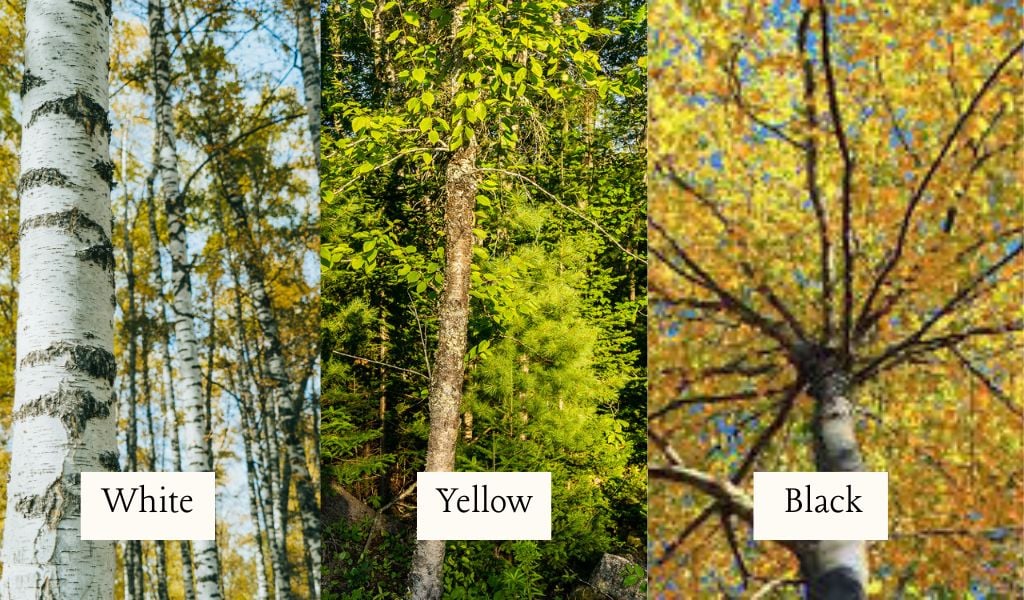
There’s something unmistakable about the presence of birch trees in the wild — the way they catch the light, their papery bark peeling back. Here in New England, we’re fortunate to share space with three native varieties: Paper Birch (Betula papyrifera), Yellow Birch (Betula alleghaniensis), and Black Birch (Betula lenta). Each of them has its own personality, habitat preferences, and unique gifts to offer.
Paper Birch, sometimes called White Birch, is the one most often associated with the classic ghostly-white bark — the kind that curls like scrolls and has been used by Indigenous peoples for everything from baskets to fire starters. This tree loves the sun and often springs up in recently disturbed areas, bringing life back to open spaces. Its bark is not just beautiful; it’s filled with compounds that are antibacterial and anti-inflammatory.
Yellow Birch is a bit more reserved in appearance, with golden, flaky bark that darkens as the tree matures. You’ll find it in cooler, moist forests — often growing tall and straight, exuding quiet strength. It’s a keystone species in many northern hardwood forests and holds ecological importance for everything from fungi to birds and mammals. The scent of its twigs, when scratched, is faintly sweet — a telltale sign of its kinship to the Black Birch.
Black Birch, also known as Sweet Birch or Cherry Birch, is perhaps the most medicinally potent of the three. Its twigs and bark carry the wintergreen aroma that hints at its high methyl salicylate content — nature’s original aspirin. It was used extensively in both Indigenous and folk medicine, and even today herbalists tap into its soothing, pain-relieving properties. Black Birch tends to grow in rocky, well-drained soils and thrives in the same kinds of upland forests where I often find myself gathering or simply wandering.
Each of these birch varieties offers something unique, but they all share a role as pioneer species — the first to move in and begin the healing process after disturbance. In that way, they are a mirror to our own resilience: gentle in spirit but endlessly capable of restoration.
As someone who feels trees as kin, I see birch not just as a plant ally but as a messenger of transitions — a guide through change. Whether I’m making tea from its leaves or simply resting my hand on its bark, there’s always something to learn from these native New England birches.
Birch in Indigenous and Colonial Healing Traditions
Long before birch was used in modern herbalism, it was revered by the first peoples of this land — including my own Nipmuck ancestors — not only for its medicinal uses, but also for its deep spiritual significance. The birch tree wasn’t just a source of healing; it was part of the fabric of daily life, woven into story, ceremony, and survival.
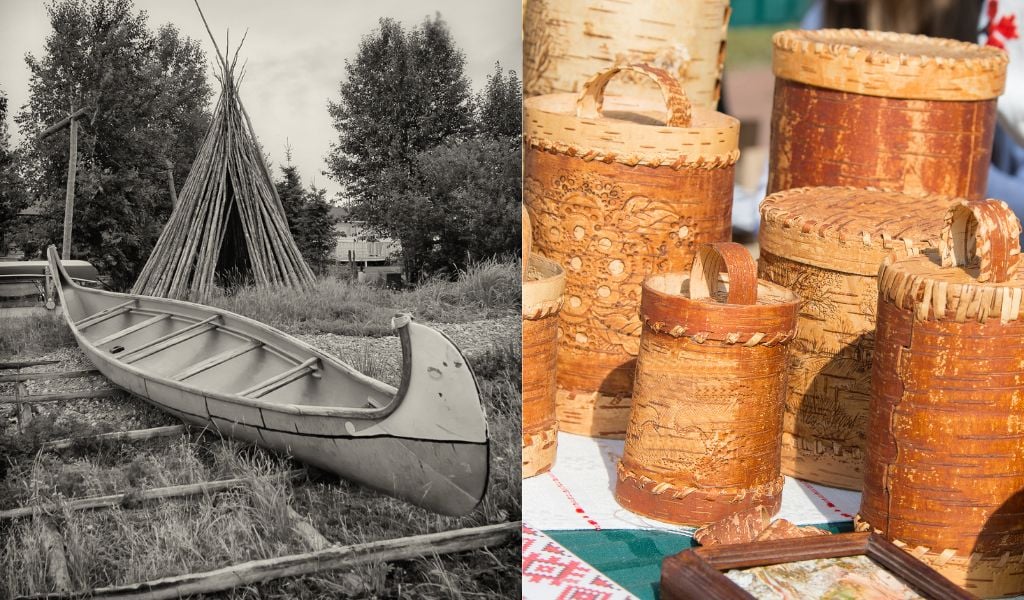
Among Northeastern Woodland tribes like the Nipmuck, Wabanaki, and Abenaki, Paper Birch held incredible practical value. Its bark, waterproof and lightweight, was used to make canoes, containers, and even shelters. But beyond these material uses, birch was deeply respected for its healing spirit. Its inner bark and leaves were brewed into teas to treat colds, fevers, and digestive issues. The sap, tapped in early spring, was consumed as a gentle tonic — a way to awaken the body after a long, cold winter (2).
The Black Birch, with its strong wintergreen scent, was particularly cherished for its medicinal power. My ancestors and other Indigenous peoples would chew the twigs to relieve pain, or infuse them into decoctions to soothe inflammation and bring down fevers. This use of birch for pain relief mirrors what modern science now tells us — that Black Birch is rich in methyl salicylate, a natural compound similar to aspirin.
When European settlers arrived, they quickly learned from Native healers about birch’s many uses. Colonial herbal texts from the 1600s and 1700s often mention birch decoctions for kidney complaints, salves for wounds, and bark poultices for skin issues. The knowledge passed down through generations of Indigenous wisdom became woven into folk medicine traditions that still echo in rural parts of New England today (1).
But beyond the physical medicine, birch carried a kind of emotional and spiritual medicine. Its bright bark and fast growth were seen as symbols of renewal, new beginnings, and resilience in the face of adversity. It’s no coincidence that many birch groves were considered sacred — places for reflection, transition, or healing rituals. Even today, I feel this energy when I stand among them.
When I teach others about herbalism, I always try to remind them: birch isn’t just a remedy you harvest. It’s a teacher. And we must approach it with the same reverence my ancestors did — listening, learning, and giving thanks for the gifts it so freely offers.

Medicinal Properties of Birch Bark, Leaves, and Sap
The more time I spend with birch trees — walking among them, harvesting their gifts, preparing medicine — the more I realize that every part of the tree offers something special. Birch doesn’t just give us one medicine; it gives many, and each part of the tree has its own unique energy and therapeutic use.
Let’s start with the bark, which has long been one of the most celebrated parts of the birch. In particular, Black Birch bark is rich in methyl salicylate, the same compound that gives wintergreen its signature aroma. This natural chemical has analgesic and anti-inflammatory properties, making it excellent for treating muscle pain, joint inflammation, and headaches. Traditionally, a strong decoction of the bark was used topically or sipped slowly as a tea. I often make a soothing balm from Black Birch bark infused in oil — it’s one of my favorite salves for achy knees after a long foraging walk.
Paper and Yellow Birch bark, while less fragrant, are also used in traditional medicine. They contain betulin and betulinic acid, compounds being studied for their antiviral and anticancer properties. The inner bark, stripped carefully in small amounts and always with thanks, can be dried and powdered or steeped for a gentle digestive tonic.
The leaves — especially when harvested young in spring — make a wonderful cleansing tea. Their slightly bitter flavor hints at their action: birch leaves are diuretic, helping to flush the kidneys and support the body’s natural detoxification pathways. I like to pair birch leaf with nettle and dandelion for a spring renewal tea that feels like forest medicine in a cup. Rich in flavonoids and vitamin C, birch leaves also support immunity and have a mild anti-inflammatory effect.
And then there’s the sap — a truly magical offering that arrives just as the snow begins to melt. Birch sap is thin, slightly sweet, and incredibly mineral-rich, containing calcium, potassium, manganese, and a trace of natural sugars. Indigenous people of the Northeast, including the Nipmuck, have long tapped birch trees as a spring tonic — a way to nourish and awaken the body after the long, cold winter. Unlike maple sap, birch sap has a more subtle flavor and a different energetic quality: lighter, cleaner, and full of vitality.
One of my favorite springtime rituals is tapping a single birch and collecting a few bottles of sap. I drink it fresh and unfiltered, as my ancestors did — a reminder that the Earth is waking up, and so are we.
It’s easy to forget in today’s world that our medicine doesn’t always come in bottles. Sometimes, it grows quietly in the forest.
Modern Herbalism and the Resurgence of Birch Remedies
There’s something beautiful happening right now: a quiet but powerful return to ancestral wisdom. As more people turn away from synthetic, one-size-fits-all medicine, there’s a growing reverence for the plants and trees that have been healing us for generations. And the birch tree — humble, unassuming, and full of quiet strength — is having a resurgence in modern herbalism.
Today, herbalists are rediscovering the magic of birch in much the same way my ancestors honored it: by listening to the land and respecting the plant’s cycles. Black Birch bark is now commonly used in salves, liniments, and tinctures aimed at relieving inflammation, muscle pain, and even the emotional heaviness that can weigh on us. I still make birchbark oil infusions the old way — low and slow, letting the warmth draw out its soothing compounds over several weeks.
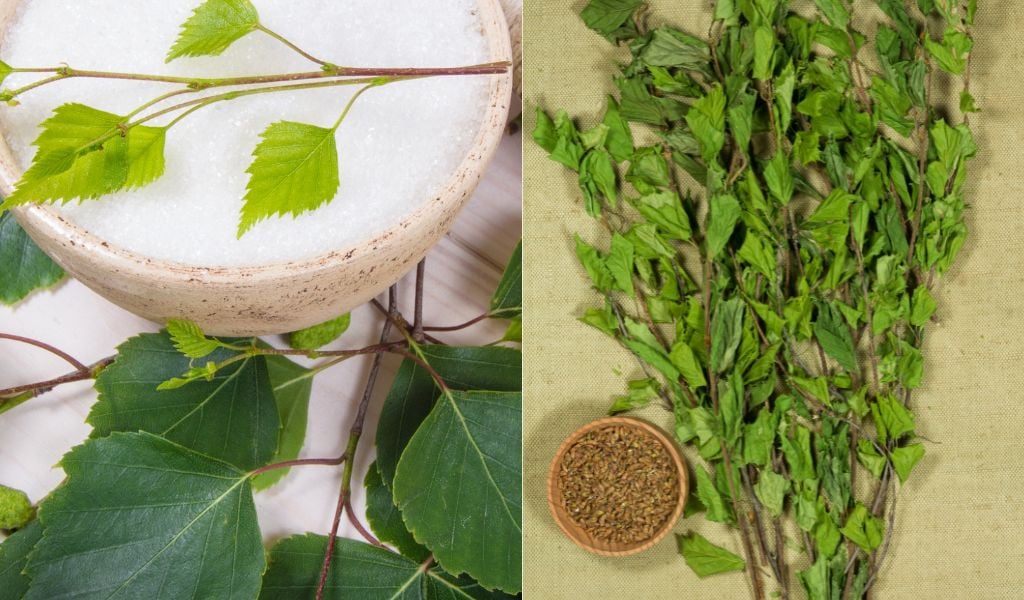
Birch leaf teas are regaining popularity as gentle detoxifiers, often paired with nettle or cleavers in spring blends. These infusions help support liver and kidney function and are especially useful after the sluggish months of winter. What I love most about birch leaf tea is how simple it is — no complicated preparations, just a handful of tender green leaves, hot water, and time.
And then there’s the birch sap, which has sparked interest beyond herbal circles. In Europe, it’s bottled and sold as a “beauty elixir,” thanks to its mineral content and subtle anti-aging effects. But for those of us in New England, it’s more than a trendy drink — it’s a way to connect with the rhythm of the seasons. I always tell people: if you want to feel what spring tastes like, drink birch sap fresh from the tree.
Even skincare formulators have turned to birch for its anti-inflammatory and toning properties. You’ll find birch extract in natural facial cleansers, toners, and creams — especially those aimed at calming irritated or sensitive skin.
What’s most exciting to me is that birch is finally being seen for what it truly is: a multidimensional healer. It’s not just about pain relief or detox; it’s about renewal, resilience, and connection. When people start incorporating birch into their wellness routines, they’re not just nourishing their bodies — they’re rekindling a relationship with the land, with tradition, and with something much older and wiser than modern science alone.
In my practice, I see birch as a bridge — between old and new, seen and unseen, medicine and magic. And I’m grateful that more people are crossing it with intention and care.
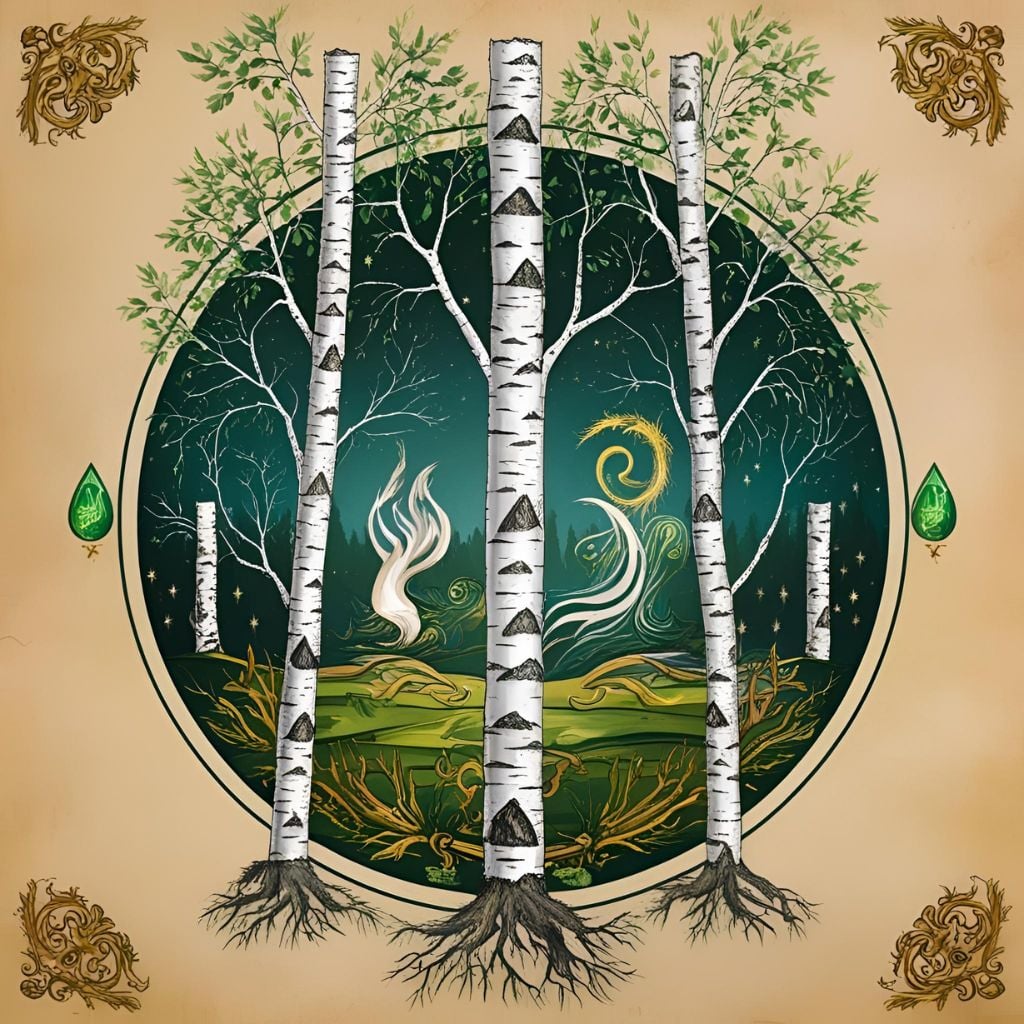
Spiritual & Symbolic Magic of Birch in Folklore
To walk among birch trees is to step into a world between worlds — a place where the veil feels thinner, where the forest breathes stories into the wind. For me, birch has never been just a tree. It’s a guardian of thresholds, a keeper of transitions, and a powerful ally in spiritual work.
In Nipmuck tradition, birch trees are part of the land’s original memory. They are associated with renewal, purification, and protection, and they mark the places where new life begins. Just as birch is often the first to return after fire or disruption, it teaches us how to begin again, how to move through loss or change with grace. When I’m going through a personal transformation or seeking clarity, I find myself pulled to birch groves — drawn there like a moth to the light.
There’s a reason why birch features prominently in New England folklore. Colonial settlers brought their own reverence for the tree, blending European superstition with Indigenous respect. In Celtic tradition, birch was the first tree of the Ogham — a symbol of beginnings, rebirth, and cleansing. That belief blended naturally with what the land here already knew: birch is a boundary-walker, a sacred sentinel of change.
Some old New England homesteads would plant birch trees at the edge of properties as protection against evil spirits. The bark, when burned, was thought to clear away negativity, and birch brooms were used in ritual cleansings of homes. Even now, I use birch smoke in my seasonal clearing ceremonies.
And of course, there’s poetry. Robert Frost’s “Birches” has always felt like a spiritual touchstone to me. In it, he imagines swinging through the trees to escape the “pathless wood” of adulthood — a longing to return to innocence and wonder. Birch trees, in that poem and in life, remind us that we can hold both the weight of our years and the lightness of youth at once.
I believe that birch carries a kind of tree-magic that speaks in soft whispers. You won’t find it in textbooks or lab reports — you’ll find it in quiet moments: in the way sunlight slips through their pale trunks, in the way their bark peels like layers of memory, and in how they seem to shimmer between worlds.
If you’re ever in doubt, or in need of guidance, find a birch tree. Sit with it. Listen. You just might find that it has something sacred to share — something only you can hear.

The Birch Tree’s Invitation to Remember
Birch trees have always called us back — back to the forest, back to ourselves, back to what we know deep in our bones. Whether we’re harvesting bark for medicine, sipping spring sap as a tonic, or simply standing in their quiet presence, birches invite us to slow down, listen, and remember.
For me, as a Nipmuck woman and wildcrafter, birch is more than a plant ally — it’s family. It reminds me of my ancestors, of ceremony, of resilience, and of the wild wisdom that still lives in the land around us. And I hope, as you walk your own path, birch offers you the same sense of connection and healing.
If this piece spoke to something in you, I invite you to continue exploring the magic of trees and ancestral plant knowledge. Here are a few articles you might like:
- 30 Northeastern Medicinal Trees and Their Uses
- The Magic and Traditional Uses of the Basswood Tree
- The Food and Medicine of the Juniper Tree: An Easy Plant to Forage
- Ancestral Living: 10 Easy Principles I used to Transform My Life
- Wild Edible Foods and Ancestral Eating
- 11 Powerful Ways to Connect With Your Ancestral Lineage
- The Magic of Reciprocal Relationships with Plants in Herbalism
References
- Blackwell, Elizabeth. “A Curious Herbal, Containing Five Hundred Cuts, of the Most Useful Plants, Which Are Now Used in the Practice of Physick.” Biodiversitylibrary.org, vol. v.2, Printed for J. Nourse, 2025, www.biodiversitylibrary.org/item/339685#page/19/mode/1up. Accessed 27 May 2025.
- “BRIT – Native American Ethnobotany Database.” Brit.org, 2025, naeb.brit.org/uses/search/?string=birch. Accessed 27 May 2025.
Don't Forget to Subscribe to Our Newsletter

Are you passionate about connecting with nature and exploring the world of herbal remedies? Join our community by subscribing to our weekly newsletter! As a subscriber, you’ll gain exclusive access to our members-only freebie and resource library, packed with valuable guides, recipes, and tips for living a more natural and sustainable lifestyle, closer to nature. Plus, you’ll gain access to our Freebie & Resource Library full of exclusive content for subscribers only.
Disclaimer:
The Outdoor Apothecary website is intended for informational purposes only and should not be considered a substitute for professional medical advice. The information provided is not intended to diagnose, treat, cure, or prevent any disease. While we strive to provide accurate and up-to-date information, it is the reader’s responsibility to ensure proper plant identification and usage.
Please be aware that some plants are poisonous or can have serious adverse health effects. We are not health professionals, medical doctors, or nutritionists. It is essential to consult with qualified professionals for verification of nutritional information, health benefits, and any potential risks associated with edible and medicinal plants mentioned on this website.
