The Outdoor Apothecary is reader-supported. When you buy through links on our site, we may earn an affiliate commission. Learn more
Nettles have long been one of my favorite herbs to work with, especially as the growing season begins to unfold. For years, I gathered the tender spring tops by the basketful, bringing them home to dry for tea blends and appreciating their deep nourishment. Rich in minerals like iron and calcium, nettle has a way of replenishing what feels depleted. It’s a plant I return to again and again.
Over time, as I paid closer attention to the plants beyond that early harvest window, I began to notice nettle seeds forming in summer. That small observation sparked my curiosity and led me into researching their traditional uses and potential. What I discovered shifted the way I harvest nettle entirely.
Now, I make a point to follow a plant through its full growing cycle. In spring, nettle leaves are tender, vibrant, and well-suited for food or tea. By late summer, the plant has grown tall and put its energy into seed. The leaves become too tough to eat, but the drooping clusters on the female plants are something else altogether—dense, green, and full health benefits.
In this article I’ll share what I learned, and why I now make two separate harvests: nettle leaves in spring, and nettle seeds in summer.

First, a Word About the Nettle Herself
Stinging nettle (Urtica dioica) is one of the most recognized wild plants in New England — and one of the most underused. Most people who forage nettle typically harvest the leaves in spring for tea, soups, and broths. Far fewer know about nettle seeds, a lesser-known part of the plant with their own distinct uses and benefits.
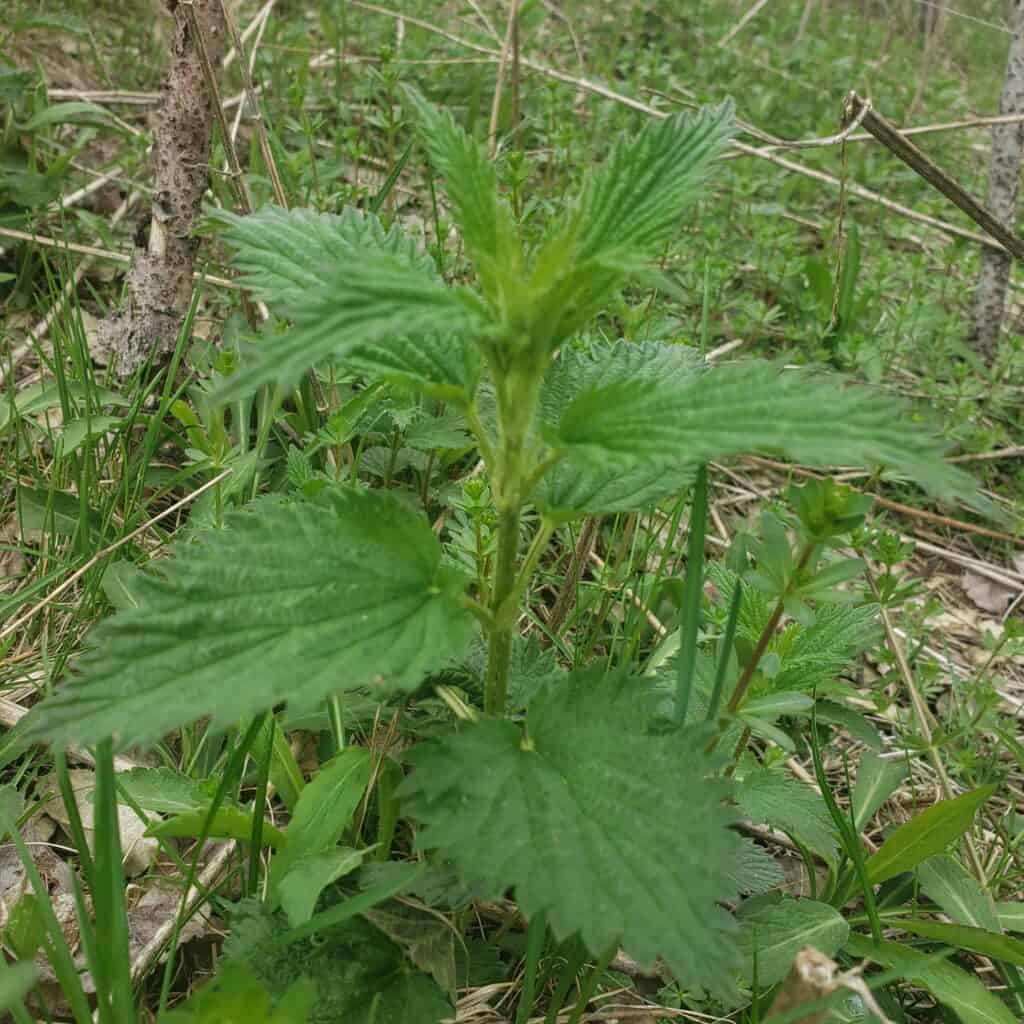
Nettle grows in rich, disturbed soil: fence lines, woodland edges, old homesteads. She favors the places where people have been — where the ground has been worked, composted, layered with years of living. If you’ve ever brushed against a patch and felt that unmistakable sting, you’ve already met her. The seeds come later in the season, small and easy to overlook — which is exactly why most foragers walk right past them, not realizing their value.
But nettle has lived alongside people for a very long time. There’s more to learn here than most field guides bother to mention. Nettle seeds are a quieter teaching — one that rewards those who slow down enough to look.
Girls and Boys: How to Tell the Difference
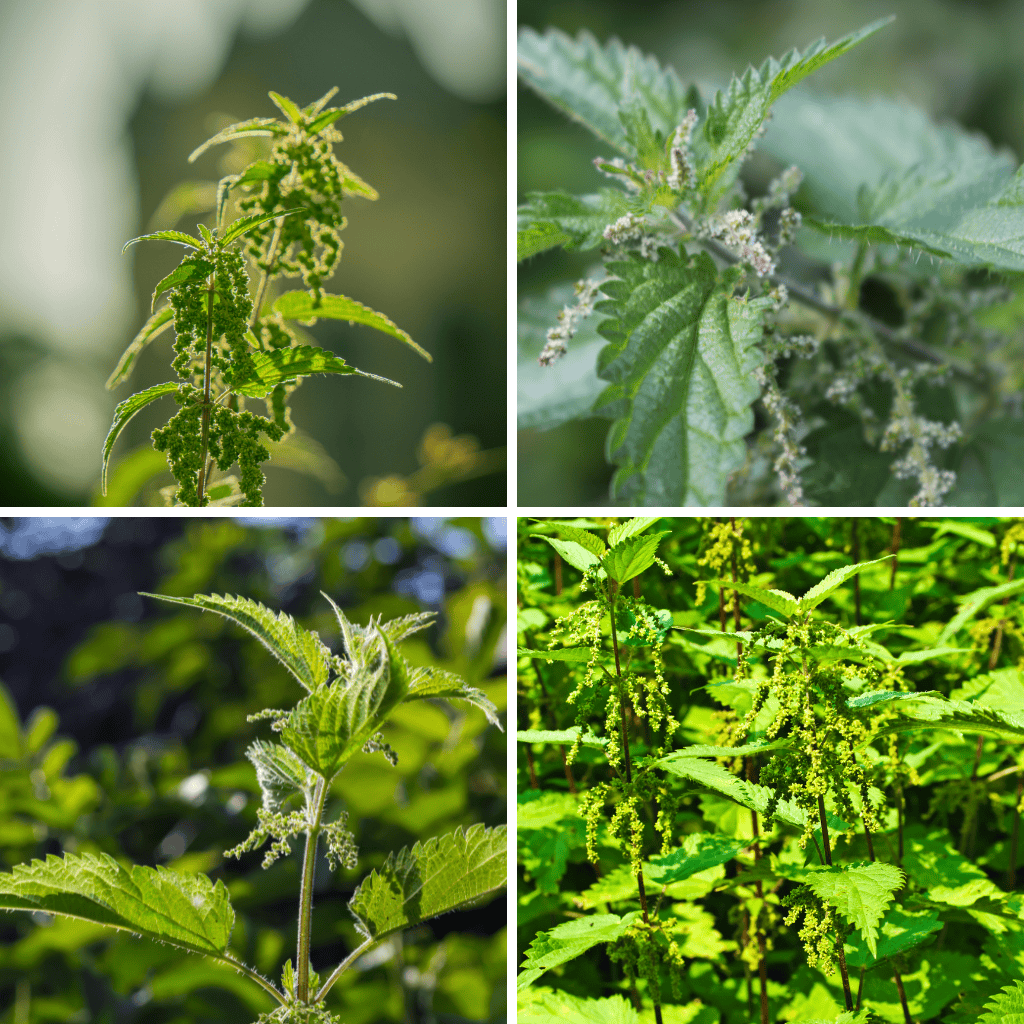
Stinging nettle is dioecious — which simply means the male and female flowers grow on separate plants. The Latin name says as much. Dioica comes from the Greek for “two households.” Two plants, two jobs, two very different offerings.
This matters enormously when you’re harvesting nettle seeds. Because only the female plant produces it.
The female plants are what you’re after. From the leaf axils — those little joints where the leaves meet the stem — hang dense, drooping clusters. Green and geometric, they look like tiny chandeliers, or rows of pointed hats, weighed down with quiet purpose. When they’re ready, they hang heavy, almost pendulous. There’s a fullness to them that you start to recognize in your hands as much as in your eyes.
The male plants look deceptively similar at first glance. They also send out fronds from the leaf axils, and if you’re not paying close attention, it’s easy to get them confused. But the male flower clusters are lighter, looser, stringier — and they tend to reach across or upward rather than drooping down. Their only job is to release pollen into the air and be done with it.
Watch a patch on a hot summer’s day and you might actually see it happen — a little puff of pollen bursting into the air, almost like a small exhale.
The females, once pollinated, carry on. They gather their energy and quietly get on with making the seed.
That’s the one to know.
When and How to Harvest Nettle Seeds
Timing is everything with nettle seeds.
You’re looking for the moment when the clusters are still green and plump — heavy-looking, almost swollen. Not dried, brittle, or brown. Once they’ve turned brown, their best has largely passed. The volatile oils and medicinal compounds are at their peak when the seed is fresh and green, just on the cusp of full ripeness.
In most of New England, that window falls somewhere between late July and September, depending on your elevation and the rhythm of that particular summer. Watch the patch. Check it every few days once the clusters start to fill out.
To harvest:
Go out on a dry morning, after any dew has lifted. Wear long sleeves — this is still stinging nettle, after all. Bring scissors or snips and a paper bag or wide basket.
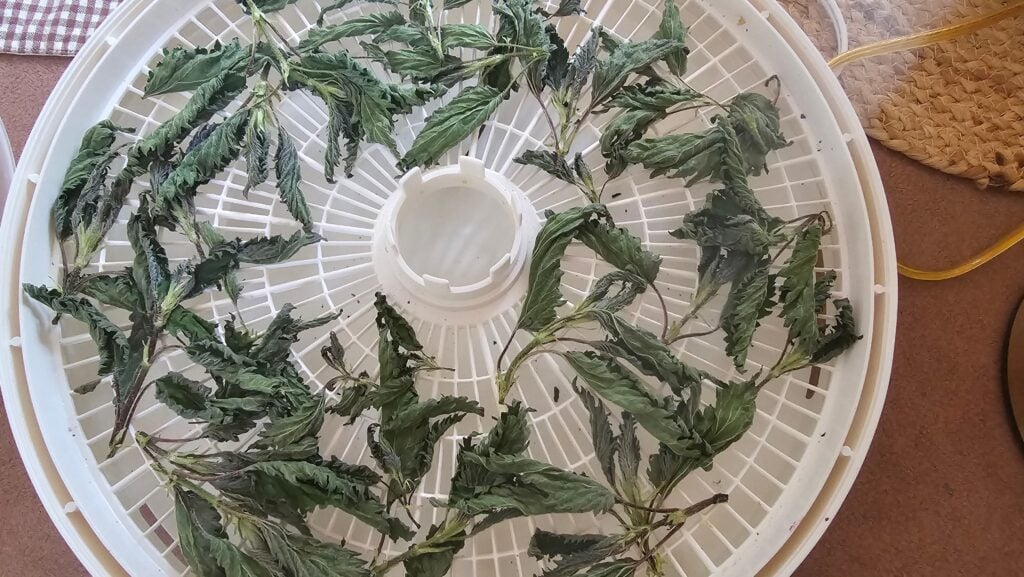
Cut the seed-bearing stems, focusing on female plants with plump green clusters. You can strip the clusters off with a gloved hand, running it down the stem, or simply cut whole stems and process them at home. Spread them on a clean cloth or screen in a warm, well-ventilated spot out of direct sun. Turn them gently once or twice a day.
They dry relatively quickly — often within a week. Once dry, you can gently thresh the nettle seeds loose by rolling the clusters between your palms over a clean sheet. Winnow away the chaff by blowing gently or passing near a fan.
Store in a sealed glass jar, away from heat and light. Dried nettle seed keeps well for a year or more.s
Medicinal Properties: A Deep Restorative
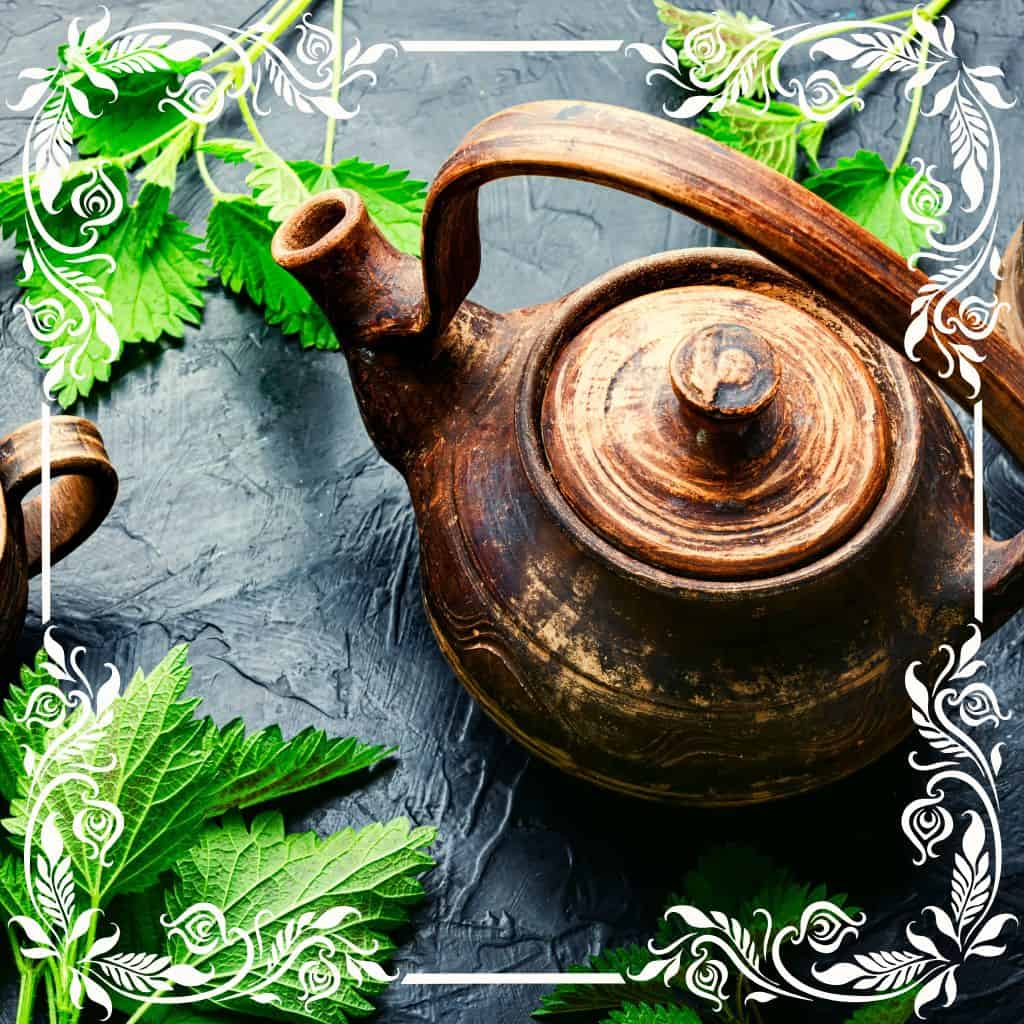
Nettles and nettle seeds are one of the most respected trophorestorative herbs (1) in the Western tradition — meaning it feeds, rebuilds, and restores depleted tissue over time. Specifically, the kidneys and adrenal glands.
What the seed is known for
Kidney and adrenal support. Herbalists have long reached for nettle seeds when someone describes what they call kidney fatigue — that deep, low-back tiredness that feels different from ordinary tiredness. David Winston, Susun Weed, and other contemporary herbalists have written about its traditional use in supporting kidney and adrenal function, particularly in people dealing with chronic low energy or the kind of depletion that follows long periods of stress or illness. This is not a replacement for medical care, and anyone with known kidney concerns should work with a healthcare provider. But as a nourishing, supportive addition to that care, it has a meaningful history of use.
Fatigue, burnout, and post-viral depletion. This is where many practitioners reach for it first. The kind of fatigue that doesn’t lift after a good night’s sleep — the kind that follows a long illness, a long year, or a life that has asked too much for too long. Herbalists often describe nettle seed as working at a foundational level. Less stimulant, more rebuild.
Rich nutrition. The seeds contain essential fatty acids, plant sterols, minerals, and chlorophyll. In their small way, they are a concentrated food as much as an herb.
Possible nervous system affinity. Some herbalists note an energizing, almost buzzy quality to fresh nettle seed — a kind of tingling alertness, especially at higher doses. This is generally considered pleasant in small amounts. Those with thyroid conditions or sensitivities to stimulating herbs are often advised to start very small and pay attention to how their body responds.
How to take it
The doses are small. This is not an herb you take by the handful.
- Fresh or dried seed — start with ¼ to 1 teaspoon per day, stirred into food, sprinkled on yogurt or oatmeal, or eaten plain
- Tincture — 1–2 ml, one to three times daily
- Infused in honey — perhaps the loveliest way; pack fresh or lightly dried seed into a jar, cover with raw honey, and let it infuse for several weeks before using
Give it time. This is a weeks-and-months herb, not a take-it-once-and-feel-it herb.
The Folklore of Nettles
Nettles have never been just medicine. They’ve been magic, too.
In the British Isles and across much of Northern Europe, nettles were considered protective plants — boundary keepers. They were believed to guard against lightning, witchcraft, and malevolent spirits. Bunches of dried nettle hung above doorways were said to keep harm from entering. You’d find them in old byres and barns, where livestock were especially vulnerable to ill-wishing.
There’s a long tradition in Celtic and Norse folklore of nettles growing thick around fairy mounds and the homes of the fey. Not to be disturbed. Not to be casually cut back. A nettle patch that nobody planted might just belong to someone else entirely.
Thor’s plant. In Norse tradition, nettles were sacred to Thor, god of thunder and storms. Throwing nettles into a fire during a thunderstorm was said to protect the home. The association with lightning may have come from nettle’s iron content, or simply from the sting — that electric, crackling contact.
Clothing and courage. Nettle fiber is one of the oldest textile plants in Europe, predating flax in some regions. There are Danish Bronze Age burial cloths woven from nettle. In the fairy tale by Hans Christian Andersen, The Wild Swans, a girl must weave coats from stinging nettles to break a curse on her brothers — and she cannot speak while she works, nor show pain from the sting. Silence and endurance. Nettles demanding something before giving.
Death and purification. In some traditions, nettles were planted on graves or used in funeral rites — a plant of transition, of the threshold. The sting makes you present. It reminds you, sharply, that you are alive.
There’s something in all of this that feels right for a plant that stings first and then nourishes deeply. Nettles have always asked you to pay attention.
A Last Word
You learn things like this not from a single book, but from observing nature through many seasons. From sitting still beside a patch in late August, watching the light catch the seed clusters. From noticing the difference between the drooping female tassels and the loose, upward-reaching males. From coming back to the same plants year after year until you know them the way you know favorite relatives.
Go find your nettle patch.
More to Explore
If nettle seeds have sparked your curiosity, there’s a whole world waiting within this one humble plant. I’ve found that the more time I spend with nettle, the more she reveals—each season offering something different, something worth paying attention to.
In early spring, I turn to the young leaves, tender and full of minerals after a long winter. If you’re just getting started with nettles, I’ve shared how I harvest and work with them here:
👉 https://www.outdoorapothecary.com/nettle/
And once you’ve gathered them, learning how to handle their sting is part of the relationship. A simple blanch transforms them completely, making them safe, nourishing, and deeply satisfying to eat:
👉 https://www.outdoorapothecary.com/blanch-nettles/
If you’re drawn to working with nettle as a daily ritual, tea is one of the easiest and most grounding ways to bring it into your life. It’s something I return to again and again:
👉 https://www.outdoorapothecary.com/stinging-nettle/
And when you’re ready to bring nettle into the kitchen, there are so many ways to use it—soups, baked goods, simple sautés. It’s one of those plants that bridges food and medicine so beautifully:
👉 https://www.outdoorapothecary.com/nettle-recipes/
Sources:
(1) Bhusal K, Magar S, Thapa R …Nutritional and pharmacological importance of stinging nettle (Urtica dioica L.): A review Heliyon, 2022; 8
Don't Forget to Subscribe to Our Newsletter

Are you passionate about connecting with nature and exploring the world of herbal remedies? Join our community by subscribing to our weekly newsletter! As a subscriber, you’ll gain exclusive access to our members-only freebie and resource library, packed with valuable guides, recipes, and tips for living a more natural and sustainable lifestyle, closer to nature.
Disclaimer:
The Outdoor Apothecary website is intended for informational purposes only and should not be considered a substitute for professional medical advice. The information provided is not intended to diagnose, treat, cure, or prevent any disease. While we strive to provide accurate and up-to-date information, it is the reader’s responsibility to ensure proper plant identification and usage.
Please be aware that some plants are poisonous or can have serious adverse health effects. We are not health professionals, medical doctors, or nutritionists. It is essential to consult with qualified professionals for verification of nutritional information, health benefits, and any potential risks associated with edible and medicinal plants mentioned on this website.

Thanks for your input on nettles. I use them in smoothies and find the benefits amazing to health and healing.
Thanks, Doug! I’m so glad to hear you’ve found nettles so beneficial. They’re such an incredible plant, and I love how easy it is to incorporate them into everyday foods like smoothies.