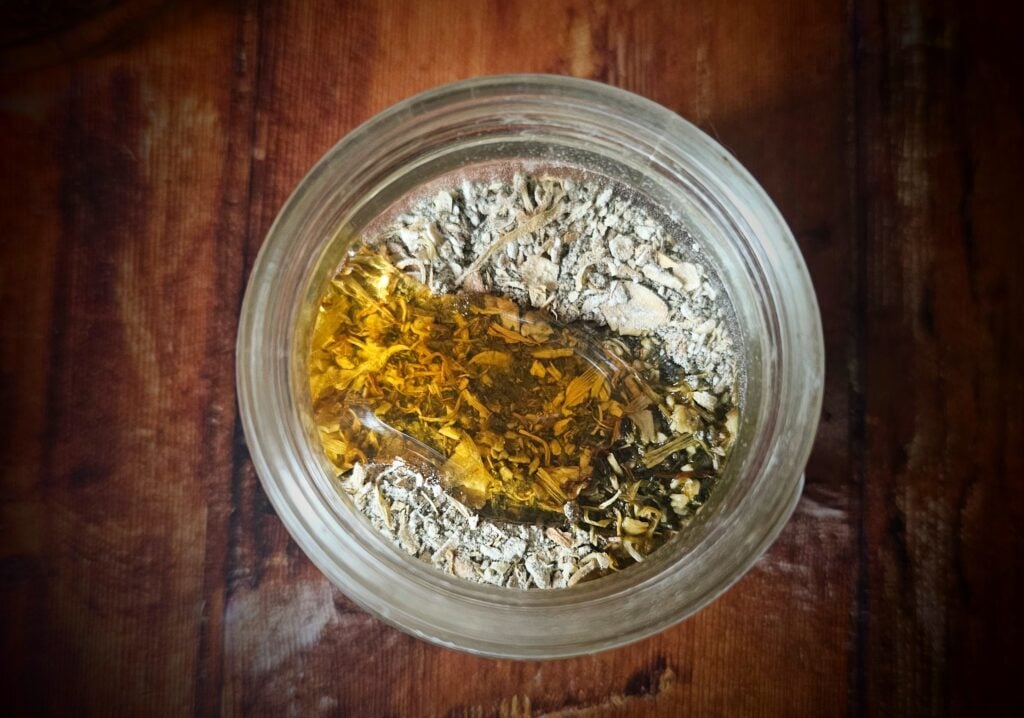
The Outdoor Apothecary is reader-supported. When you buy through links on our site, we may earn an affiliate commission. Learn more
There’s something deeply satisfying about creating simple, nourishing skincare with herbs I’ve grown or foraged myself. For over 20 years, I’ve been making my own all-natural herbal soaps — I haven’t bought a single bar of commercially made soap in all that time. For a while, I even sold them at farmers markets, but these days I craft them just for myself, close friends, and family.
I infuse oils with herbs I either grow in my garden or gather wild — plants like calendula, chickweed, plantain, rosemary, dandelion, rosehips, and nettles, to name a few. These plants are more than ingredients — they’re part of a seasonal rhythm, a connection to the land, and a way of bringing the wild into everyday rituals.
Now that I’m older, I’ve come to appreciate the gentle power of facial scrubs even more. They help exfoliate and brighten my skin, keeping it healthy and vibrant in a natural way. This homemade facial scrub with herbs is one of my favorites — it’s easy to make, deeply nourishing, and infused with the kind of care that only comes from something handmade.

🌿 Why I Turn to Herbs for Skincare
My journey into herbal skincare has always been rooted in a desire to live more sustainably and in tune with nature. I’ve long been eco-conscious, but in the past five years or so, I’ve really leaned into a simpler, more natural way of life — one that steers clear of synthetic ingredients and harsh chemicals, especially when it comes to what I put on my skin.
There’s something empowering about making my own skincare products. I know exactly what’s going into them — every herb, every oil, every grain — because I’ve chosen each ingredient with intention. Many of the ingredients I use are harvested when they’re in season, which helps me stay connected to the natural cycles of the earth. Whether it’s infusing dandelion blossoms in spring or drying nettles in early summer, these little rituals help ground me in the present moment.
When I blend up something as simple as a facial scrub using herbs I’ve foraged or grown myself, I feel a deeper connection — not just to the plants, but to an ancestral wisdom that reminds me that beauty and wellness don’t have to come from a store shelf. They can come from our gardens, our forests, and our hands.
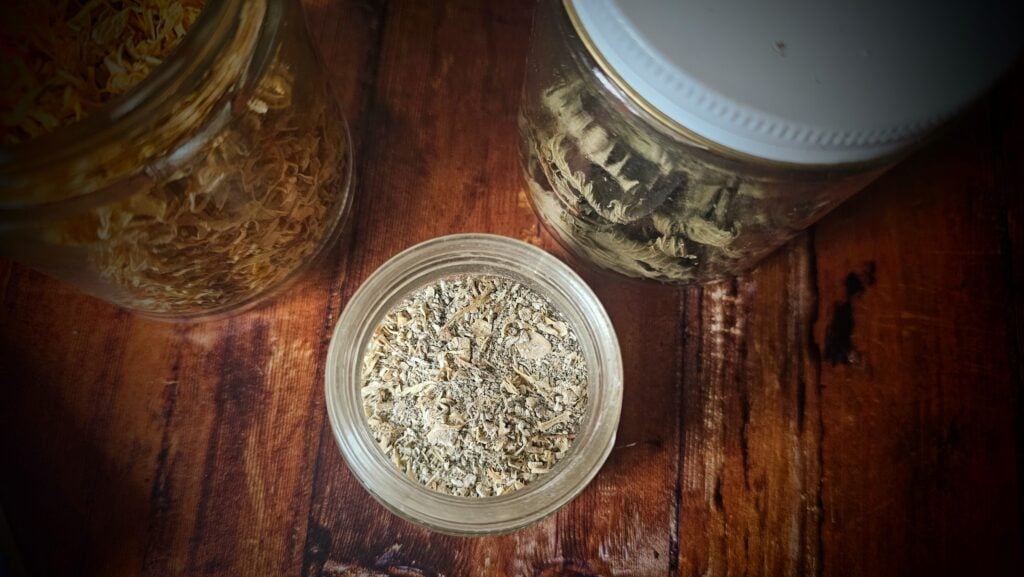
🌿 The Benefits of Using a Facial Scrub (Especially One You Make Yourself)
As I’ve gotten older, I’ve noticed subtle changes in my skin — a little less glow, a little more dullness. It’s natural, of course, and I embrace the journey of aging with as much grace and gratitude as I can. But I’ve also learned to support my skin in gentle, nurturing ways — and regular exfoliation has made a noticeable difference.
Using a facial scrub a few times a week helps slough off dry skin and encourages healthy cell turnover. The result? Skin that feels smoother, looks brighter, and carries that fresh, just-spent-time-in-the-garden glow.
But beyond the physical benefits, making and using my own herbal facial scrub has become a kind of ritual — one that reminds me to slow down, breathe deeply, and tend to myself with care. It becomes a practice in mindfulness, in presence, and in remembering that self-care can be both simple and soul-nourishing.
When I reach for this scrub, I’m not just exfoliating my skin — I’m reconnecting to the earth, to the seasons, and to the quiet power of plants that have been used for generations to support beauty and well-being.

🌿 My Favorite Herbs for Glowing Skin
Over the years, I’ve come to rely on a handful of trusted herbs that help support vibrant, healthy skin — many of which grow wild or thrive in my New England garden. These plants are simple, accessible, and deeply effective, each bringing its own kind of beauty to an herbal skincare routine.
Rosehips are one of my absolute favorites. In late autumn, I love gathering them from wild rose bushes near the edges of fields and forests. These bright red berries are rich in vitamin C and antioxidants, which support collagen production and help brighten the skin.
Dandelion is another plant I reach for often. While some see it as a weed, I see it as a generous, multi-purpose healer. Dandelion flowers are packed with skin-soothing compounds and are known to help detoxify and gently stimulate the skin’s natural renewal process.
Calendula is a beloved garden staple that I grow every year. Its bright orange and yellow blooms bring cheer to any corner of the garden, and their skin-loving benefits are unmatched. Calendula is known for its anti-inflammatory and healing properties — perfect for calming irritated or dry skin. I almost always have a jar of calendula-infused oil on hand.
Other herbal allies I love for skincare include:
- Chickweed, which shows up early in spring and offers wonderful cooling and moisturizing properties. It’s especially helpful for soothing red or itchy skin.
- Yarrow, a native wildflower in New England, is excellent for toning and tightening the skin thanks to its natural astringent qualities.
- Wild violets, which bloom in abundance in the shady parts of my yard, are gentle and hydrating — their delicate flowers can be dried and added to scrubs for a soothing, softening effect.
🌿 Homemade Facial Scrub with Herbs Recipe
This gentle exfoliating scrub is one of my favorite ways to care for my skin with ingredients I grow and gather myself. It’s simple to make and full of soothing, skin-loving herbs that bring out your natural glow.
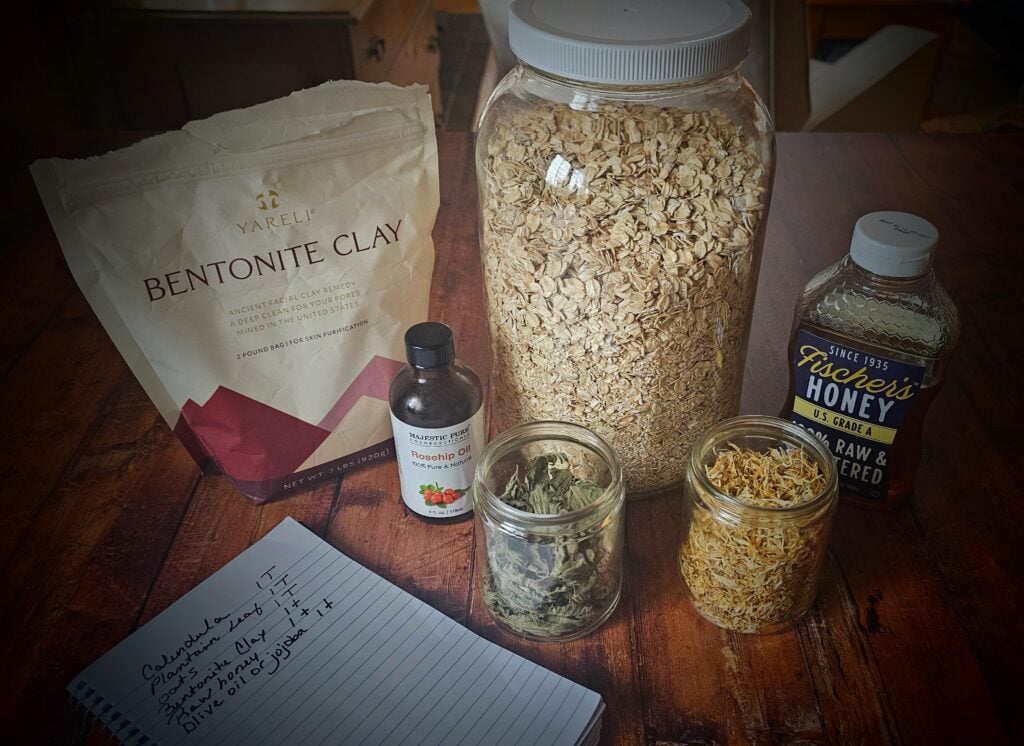
You can mix up a small batch in just a few minutes — perfect for a weekend self-care ritual or a midweek pick-me-up. The combination of calendula, plantain, and oats creates a soft, grounding texture, while bentonite clay draws out impurities. A touch of raw honey adds moisture and gentle antibacterial support, and olive or jojoba oil helps nourish and soften the skin.
Here’s how to make it:
✨ Ingredients:
- 1 tablespoon dried calendula flowers
- 1 tablespoon dried plantain leaf
- 1 tablespoon rolled oats
- 1 teaspoon bentonite clay
- 1 teaspoon raw honey
- 1 teaspoon olive oil, jojoba oil, or rosehip oil
Tip: Rosehip oil is especially wonderful for mature or sun-damaged skin, and you can make your own using foraged rosehips in autumn. I share the step-by-step process in this guide to making rosehip oil.
🌼 Directions:
Add the rolled oats to a clean coffee grinder or small food processor. Pulse briefly until the oats are broken down into small crumbs (not a fine powder). Pour them into a small bowl.
Next, add the dried calendula and plantain leaf to the grinder. Pulse until the herbs are coarsely ground, about the same texture as the oats.
Add the ground herbs and bentonite clay to the bowl of oats. Stir gently to combine the dry ingredients.
Now mix in the honey and oil. You may need to use your hands to fully incorporate the ingredients — it’s a little messy, but also a wonderful sensory experience.
To use: After washing your face with lukewarm water, apply the scrub gently to damp skin using your fingertips. Massage in small, circular motions, avoiding the delicate eye area. Rinse thoroughly with warm water and a soft cloth.
Follow up with a toner (I love using my homemade witch hazel extract — it’s gentle, astringent, and perfect after exfoliating) and a nourishing facial oil or moisturizer like this homemade one here.
🌿 Yield: Makes about 3 scrubs. Store any leftovers in a sealed jar in the fridge for up to 2 days.

🌿 Customizing Your Herbal Facial Scrub
One of the things I truly love about making my own skincare is how easy it is to tailor recipes to my skin’s changing needs. Whether I’m responding to seasonal shifts, aging gracefully, or supporting dry or damaged skin, I can combine herbs and oils in a way that feels intuitive and nourishing — and always in alignment with what’s growing around me.
The base recipe I’ve shared here is a wonderful starting point, but it’s also endlessly adaptable. You can mix and match herbs depending on the actions you’re looking for — whether it’s calming inflammation, adding moisture, or gently drawing out impurities.
Here are a few simple ways to customize your homemade facial scrub with herbs:
🌼 For Dry or Aging Skin:
Choose herbs that are soothing, hydrating, and rich in skin-repairing properties.
Try: Calendula, plantain, violet, rosehips, or chickweed
Pair with rich, moisturizing oils like olive, sweet almond, or avocado oil.
🌿 For Damaged or Irritated Skin:
Focus on herbs that promote healing and reduce inflammation.
Try: Plantain, chamomile, yarrow, or comfrey (if you’re comfortable using it)
Jojoba oil works well here, as it mimics the skin’s natural sebum and won’t clog pores.
🍃 For Oily or Acne-Prone Skin:
Look for herbs with gentle astringent and antibacterial qualities.
Try: Yarrow, witch hazel leaf, lavender, or lemon balm
Use lighter oils like jojoba or grapeseed, and consider adding a bit of green clay in place of bentonite.
🌸 For Sensitive Skin:
Stick with calming, non-irritating herbs and skip any strong essential oils or coarse textures.
Try: Chickweed, violet, rose petals, or oatstraw
Pair with jojoba or calendula-infused oil for a gentle touch.
I like to think of herbal skincare as a dialogue — between myself, the land, and what my skin is asking for in each moment. By listening closely, we can create rituals that feel both deeply personal and rooted in the cycles of nature.
So experiment, play, and follow your instincts. Nature provides all the tools — we just have to learn how to use them with care.


🌿 More to explore
If this recipe inspired you, I invite you to explore more skin-loving, nature-rooted recipes. You’ll find plenty of ways to deepen your connection to the earth while caring for your skin, naturally and sustainably.
Here are a few of my most-loved herbal skincare articles:
Make Witch Hazel Extract in a Few Easy Steps
Learn how to make your own natural toner from wild-harvested witch hazel — perfect for following up after your facial scrub.How to Make an Herbal Infused Oil
A step-by-step guide to creating infused oils for skincare, salves, or body care using the herbs you grow or forage.DIY Herbal Healing Salve Recipe
Make your own multipurpose salve with infused oils — great for dry skin, cuts, and everyday use.How to Make a Wild Rosehip Infused Oil
Harness the gentle beauty and skin-supporting magic of wild roses in this seasonal oil recipe.How to Make Lilac Oil
A classic herbal oil known for its calming scent and skin-supportive properties.How to Make Dandelion Lotion Bars
These nourishing bars are perfect for dry skin and carry the sunshine of early spring dandelions.How to Make Calendula Cream
A rich, deeply moisturizing cream made with calendula — perfect for sensitive or weather-worn skin.
There’s a whole world of natural beauty to explore — and I hope these recipes help guide you there, one mindful, handmade moment at a time.
Don't Forget to Subscribe to Our Newsletter

Are you passionate about connecting with nature and exploring the world of herbal remedies? Join our community by subscribing to our weekly newsletter! As a subscriber, you’ll gain exclusive access to our members-only freebie and resource library, packed with valuable guides, recipes, and tips for living a more natural and sustainable lifestyle, closer to nature. Plus, you’ll gain access to our Freebie & Resource Library full of exclusive content for subscribers only.
Disclaimer:
The Outdoor Apothecary website is intended for informational purposes only and should not be considered a substitute for professional medical advice. The information provided is not intended to diagnose, treat, cure, or prevent any disease. While we strive to provide accurate and up-to-date information, it is the reader’s responsibility to ensure proper plant identification and usage.
Please be aware that some plants are poisonous or can have serious adverse health effects. We are not health professionals, medical doctors, or nutritionists. It is essential to consult with qualified professionals for verification of nutritional information, health benefits, and any potential risks associated with edible and medicinal plants mentioned on this website.
