The Outdoor Apothecary is reader-supported. When you buy through links on our site, we may earn an affiliate commission. Learn more
Explore bloodroot folklore, its Indigenous roots, spiritual symbolism, and role as a powerful spring ephemeral tied to renewal, protection, and transformation.
Early spring is one of my favorite times to walk in the woods. Here in eastern Connecticut, the snow has usually just begun to melt, the ground is soft underfoot, and the forest feels like it’s holding its breath. My husband and I often walk the trails of the Avalonia Land Conservancy near our home and the state forest nearby—the largest in Connecticut—and every year I watch closely for the first signs of the spring ephemerals.
Bloodroot is always one of the first plants I notice.
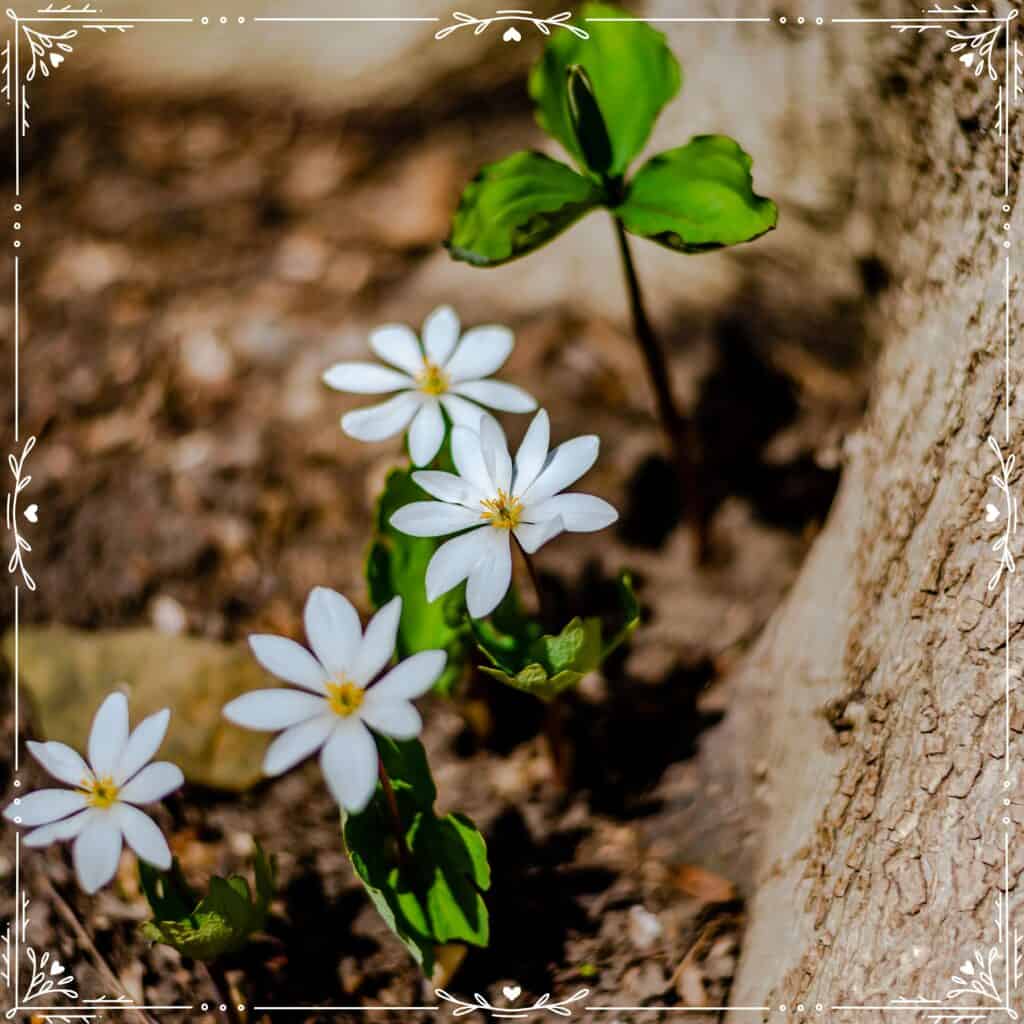
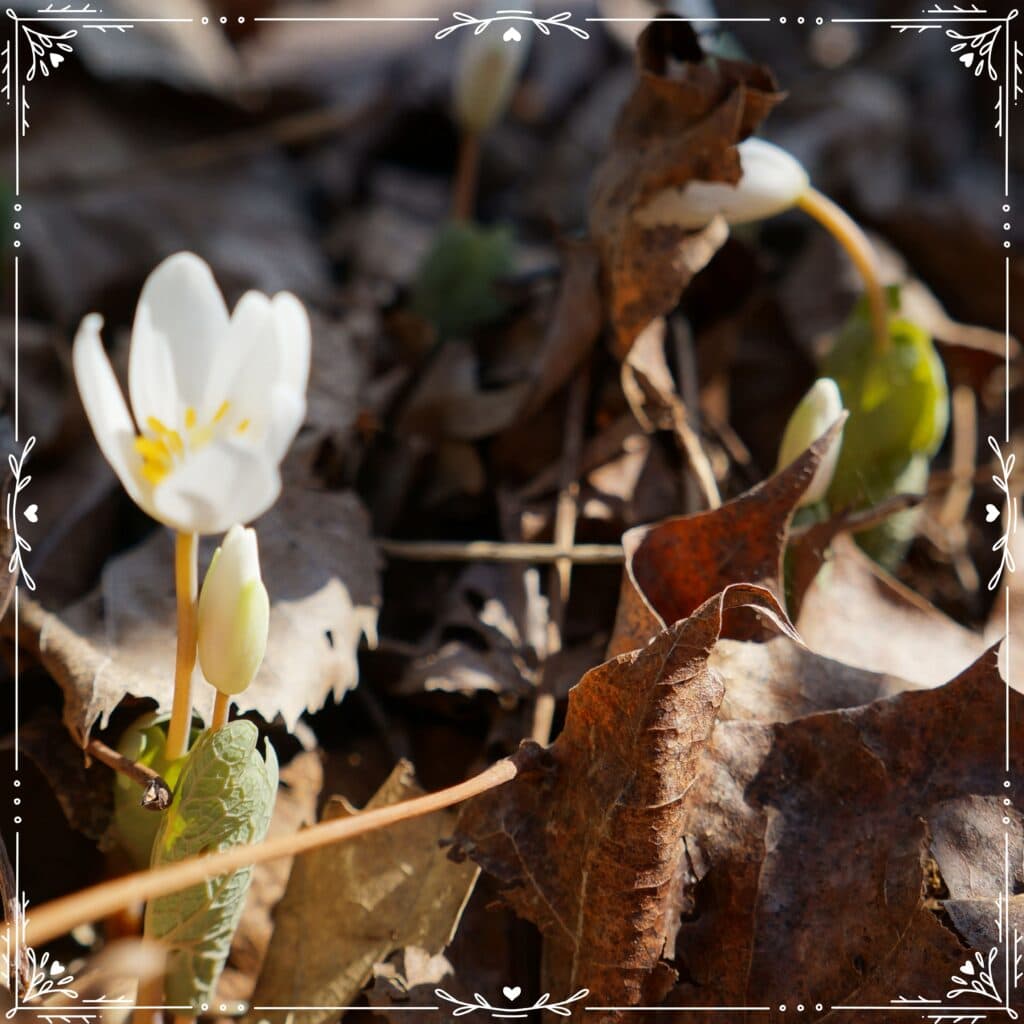
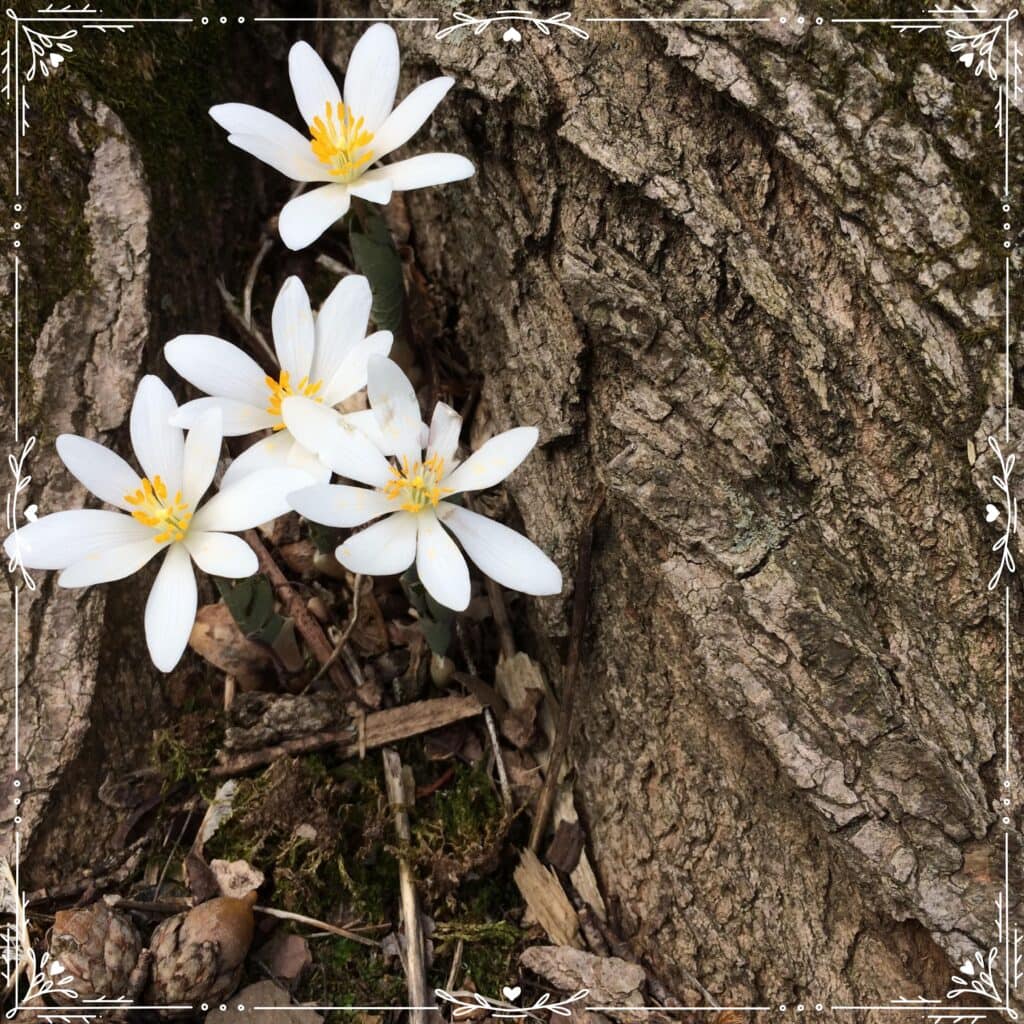
One moment the forest floor looks brown and quiet, and then suddenly there it is: a single white flower rising out of last year’s leaves. Bloodroot (Sanguinaria canadensis) doesn’t announce itself loudly, but once you learn to see it, you can’t miss it. Its white petals glow in the low spring light, and if the root is broken, it releases a deep red sap that looks almost unreal against the soil.
As a Nipmuck woman, walking these woods feels personal. Indigenous people of this region have known and worked with Bloodroot for generations. When I see it growing along the trail, I don’t think of it as something to collect or use—I think of it as a relative, an old teacher, rising right on time.
A Messenger of Vitality
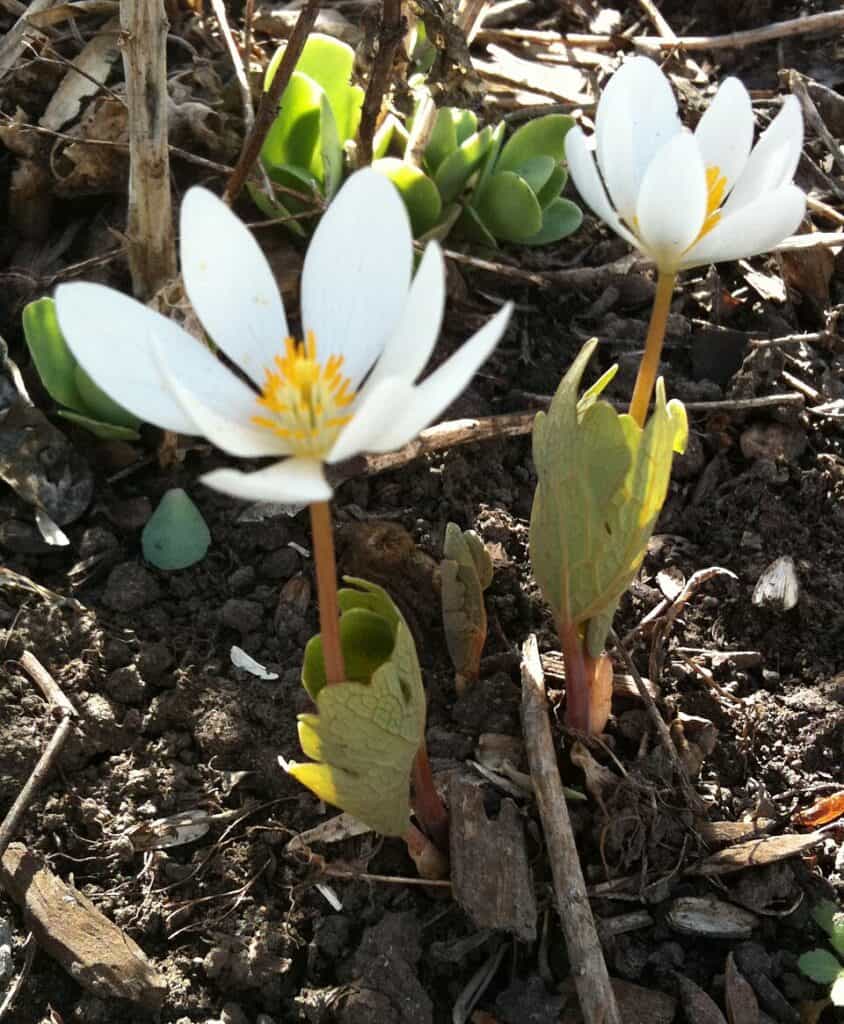
Bloodroot often emerges before winter has fully loosened its grip. Frost still clings to the ground some mornings, yet this small plant pushes upward anyway. That’s part of what makes it so powerful to me. It doesn’t wait for perfect conditions. It rises when the moment comes.
Each plant carries its flower wrapped tightly in a leaf, as if protecting itself from the cold. When the sun warms it enough, the leaf slowly opens and the flower unfurls. That quiet unfolding feels like a lesson in patience and inner strength.
March is a month of stirring—of sap beginning to rise, of movement returning after a long pause. Bloodroot embodies that energy. It reminds me that real change often starts underground, unseen, long before anything blooms.
Indigenous and Folk Traditions
Bloodroot has a long history of use among Indigenous peoples of the Northeast, including Nipmuck communities and neighboring tribes. The vivid red sap was used as a natural dye and body paint, often in ceremonial or symbolic ways. Its color alone carried meaning—life, blood, vitality, and protection.
Bloodroot was also known as a strong medicine, and it was treated with respect. It wasn’t a casual plant. Knowledge holders understood its power and used it carefully, most often externally and in specific contexts.
Later, in European folk traditions, Bloodroot carried a similar reputation. Folk herbalists approached it cautiously, recognizing that it could be helpful or harmful depending on how it was handled. Across cultures, the message stayed the same: this is a plant that demands respect.
Bloodroot Folklore & Spiritual Meanings
In Bloodroot folklore, the plant is often linked to strong, elemental themes:
- Vitality – A symbol of life-force returning to the land
- Transformation – A plant of thresholds, marking the shift from winter to spring
- Courage – Rising early, despite cold and risk
- Heart Healing – Associated with releasing old pain and making space for joy
- Protection – Historically believed to guard against illness or harmful influences
The red sap especially shaped its folklore. Many people believed it carried protective energy and used it symbolically in times of transition. Bloodroot shows up again and again in stories tied to change, renewal, and inner fire.
Herbal & Practical Uses (With Caution)
Historically, Bloodroot had several uses, though most are not appropriate for modern home use:
Natural Dye – Produces a red-orange pigment
External Remedies – Once used for skin conditions under skilled guidance
Symbolic Presence – Represented through drawings, photos, or respectful altar imagery
⚠️ Important Note: Bloodroot is toxic if ingested and can cause harm if misused. It should never be taken internally. Wild plants should not be harvested unless you are trained and ethically sourcing. For most of us, Bloodroot is best honored by observing it where it grows.
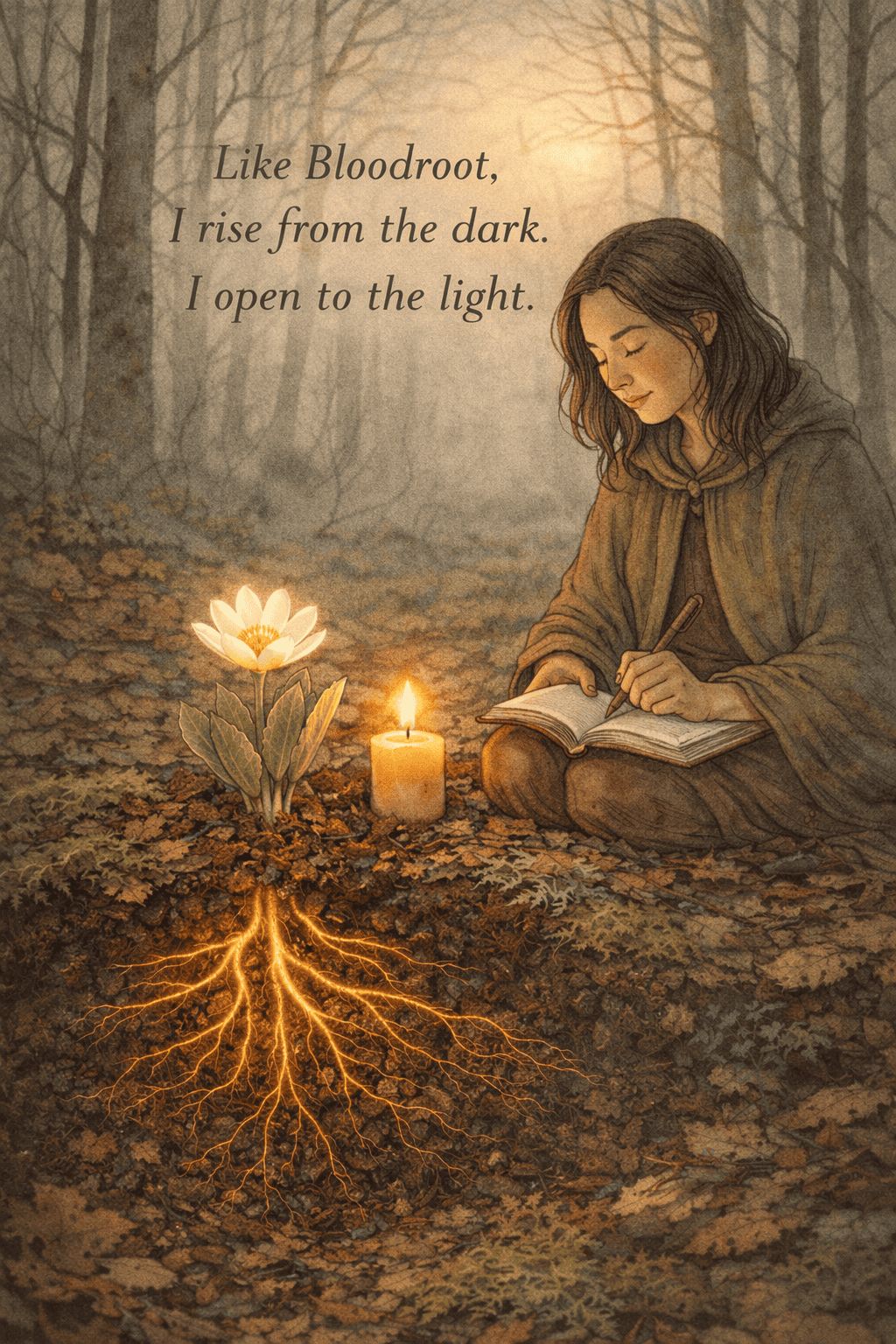
March Ritual: Rising Root Meditation
Purpose: To connect with the returning life-force of spring and your own inner momentum.
You’ll Need:
- A photo or drawing of Bloodroot, or a memory of seeing it in the woods
- A red or white candle
- A journal
Steps:
- Sit quietly and light your candle.
- Bring to mind the image of Bloodroot beneath the soil, waiting.
- Picture it slowly pushing upward, breaking through the earth.
- Reflect on where something new is beginning to stir in your life.
- Say quietly:
“Like Bloodroot, I rise from the dark. I open to the light.” - Write down whatever thoughts or feelings come up.

March Journaling Prompts
- Where do I feel new energy beginning to move?
- What part of me is ready to emerge after winter?
- What am I being asked to approach with courage?
- How can I honor softness and strength at the same time?
- What would it mean for me to rise without apology?

Nature-Aligned Activities for March
- Visit a wooded area and search for signs of Bloodroot or other ephemerals
- Create a spring altar with stones, shells, or plants that represent renewal
- Light a candle at sunrise and welcome the returning light
- Walk barefoot on the earth (even just for a moment) to reconnect with life-force
- Write a letter to yourself about what you’re ready to grow into
- Try natural dyeing with plant-based pigments (onion skins, beets, turmeric, etc.)
- Watch for the full moon and charge a small item (crystal, charm, journal) with your spring intentions
Bloodroot doesn’t stay long. Its flower fades quickly, and then it retreats back into the forest floor. But every year it returns, right on time, reminding me that renewal doesn’t need permission—it simply rises.
More to Explore
If you’re inspired by bloodroot folklore and the seasonal wisdom of early spring, here are a few related articles that dive into plant lore, seasonal rituals, and nature-aligned living:
Embracing Renewal: A Simple Spring Equinox Ritual — Ritual practices to welcome spring’s return and connect with the earth as the season begins anew.
7 Easy Imbolc Rituals to Welcome Spring — Gentle, meaningful rituals rooted in the turning of the wheel and honoring early spring energies.
10 Spring Equinox Rituals for a Grounded Life — A variety of grounding rituals to help you step into spring with intention and presence.
The Birch Tree: Healing Traditions Rooted in New England’s Forests — Delve into the folklore, healing uses, and ancestral connections of birch trees in our region’s forests.
Lilac Spiritual Meaning: The Magic, Memory, and Mystery — A rich look at lilac folklore, spiritual symbolism, and its role in early-season transition.
The Magic of Reciprocal Relationships With Plants — Explores deep, respectful plant relationships and ancestral ways of connecting with the natural world.
Following Nature’s Calendar (With FREE Seasonal Checklist) — A seasonal outlook on living in harmony with the earth’s cycles, including early spring rhythms.
13 Simple Ways to Celebrate Ostara, the Spring Equinox — Spring equinox traditions and nature-based activities to ground you in seasonal transition.
The Folklore of White Pine — A deep look at tree lore, resilience, and cultural meanings that echo throughout the seasons.
These articles weave plant lore, seasonal celebration, and nature connection to deepen your experience of the changing year and inspire your own walks, rituals, and reflections.
Sources:
Daniel E. Moerman, Native American Ethnobotany (Portland, OR: Timber Press, 1998).
Edith Van Allen Murphey, Indian Uses of Native Plants (Lincoln: University of Nebraska Press, 1990).
Robin Wall Kimmerer, Braiding Sweetgrass (Minneapolis: Milkweed Editions, 2013).
Charles F. Millspaugh, American Medicinal Plants (New York: Dover Publications, 1974).
Maud Grieve, A Modern Herbal (London: Jonathan Cape, 1931).
Matthew Wood, The Earthwise Herbal: A Complete Guide to Old World & New World Medicinal Plants (Berkeley, CA: North Atlantic Books, 2008).
Don't Forget to Subscribe to Our Newsletter

Are you passionate about connecting with nature and exploring the world of herbal remedies? Join our community by subscribing to our weekly newsletter! As a subscriber, you’ll gain exclusive access to our members-only freebie and resource library, packed with valuable guides, recipes, and tips for living a more natural and sustainable lifestyle, closer to nature. Plus, you’ll gain access to our Freebie & Resource Library full of exclusive content for subscribers only.
Disclaimer:
The Outdoor Apothecary website is intended for informational purposes only and should not be considered a substitute for professional medical advice. The information provided is not intended to diagnose, treat, cure, or prevent any disease. While we strive to provide accurate and up-to-date information, it is the reader’s responsibility to ensure proper plant identification and usage.
Please be aware that some plants are poisonous or can have serious adverse health effects. We are not health professionals, medical doctors, or nutritionists. It is essential to consult with qualified professionals for verification of nutritional information, health benefits, and any potential risks associated with edible and medicinal plants mentioned on this website.
As an Amazon Associate, I earn from qualifying purchases.
