The Outdoor Apothecary is reader-supported. When you buy through links on our site, we may earn an affiliate commission. Learn more
November asks me to look a little closer. Once the brightest leaves have fallen, it is easy to pass through the woods and think there isn’t much happening. But the bare branches, dried seed heads, and leaf-covered ground give us plenty to notice if we slow down.
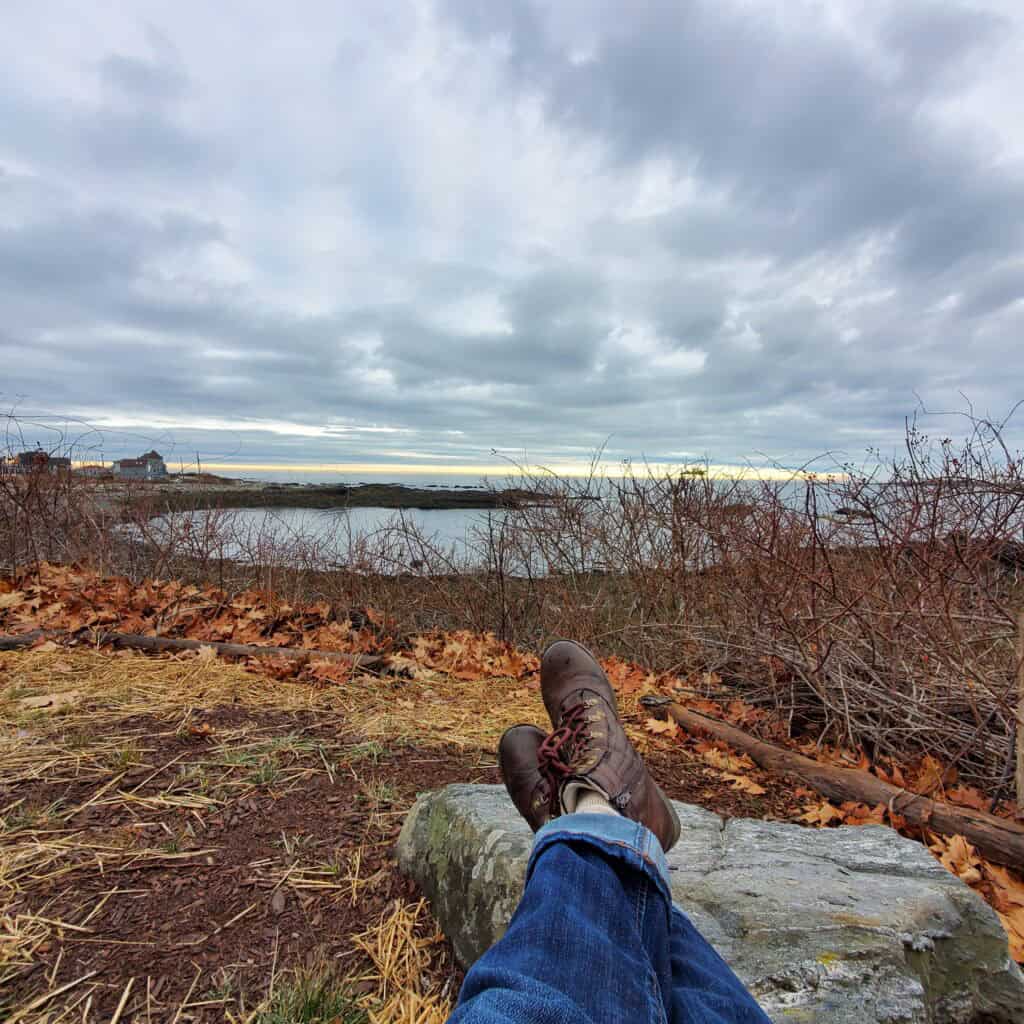
Here in northeastern Connecticut, November sits between autumn’s color and winter’s deeper cold. Some mornings may bring frost; other days feel surprisingly mild. The changes don’t follow a tidy schedule, which is part of what makes November nature study so worthwhile. We get to discover what this particular season looks like in the place we call home.
As I continue getting to know our new land, I want to carry that curiosity into the quieter months. The pond, garden, and nearby woods offer places to return to, even when a walk is brief. I don’t need to know the name of everything I see. I can begin with a question, a few notes, and a willingness to pay attention.
These 25 ideas are gentle invitations for your own late-autumn walks. Choose one or two, bring a notebook if you like, and see what November has to show you.

Why November Is a Beautiful Month for Nature Study
When leaves fall, the shape of a landscape becomes easier to see. Branches that were hidden all summer come into view. A stone wall, an old stump, or a bend in a stream may suddenly catch your attention. There is more sky between the trees, and more opportunity to notice how light moves through them.
The garden offers a different kind of beauty, too. Seed heads, dried stems, and the remains of summer’s growth hold shapes and textures worth studying. The ground becomes its own small landscape of curled leaves, acorn caps, twigs, and patches of moss.
I think of this month as a chance to become more familiar with what remains. What is still green? What has changed shape? Which birds are using the yard now? What can I see that I couldn’t see in September or October?
If you enjoyed my October nature study ideas, November offers a natural next step. Rather than tracking the height of autumn color, we can follow what happens after the leaves come down.
Getting Started with November Nature Study
You don’t need a long hike or a collection of field guides. A small patch of yard, a local park, or the view from a window can give you a place to begin.
- Choose somewhere familiar. Return to the same tree, garden bed, pond edge, or stretch of path throughout the month.
- Keep your supplies simple. A pencil and notebook are enough. Binoculars, a hand lens, or a phone camera can be useful, but none is required.
- Record the conditions. Note the date, time, weather, and whether the ground is wet, dry, or frosty.
- Write what you actually notice. “Three small birds feeding among the stems” is a good observation, even before you identify them.
- Leave room for questions. An unfamiliar twig or bird call can become something to learn about later.
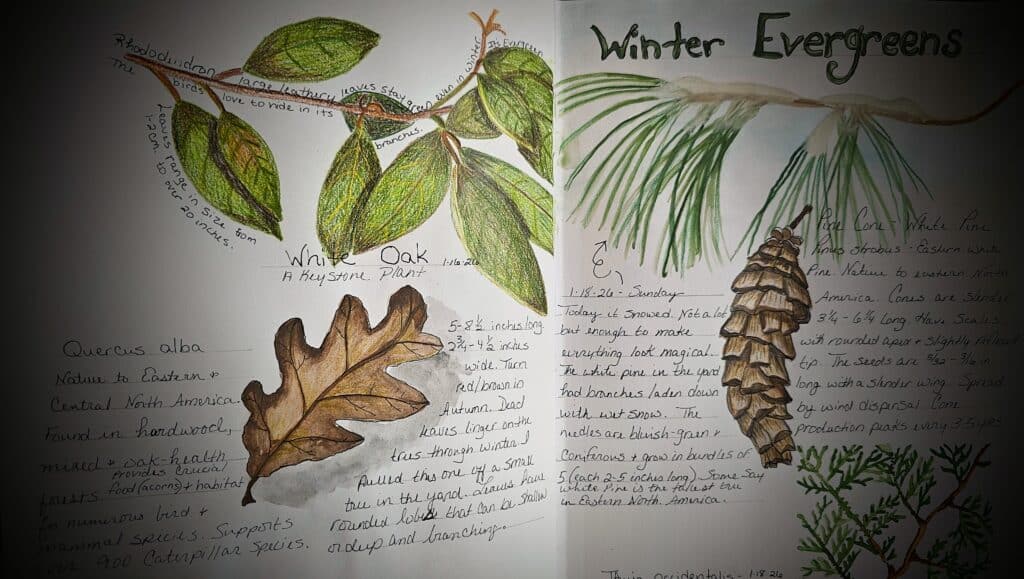
My guides to nature journaling and choosing a sit spot can help you build a practice that feels comfortable and manageable.
These ideas are written with New England in mind. Let your local conditions lead you: frost, leaf drop, and bird activity vary with location and weather. Stay on safe paths, follow local access rules, and enjoy observations from shore rather than stepping onto early ice.
25 November Nature Study Ideas
Bare Trees, Buds, and Late-Autumn Plants
- Get to know one tree without its leaves. Notice its overall shape, the angle of its branches, and whether its crown looks rounded, narrow, or irregular. Sketch its outline.
- Look closely at a twig. Find the buds along it and compare their size, color, and arrangement. Observe an attached twig without breaking it off.
- Compare bark textures. Study two or three trees along your route. Look for ridges, plates, smooth patches, and differences between younger and older trunks.
- Notice which trees still hold leaves. Are the leaves scattered throughout the crown or mostly on lower branches? Keep a record and check again next week.
- Look for American witch hazel in bloom. If it grows near you, watch for the narrow yellow petals of Hamamelis virginiana. Its fall flowering makes it a wonderful plant to observe as the woods become bare; bloom timing varies.
- Find a green plant close to the ground. Observe a familiar rosette or a patch of evergreen foliage. Compare its position and color with nearby dried stems.
Seed Heads and the World Beneath Our Feet
- Study a standing seed head. Look at the shape left behind by a familiar garden plant. Sketch the outline before examining the finer details.
- Watch how seeds move. On a breezy day, observe a seed head from a little distance. Does anything lift away, shake loose, or stay firmly attached?
- Compare fresh and older fallen leaves. Notice differences in color, flexibility, and texture. Photograph them where they lie rather than clearing away a patch.
- Look for signs of feeding. Find a chewed nutshell, an acorn with a hole, or a partly eaten cone. Record the evidence without assuming which animal left it.
- Notice where leaves gather. Look along stone walls, around shrubs, and in hollows. How do wind and the shape of the ground influence these little piles?
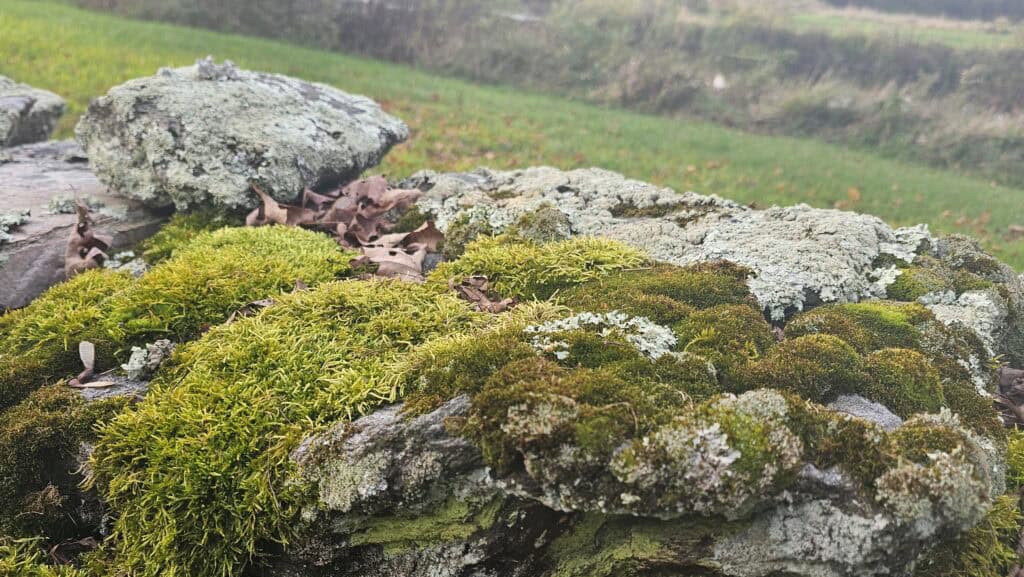
- Visit a patch of moss after rain. Compare its appearance with a photograph from a drier day. Observe its texture closely without peeling it from the ground.
- Watch a familiar fallen log. Look for fungi, changing bark, or new colors on its surface. Leave the log in place and return to see what changes.
Birds and Other Wildlife
- Keep a ten-minute bird list. Write down what you see or hear from one spot. Use descriptions if you don’t know the species yet.
- Watch birds in the garden. Notice whether they use standing stems, shrubs, open ground, or nearby trees. Record where they spend their time.
- Listen for geese overhead. Note the direction, number of birds, and flight pattern. A passing flock alone doesn’t tell us whether the birds are migrating or making a local trip.
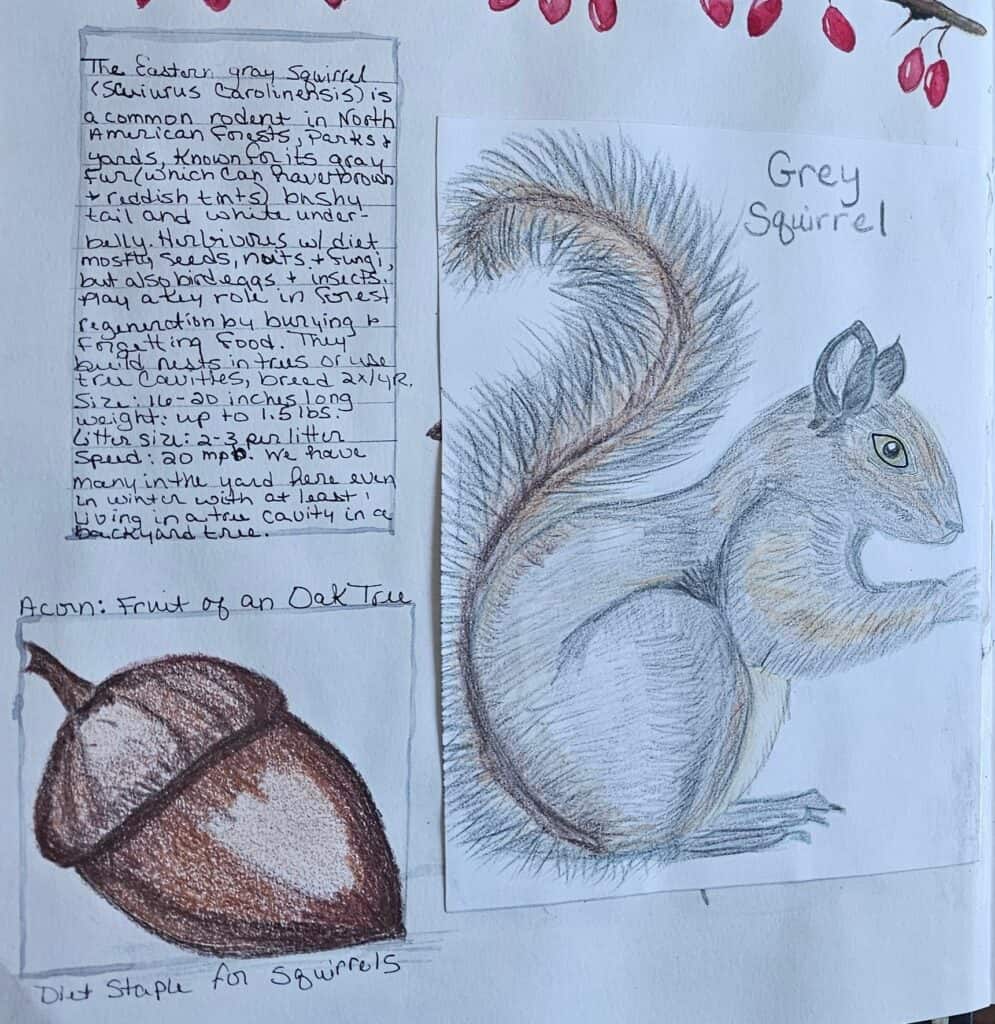
- Observe squirrels from a distance. Watch for feeding, carrying nuts, or digging. Describe the behavior before deciding what it means.
- Look for tracks on a muddy path. Photograph a clear print beside a ruler if you have one. Sketch its shape and keep uncertain identifications as questions.
- Notice activity on a mild afternoon. Are any insects flying or moving on flowers, bark, or sun-warmed surfaces? Record the weather along with what you find.
Frost, Water, Light, and Sound
- Map where frost appears. On a frosty morning, compare an open lawn, a sheltered bed, and a shaded edge. Check later to see where it lingers.
- Study frost on one small surface. A leaf, grass blade, or seed head can make a lovely subject. Photograph or sketch the pattern before it melts.
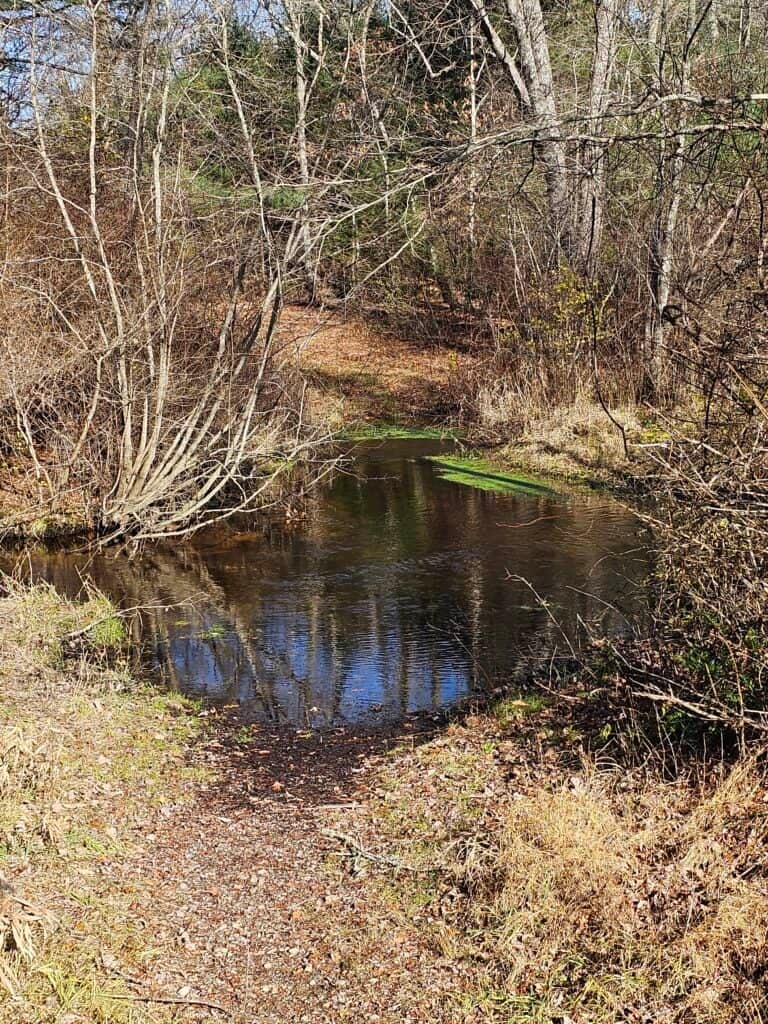
- Return to the same view of water. Observe a pond or stream from a safe spot. Record reflections, ripples, floating leaves, and any visible ice along the edge.
- Follow a shadow. Choose a tree or fence post and compare its shadow at roughly the same time on several days. Note cloudy days when you can’t make the comparison.
- Spend five minutes listening. Close your eyes if the setting feels safe. List the sounds you hear, including wind, water, birds, footsteps, and distant human activity.
- Photograph one view each week. Stand in the same place and aim your camera in the same direction. By the end of November, you’ll have a small record of how your landscape changed.
A Simple Weekly November Nature Study Practice
Twenty-five ideas can feel like a lot, so I wouldn’t try to turn them all into a checklist. One thoughtful observation each week is a good beginning.
- Week one: Choose your place. Take a photograph, describe the view, and note what you want to watch.
- Week two: Look closely at plants. Spend time with a twig, a seed head, or the leaves beneath a tree.
- Week three: Watch for movement. Observe birds, squirrels, windblown seeds, or flowing water.
- Week four: Compare and reflect. Return to your first photograph and notes. What changed? What stayed familiar? What surprised you?
Try to make each visit easy enough that you’ll want to return. Ten minutes outside can be plenty, especially on a cold or busy day.
November Nature Study Journal Prompts
When I don’t know what to put on a page, a simple question helps me begin. Try one of these after a walk, or explore my collection of nature journal prompts for more ideas.
- What can I see now that the leaves have fallen?
- Which colors stand out in today’s landscape?
- What remains green, and where is it growing?
- What evidence of wildlife did I notice?
- How did the weather change what I could observe?
- What has changed in my chosen spot since October?
- What question would I like to carry into my next walk?
- What small detail made me feel more connected to this place?
A few words count. So does a rough sketch, a dated photograph, or a note that says, “I don’t know what this is yet.” The point is to create a record you can return to, not a perfect journal page.
Leave Room for the Life You Cannot See
November nature study also reminds me to be gentle with the places I’m observing. Fallen leaves and standing stems can provide shelter for overwintering insects, while seed heads offer food and structure in a garden that may look finished to us.
Where practical, I leave leaves in garden beds and beneath shrubs, and keep healthy standing stems through winter. That doesn’t mean every leaf needs to stay on every surface. Paths still need to be safe, and diseased vegetable debris may need different handling. But a garden can have room for both thoughtful care and the small lives sheltering within it.
For guidance on winter habitat, the Xerces Society’s Leave the Leaves resource offers a helpful place to begin. When observing outside your own yard, leave plants, nests, logs, and other habitat features where you find them.
A Gentle Invitation for the Month Ahead
This November, I invite you to choose one place and keep returning. Watch a tree reveal its branches. Notice what gathers beneath it. Listen to the birds that use the space, and see how the light changes from one visit to the next.
There is no need to make each walk productive. Sometimes the best thing we bring home is a little more familiarity with the land around us.
By the time December arrives, you may have a handful of notes, a few photographs, and questions you didn’t have before. To me, that is a lovely way to enter winter: still curious, still paying attention, and a little more at home. And as always, thanks for being here.
More to Explore
If you’d like to continue observing your own corner of the world, these articles offer more ideas for nature journaling, seasonal walks, and getting to know the plants around you.
- October Nature Study — Look back at the changes that led into November.
- Winter Nature Study — Carry your observation practice into the colder months.
- The Benefits of Nature Journaling — Begin a simple record of your walks and discoveries.
- Nature Journal Prompts for a Deeper Connection to Place — Find a starting point when the page feels blank.
- Sit Spot: A Sacred Place to Observe the Rhythms of Nature — Choose somewhere to return to throughout the seasons.
- What Is Witch Hazel For? — Get to know a native shrub with an unusual flowering season.
Don't Forget to Subscribe to Our Newsletter

Are you passionate about connecting with nature and exploring the world of herbal remedies? Join our community by subscribing to our weekly newsletter! As a subscriber, you’ll gain exclusive access to our members-only freebie and resource library, packed with valuable guides, recipes, and tips for living a more natural and sustainable lifestyle, closer to nature.
