The Outdoor Apothecary is reader-supported. When you buy through links on our site, we may earn an affiliate commission. Learn more
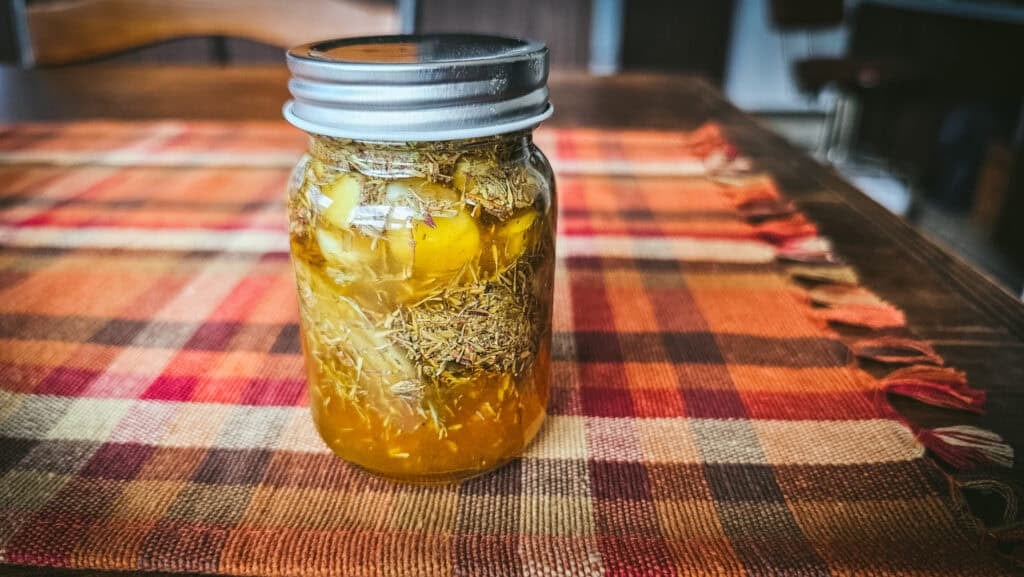
Every year as the cold weather settles in over the Northeast, I find myself reaching for the simple remedies that have carried my family through countless winters. One of my favorites—something I make as soon as sniffles begin to circulate—is a small-batch thyme honey infused with onions, garlic, and a splash of apple cider vinegar. It’s deeply aromatic, sweet, and a little fiery… and when my throat aches or a cough lingers, this is the first jar I turn to.
What I love most about this remedy is how old-world it feels. It brings together some of the most trusted kitchen herbs—thyme, garlic, and onion—each one offering its own gifts for clearing congestion, soothing sore throats, and supporting the immune system.
If you love simple herbal recipes that make you feel more rooted in the seasons, this is one I think you’ll return to again and again.
Why Thyme Honey Works So Well
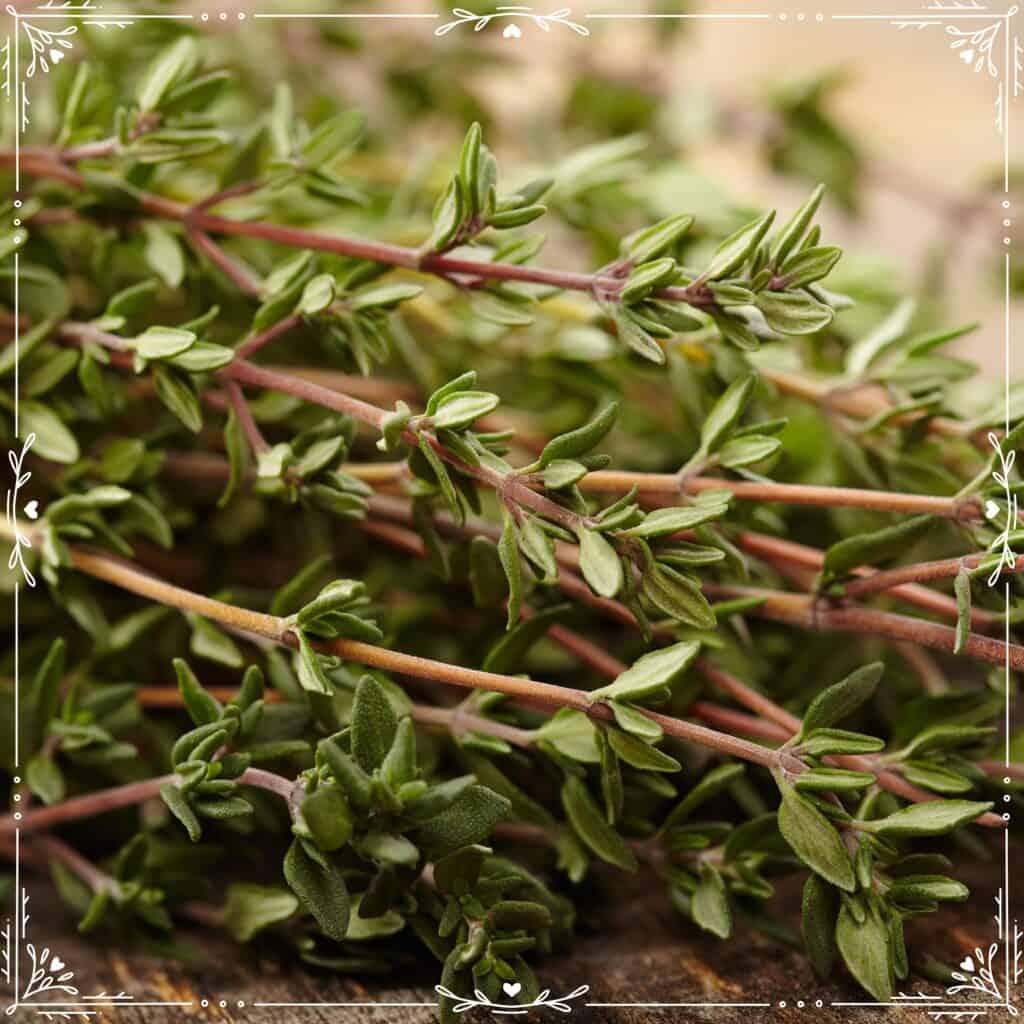
Thyme has long been cherished for its ability to ease coughs and support the lungs. Its warming, aromatic oils make it especially useful when your chest feels tight or heavy. Garlic and onion bring their own powerful actions—both rich in compounds traditionally used to support the immune system and help the body fend off winter bugs.
When you combine these herbs with raw honey, you get a sweet, soothing preparation that coats a sore throat beautifully while drawing out the plant constituents over time.
And adding a touch of apple cider vinegar brings this remedy into the realm of safe, modern herbal practice—more on that below.
Before we get into the thyme honey recipe, I’m curious: What herbal remedies do you tend to reach for when the first cold of the season hits?
Why I Add Vinegar (And Why You Might Want To, Too)
Whenever we work with garlic and honey together, it’s important to be aware of basic food safety. Both garlic and honey can naturally carry Clostridium botulinum spores. While honey alone is acidic and high in sugar—both of which inhibit botulism—the moment we add juicy, low-acid ingredients like garlic or onion, we begin to dilute that natural protection.
A small splash of apple cider vinegar helps tip the balance back in our favor by:
- Lowering the pH
- Creating a more acidic environment
- Making it much harder for harmful microbes to grow
Most herbalists aim for a pH below 4.6 to reduce risk. You can certainly check your finished product with a pH meter if you have one, but adding vinegar is a simple, traditional way to help ensure your remedy stays in the safe zone.
Plus, apple cider vinegar adds a lovely brightness that complements the thyme honey.

Thyme Honey With Onion, Garlic & Apple Cider Vinegar
This recipe for thyme honey uses “parts,” which makes it easy to scale. If you decide to make a large batch during cold season, just stick to the same proportions.
Ingredients
- 1 part fresh thyme sprigs
- 2 parts onion, peeled and sliced
- 1 part garlic, peeled and sliced or lightly smashed
- Raw honey (enough to fully cover the herbs)
- A splash of apple cider vinegar (about 1–2 teaspoons per cup of honey is usually enough)
A Note on Using Parts
I love using the “parts” method in kitchen and herbal recipes because it keeps things beautifully flexible. Instead of locking you into exact measurements, it lets you scale a recipe up or down depending on what you have on hand. One “part” can be any unit of measurement you choose—a cup, a handful, or even a small bowl—as long as you use the same unit throughout.
For this thyme honey, the ratio stays the same no matter the size of your batch: equal parts thyme and garlic, twice as much onion, and enough raw honey to completely cover everything in the jar. This approach feels a bit like cooking the old-fashioned way—intuitive, adaptable, and grounded in what’s available in the moment. It also makes it easy to whip up a small jar when someone in the house is under the weather, or a larger batch when cold season rolls in..
Directions
Making thyme honey is easy – just follow these simple steps:
Layer the herbs
In a clean, completely dry jar, add a layer of onions, a layer of thyme, and a layer of garlic. You can pack it gently, but leave a little room for the honey to flow between everything.Add honey and vinegar
Pour honey slowly over the herbs until they’re fully submerged. Add your splash of apple cider vinegar and use a chopstick or butter knife to release any trapped bubbles.Protect the honey
Place a square of unbleached parchment paper on top of the jar before sealing. This prevents the honey from contacting any coated lid surfaces.Infuse
Store the jar of thyme honey in a dark cupboard for at least 1 week, though I often let mine go for closer to 2. Turn or gently shake it once a day to keep everything well mixed.Strain and store
After a week or two, strain out the solids and transfer the infused honey into a clean, dry jar. Label it and refrigerate. It will keep for up to 3 months.

How I Use This Thyme Honey Remedy
Whenever a cold or cough starts creeping in, I take:
A teaspoon of thyme honey straight from the jar
A spoonful stirred into warm (not hot) tea
A bit mixed into warm water with lemon
The flavor is bold—sweet, savory, and deeply herbal—but I’ve come to associate it with comfort, warmth, and healing.
Safety Notes
Botulism risk is reduced—but not eliminated—by acidity and sugar levels.
Honey is high in sugar and naturally acidic (around pH 3.9), which helps protect against harmful bacteria. However, adding garlic and onion dilutes these protections. (National Honey Board, n.d.)Apple cider vinegar helps increase acidity.
A pH below 4.6 is considered less hospitable to Clostridium botulinum. Adding vinegar increases safety, especially if you don’t have a pH meter.Refrigeration is important.
Always store this thyme honey remedy in the fridge and use within 3 months.Never give honey to children under 1 year old.
A Sweet, Savory Remedy for the Cold Months Ahead
Making this thyme honey has become part of my seasonal rhythm—something I prepare before winter truly sets in. It feels so grounding to assemble a remedy using herbs I grow or gather myself, knowing it will be there when I need it most.
I hope you’ll try your own batch this season. It’s one of those herbal creations that truly feels like a gift from the garden.


More to Explore
If you love simple herbal crafts and cozy winter remedies as much as I do, here are a few more nourishing projects and articles you might enjoy:
10 Immune-Boosting Herbs for Cold & Flu Season
Explore some of my favorite herbs to support the body when colds and coughs are circulating. Many of these plants are simple, accessible, and easy to weave into daily routines.Homemade Antibiotic Salve for Winter First Aid
This soothing salve is a staple in my home during the winter months. Learn how to make a powerful, plant-based remedy for minor scrapes, cuts, and winter skin woes.10 Winter Solstice Rituals to Welcome the Season’s Magic
Discover 10 enchanting winter solstice rituals to embrace the magic of the season and welcome a time of renewal and reflection in nature’s rhythm.
5 Benefits of Ginger For a Cold and Easy Tea Recipe
Try ginger for a cold when you’re feeling sick. Its properties may help soothe symptoms and support your body’s defenses.
Sources
Centers for Disease Control and Prevention. Botulism: General Information. 2024, https://www.cdc.gov/botulism.
Green, James. The Herbal Medicine-Maker’s Handbook. Crossing Press, 2000.Herbal
National Center for Home Food Preservation. General Guidelines for Safe Food Preservation Practices. University of Georgia, https://nchfp.uga.edu.
National Honey Board. “pH and Acids in Honeys.” BJCP, https://www.bjcp.org/mead/ph_acid.pdf.
United States Department of Agriculture, Food Safety and Inspection Service. Food Safety Guidelines for Home-Prepared Foods. 2010.
Disclaimer:
The Outdoor Apothecary website is intended for informational purposes only and should not be considered a substitute for professional medical advice. The information provided is not intended to diagnose, treat, cure, or prevent any disease. While we strive to provide accurate and up-to-date information, it is the reader’s responsibility to ensure proper plant identification and usage.
Please be aware that some plants are poisonous or can have serious adverse health effects. We are not health professionals, medical doctors, or nutritionists. It is essential to consult with qualified professionals for verification of nutritional information, health benefits, and any potential risks associated with edible and medicinal plants mentioned on this website.
